

Psoriasis Stem Cell Therapy | Calming the Immune Attack Without More Biologics
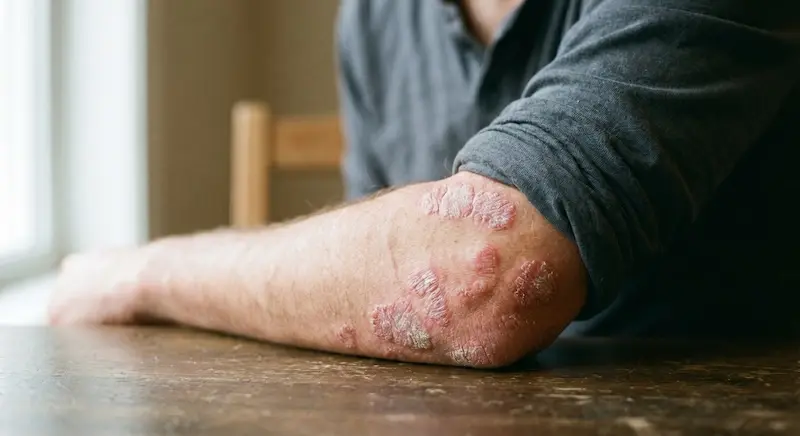
The patches on your elbow are back. You spent the morning picking a shirt with sleeves long enough to cover them, the way you have learned to do over years. The biologic you switched to nine months ago worked beautifully at first — your skin was nearly clear by week six. But over the past two months, plaques have begun reappearing on your scalp, your lower back, your shins. Your dermatologist has mentioned that the next conversation may need to be about switching, again.
If this pattern feels familiar, you are part of a very large group. An estimated 125 million people worldwide live with psoriasis according to the World Psoriasis Day Consortium, with more recent Global Burden of Disease analyses placing the figure at roughly 43 million confirmed cases as of 2021. The medications available have improved dramatically over the past two decades — but for a meaningful proportion of patients, the disease eventually outpaces each new drug, requiring another switch, another adjustment, another waiting period to see whether this one will hold.
This article is written for people who have already lived through that pattern. We will look honestly at what stem cell therapy for psoriasis actually involves: the clinical trials that have been published, the response rates they have shown, who tends to benefit, and who does not. Our team has worked in regenerative medicine in Malaysia for over seven years, with more than 200 patients treated using allogeneic umbilical cord-derived mesenchymal stem cells. We are not going to tell you this is a cure. The available data does not support that claim, and any clinic that does is not being straight with you. What we can do is explain where the evidence currently sits and let you assess for yourself whether this approach is worth a closer look.
Table of Contents
- Why Psoriasis Doesn't Stay in Remission
- Why Current Psoriasis Treatments Run Out of Options
- What Clinical Trials Show for Psoriasis Stem Cell Treatment
- How Stem Cell Therapy Engages the Psoriasis Immune Loop
- Who Is — and Is Not — a Good Candidate for Psoriasis Stem Cell Therapy
- A Patient's Account of Psoriasis Stem Cell Therapy
- Honest Risks and Limitations of Psoriasis Stem Cell Therapy
- FAQ About Psoriasis Stem Cell Therapy
- Next Step
- References
Why Psoriasis Doesn’t Stay in Remission
The Immune Misfire That Drives Psoriasis Plaques
Psoriasis is not a skin problem that happens to involve the immune system. It is fundamentally an immune problem that happens to show up on the skin.
In a healthy person, immune cells called T-cells patrol the body looking for genuine threats — bacteria, viruses, foreign invaders. In someone with psoriasis, a specific subset of these cells (called Th17 cells) misidentifies the patient’s own skin as a target. Once activated, these cells flood into the upper layers of the skin and release inflammatory signalling molecules, particularly interleukin-17 (IL-17), interleukin-23 (IL-23), and tumour necrosis factor-alpha (TNF-alpha). These signals tell the skin to grow far faster than normal: skin cells that would ordinarily take 28 days to mature and shed instead complete the cycle in three to five days. The result is the thickened, scaly, inflamed patches that are the visible signature of psoriasis.
What makes psoriasis particularly stubborn is that the underlying immune dysregulation does not switch off when the skin clears. Even when a patient appears to have completely clear skin under treatment, the immune memory of the disease persists. The T-cells that drive the inflammation remain present, ready to reactivate. This is why psoriasis is described as relapsing — because the biological tendency toward flares is built into the immune system itself, not into the skin.
Why Psoriasis Returns Even After Skin Clears
Most patients who have lived with psoriasis for any length of time have experienced the pattern: a treatment works, skin clears, life feels manageable — and then, weeks or months or years later, the patches begin to creep back. Sometimes the trigger is identifiable (a stressful period, an infection, a missed dose). Often there is no obvious cause at all.
The reason this happens is that current psoriasis treatments — even the highly targeted biologic drugs — work by blocking specific inflammatory signals. They are downstream interventions. They turn off the loudspeaker, but they do not address the cells that are sending the message. As long as those cells remain in their dysregulated state, the potential for new flares persists. The drug holds the line; it does not change the underlying terrain.
This is the central biological reason that psoriasis behaves the way it does, and it is also the reason that the question of upstream immune modulation — addressing the dysregulation rather than just blocking its outputs — has become an active area of research.
Why Current Psoriasis Treatments Run Out of Options
From Topicals to Biologics: The Standard Psoriasis Treatment Ladder
For most patients with newly diagnosed psoriasis, treatment begins with topical therapies. Corticosteroid creams, vitamin D analogues, and moisturisers can manage mild cases reasonably well. For moderate disease, phototherapy — controlled exposure to ultraviolet light under medical supervision — and oral systemic medications such as methotrexate, cyclosporine, or acitretin become the next step. These options are generally effective but carry their own concerns: long-term methotrexate requires regular liver function monitoring, cyclosporine can affect kidney function and blood pressure, and prolonged phototherapy raises questions about skin cancer risk over decades.
For moderate-to-severe psoriasis that does not respond to these conventional approaches, biologic drugs have transformed treatment. Biologics are engineered proteins that target specific inflammatory pathways — TNF-alpha inhibitors (adalimumab, etanercept, infliximab), IL-12/23 inhibitors (ustekinumab), IL-17 inhibitors (secukinumab, ixekizumab), and IL-23 inhibitors (guselkumab, risankizumab). When they work, they can produce near-clear skin and dramatically improve quality of life. The newer IL-17 and IL-23 inhibitors, in particular, achieve PASI-90 — meaning 90% reduction in disease severity — in a large proportion of patients in clinical trials.
The problem is durability.
Why Biologic Drugs Lose Effect Over Time in Psoriasis
Across multiple published studies, biologic agents in psoriasis show a pattern of declining response over time. A retrospective analysis published in the Journal of Dermatological Treatment found that biologics failed more often due to secondary failure (24.2%) than systemic therapies (9.3%) — meaning patients who initially responded gradually lost that response over months or years.
The mechanism is twofold. First, some patients develop antibodies against the biologic drug itself — the immune system recognises the engineered protein as foreign and begins neutralising it. Second, the underlying disease can route around the blocked pathway: blocking TNF-alpha does not prevent the dysregulated immune cells from finding other inflammatory pathways to drive disease. The cells driving psoriasis are still there. The drug is just blocking one of their tools.
When the first biologic fails, response to the second is typically lower. A psoriatic arthritis study published in 2025 found 94 of 264 initial responders (35.6%) developed secondary biologic failure at a median of 2.7 years. For patients who reach a third or fourth agent, response rates become progressively more uncertain. Each new drug also brings its own monitoring requirements, potential side effects, and the underlying anxiety of wondering how long this one will hold.
Many patients reach a point where they are not failing in any single dramatic way, but they are tired. Tired of the rotation. Tired of waiting twelve weeks each time to see whether the new agent works. Tired of the cumulative monitoring and the cumulative cost. This is where the conversation about a fundamentally different mechanistic approach often begins.
What Clinical Trials Show for Psoriasis Stem Cell Treatment
Key Studies on Allogeneic Umbilical Cord MSCs in Psoriasis
The clinical evidence for stem cell therapy in psoriasis is younger than that for established treatments, but it is more substantial than many promotional articles acknowledge — and more measured than the most enthusiastic claims suggest.
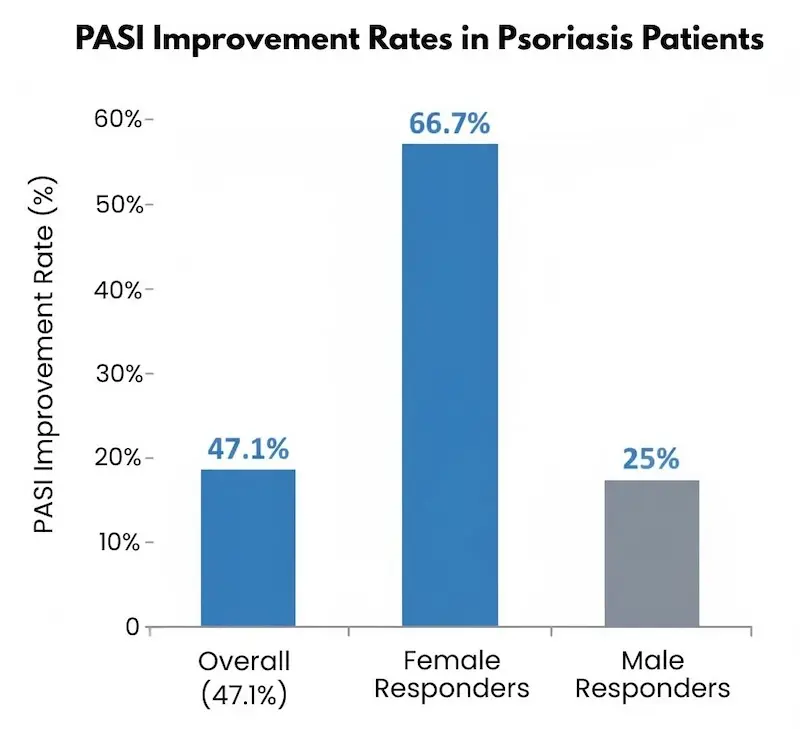
The most directly relevant study is the phase 1/2a single-arm trial by Cheng and colleagues, published in Signal Transduction and Targeted Therapy in 2022. The trial enrolled 17 patients with psoriasis who received human umbilical cord-derived MSC infusions, with follow-up over six months to assess both safety and efficacy. The researchers tracked the Psoriasis Area and Severity Index (PASI) — a standardised measure of disease extent and severity — along with the Physician’s Global Assessment (PGA) and laboratory parameters.
The results were carefully reported. A total of 47.1% (8/17) of the psoriasis patients had at least 40% improvement in the PASI score, and 17.6% (3/17) had no sign of disease or minimal disease based on the PGA score. The researchers also documented an important pattern in subgroup analysis: the efficiency was 25% (2/8) for males and 66.7% (6/9) for females. No obvious side effects were observed during treatment or follow-up.
A separate single-arm pilot trial by Yao and colleagues, published in Annals of Translational Medicine in 2021, evaluated adipose-derived MSC infusions in seven patients with moderate to severe psoriasis. The trial assessed PASI scores, body surface area involvement, visual analogue scale for symptoms, and Dermatology Life Quality Index (DLQI). Results suggested intravenous injection of AD-MSCs is safe and may be a therapeutic option for the treatment of patients with psoriasis, though the authors explicitly called for larger studies with control groups.
A phase I subcutaneous injection study by Bajouri and colleagues, published in Cell Journal in 2023, used a different delivery method: injecting allogeneic adipose-derived MSCs directly into psoriasis plaques in five patients. The primary finding was safety — no major adverse effects — with preliminary efficacy signals warranting further study.
A 2025 comprehensive review in Cell Biochemistry and Biophysics examined the accumulating body of MSC clinical trial data in psoriasis and concluded that mesenchymal stem cells represent a credible candidate for further investigation, while emphasising that currently there is no cure for the disease and long-term drug treatment is usually necessary, especially in moderate to severe cases.
What the Numbers Actually Mean for Psoriasis Patients
We want to be specific about how these numbers translate to patient experience, because cherry-picked summaries do real disservice.
A PASI 40 improvement is a meaningful clinical change — roughly equivalent to going from extensive moderate-to-severe disease to disease that covers a smaller area and feels less inflamed. It is not PASI 75 (75% improvement, often the benchmark for biologic trials) and it is not PASI 90 or 100. In the Cheng study, three of seventeen patients reached the level where physician assessment recorded essentially clear or minimal disease — a substantial response — but the majority of responders had partial rather than complete clearance.
The gender disparity in response is worth taking seriously. The reason for the difference is not yet fully understood — it may relate to hormonal influences on immune regulation, differences in baseline disease characteristics, or other factors that have not been isolated. What it means in practice is that we cannot make the same predictions for a male patient as for a female patient based on current data. We disclose this to every prospective patient before any treatment decision.
Equally important is what the data does not yet show. There are currently no large-scale randomised controlled trials with long-term follow-up demonstrating that response is sustained at the two-year, three-year, or five-year mark. The question of whether re-treatment is needed and at what interval is open. The field is moving forward but the picture is not yet complete, and patients deserve to know that before considering this approach.
How Stem Cell Therapy Engages the Psoriasis Immune Loop
Three Mechanisms Behind Psoriasis Stem Cell Therapy
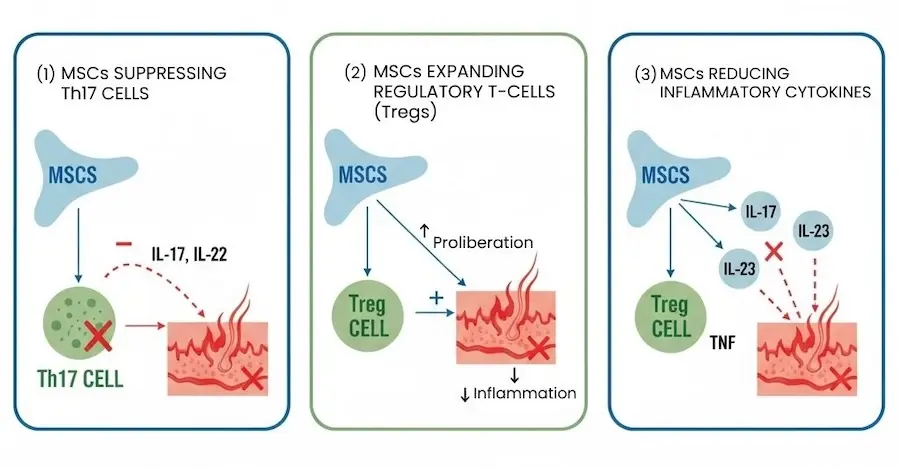
Mesenchymal stem cells (MSCs) approach psoriasis from a different direction than biologic drugs. Where biologics block specific inflammatory signals — one signal at a time — MSCs interact with the immune cells producing those signals.
The first mechanism is direct suppression of pathogenic immune cells. Research published in 2022 in Cell and Tissue Research demonstrated that human umbilical cord-derived MSCs suppress IL-17-producing γδ T cells in psoriasis-like inflammation models. These are the cells driving the production of the inflammatory signals that ordinarily require multiple biologic agents to block individually. By engaging the cells upstream, MSCs influence the production of several inflammatory mediators simultaneously rather than blocking one at a time.
The second mechanism is expansion of regulatory T-cells, often called Tregs. A separate 2026 study published in Frontiers in Immunology documented that UMSC transplantation increases the frequency of regulatory T cells (Tregs) and CD4+ memory T cells, while decreasing Th17 and CD4+ naïve T cells in the peripheral blood of some psoriasis patients. Tregs are the immune system’s own restraining cells — their function is essentially to tell other immune cells to stand down. In psoriasis, the balance between pro-inflammatory Th17 cells and restraining Tregs is shifted toward inflammation. MSC therapy may help shift it back. This is the same Treg-modulating mechanism that has been studied in other autoimmune conditions including rheumatoid arthritis stem cell therapy, where similar immunological dynamics are at play.
The third mechanism is reduction of the inflammatory cytokine environment. MSCs secrete signalling molecules that reduce the local and systemic production of TNF-alpha, IL-17, and IL-23 — the same proteins that biologic drugs target. The difference is that MSC-driven suppression comes from modulating the cells producing these cytokines rather than from binding the cytokines themselves. This may explain why MSC response, when it occurs, tends to develop gradually rather than producing the rapid effect seen with direct cytokine blockade.
It is important to be clear about what these mechanisms do not do. MSCs do not eliminate the underlying genetic predisposition to psoriasis. They do not change HLA typing. They do not guarantee permanent skin clearance. What they appear to do — based on current evidence — is shift the immune environment in a less inflammatory direction for some patients, for some period of time.
Why Allogeneic Umbilical Cord MSCs for Psoriasis Treatment
The cell source used in stem cell therapy meaningfully affects what is biologically possible. Two broad approaches exist: autologous (cells from the patient’s own body, typically bone marrow or fat) and allogeneic (cells from a healthy donor, commonly umbilical cord tissue from a consented birth).
In Japan, the regenerative medicine framework primarily permits autologous therapy. Cells are harvested from the patient, processed, and reinfused. The advantage is the absence of immune rejection concern. The disadvantage, particularly relevant in autoimmune diseases like psoriasis, is that the patient’s own MSCs reflect their existing immune environment. Several studies have suggested that MSCs harvested from patients with active autoimmune disease show altered properties compared to MSCs from healthy donors — and the question of whether these cells can effectively recalibrate the very immune system they themselves arose from is still unsettled.
The treatment we provide in Malaysia uses allogeneic umbilical cord-derived MSCs. These cells are sourced from the umbilical cord tissue of healthy newborns delivered with full donor consent. They are young in biological terms, have not been exposed to decades of immune challenges or pharmaceutical regimens, and are produced in standardised batches that allow consistent dosing and potency verification. Critically for psoriasis patients, these cells bring a healthy immunomodulatory signal from outside the patient’s existing dysregulated immune environment.
Allogeneic cord-derived MSCs show low immunogenicity — they express low levels of the surface proteins that ordinarily trigger immune rejection — which is why infusion of donor cells has not produced significant rejection problems across published clinical trials. The same cell source is used for other immune-mediated conditions where this immunomodulatory profile is relevant.
Who Is — and Is Not — a Good Candidate for Psoriasis Stem Cell Therapy
Psoriasis Patients Who Tend to Respond to Stem Cell Therapy
Based on available trial data and our clinical experience, psoriasis stem cell therapy tends to be most relevant for patients who fit a specific profile. They have confirmed moderate-to-severe psoriasis — typically PASI scores in the moderate-to-high range — that has not been adequately controlled by topical and systemic therapy. They have either tried one or more biologic agents with diminishing response, or are experiencing side effects from current treatment that affect daily life. They are not pursuing this treatment as a first-line option, and they understand that conventional rheumatological or dermatological care will continue alongside it.
Patients with shorter disease duration and less extensive structural skin damage may have somewhat more responsive disease, though this pattern is not yet definitive in the published literature. Those who are not pregnant or planning pregnancy in the immediate future, and who do not have active uncontrolled infections, severe systemic illness, or active malignancy, are clinically suitable for assessment.
For psoriasis patients who also have psoriatic arthritis — joint pain and inflammation in addition to skin disease — the same immunomodulatory mechanisms that engage the skin disease also engage the joint inflammation. The clinical assessment in these cases looks at both dimensions together, and overlap with related autoimmune presentations becomes relevant to candidacy decisions.
When Psoriasis Stem Cell Therapy Is Not the Right Approach
We are direct about situations where stem cell therapy is unlikely to provide meaningful benefit.
Patients whose current psoriasis is well-controlled on existing medication with manageable side effects probably do not have enough to gain from this treatment to justify the time, travel, and financial commitment. We say so clearly in initial consultation when this is our assessment.
Patients with active uncontrolled infections, including latent tuberculosis that has not been adequately screened and managed, should not undergo MSC therapy. Pregnant women, women planning pregnancy in the immediate future, and patients with active malignancy are not candidates. Severe uncontrolled comorbidities — particularly conditions affecting liver function, kidney function, or blood cell counts — may preclude treatment or require management before any consideration of MSC therapy.
Patients seeking guaranteed clearance of their skin, or patients hoping to be told that this treatment will eliminate their need for any further dermatological care, are people we typically counsel against proceeding. The evidence does not support those expectations, and we would rather have a difficult conversation at the consultation stage than disappoint someone after treatment.
Male patients specifically deserve to know about the gender response gap observed in the Cheng 2022 study. This does not mean we refuse male patients — many male patients have legitimate clinical reasons to pursue this option — but we discuss the published response disparity openly so that expectations are calibrated to the available data.
A Patient’s Account of Psoriasis Stem Cell Therapy
One Patient’s Decision to Try Psoriasis Stem Cell Treatment
A woman in her late forties. Diagnosed with chronic plaque psoriasis fourteen years earlier. Initial response to topical corticosteroids was reasonable for the first three or four years, but disease gradually extended beyond what topicals could manage. Methotrexate followed, then a TNF-alpha inhibitor (which worked for almost two years before secondary loss of response), then an IL-17 inhibitor (similar story — strong initial response, gradual return of plaques after roughly eighteen months). At the time of her initial consultation with us, she had been on her third biologic for ten months and was watching plaques reappear on her scalp, her shins, and the small of her back.
Her PASI score was in the moderate range. She was managing the disease, but the pattern of switching every eighteen to twenty-four months had become wearing. Her dermatologist was beginning to discuss the next agent in line. Before booking any travel, we reviewed her medical history, recent laboratory work, and previous treatment responses, and we were honest with her about what the data showed — including the better response rates seen in female patients, which her profile matched, but also the reality that approximately half of trial participants do not reach meaningful PASI improvement.
She came to Malaysia in mid-2024 for allogeneic umbilical cord MSC infusions. We continued her existing biologic regimen throughout — no medication adjustment was made before treatment, because such adjustments must be coordinated with the treating dermatologist, not made unilaterally as part of MSC therapy.
How the Six Months After Psoriasis Stem Cell Therapy Unfolded
The first six weeks produced no perceptible change. She had been told to expect this, but acknowledged afterward that the absence of change had been discouraging. By month three, the plaques on her scalp had begun to thin — not disappear, but the scaling reduced noticeably and the underlying redness softened. By month four, she reported that her shins, which had been her most stubborn area, were showing visible improvement for the first time in years. At the six-month assessment, her PASI score had reduced by approximately 45% from baseline. She had not cleared her skin entirely. Several plaques remained, though smaller and less inflamed than before.
She continued her biologic at the same dose throughout, with her dermatologist’s knowledge. No promise was made about reducing or eliminating medication, and no medication adjustment was attempted from our side. What changed for her was practical: she could wear shorter sleeves on summer days for the first time in years. The morning routine of applying topical agents to specific plaques was meaningfully shorter. She described her experience as “not a clearance, but a measurable shift in the direction I’d given up expecting.”
We continue to follow her. Whether the effect will be sustained at twelve months and beyond is something the follow-up will tell us. We do not yet know.
This is an anonymised account shared with the patient’s consent. Individual outcomes vary substantially. This experience does not represent what all patients will experience, and the published trial data shows that a significant minority do not achieve meaningful improvement.
What Recovery After Psoriasis Stem Cell Therapy Looks Like
The recovery from intravenous MSC infusion is mild compared with most procedural treatments. Patients are usually back to normal daily activity within twenty-four hours. Mild fatigue or low-grade fever within the first 24 to 48 hours after infusion is reported by some patients, thought to reflect the immune system’s response to the cells, and usually resolves without intervention.
The key communication we make about recovery is patience. Unlike a topical steroid or even a biologic injection, which can produce visible change within days or weeks, MSC therapy works through a slower biological process. Cells migrate, modulate, and signal over weeks and months. Most responders in published trials began to notice changes between weeks 8 and 16, with continued evolution of effect over the six-month follow-up period. Expecting visible change in the first month often leads to inaccurate early conclusions about whether the treatment is working.
Honest Risks and Limitations of Psoriasis Stem Cell Therapy
Known Side Effects in Psoriasis Stem Cell Trials
The safety profile across published MSC trials for psoriasis has been generally favourable, though long-term safety data beyond two years remains limited.
The most commonly reported short-term effects are mild fever in the 24 to 48 hours following infusion, generalised fatigue, and occasionally mild headache. These effects typically resolve without specific intervention. In the Cheng 2022 trial of 17 patients, no obvious side effects were observed during treatment or the six-month follow-up. In the Yao 2021 pilot trial of seven patients, intravenous AD-MSC infusion was reported as safe with no serious adverse events. The Bajouri 2023 phase I trial using subcutaneous administration similarly reported no major adverse effects.
Theoretical risks specific to MSC therapy include the possibility of immune sensitisation to donor cells with repeated administration, the unproven but theoretical question of whether immunomodulation could affect surveillance against atypical cells, and the as-yet-incompletely-mapped long-term effects beyond the published follow-up windows. These risks are discussed openly with each patient before treatment.
Patients who continue biologic therapy alongside MSC treatment should be aware that the combined immunomodulatory effect creates a theoretical infection vulnerability that warrants ongoing vigilance. We do not ask patients to discontinue their existing medication for MSC therapy — those decisions must remain with the treating dermatologist — but we communicate this combined exposure clearly.
What Stem Cell Therapy Cannot Do for Psoriasis
We want to be specific about the boundaries.
MSC therapy does not eliminate the underlying immunogenetic basis of psoriasis. The HLA-C*06:02 association, the Th17 dysregulation tendency, and the broader immune predisposition are not changed by infusion of donor cells. What may change is the activity state of the immune cells in a given window of time.
MSC therapy does not guarantee skin clearance. Based on the Cheng 2022 data, roughly half of treated patients did not reach the 40% PASI improvement threshold, and roughly four out of five did not reach the clear or minimal disease state on PGA. We cannot reliably predict who will fall into which category before treatment, though gender appears to be one variable based on current data.
MSC therapy is not a replacement for ongoing dermatological care. Patients who undergo this treatment will continue to need monitoring of their disease, management of any flares, and in most cases continuation of existing medication. The treatment is intended to engage the immune dysregulation that drives the disease, not to substitute for the surveillance that comes from a long-term dermatology relationship.
MSC therapy will not work quickly. Patients who need rapid clearance for a specific event, professional reason, or psychological urgency may find the multi-month timeline poorly matched to their needs. Topical agents, phototherapy, or short-term systemic intervention may be more appropriate for those situations.
And MSC therapy is not yet supported by large phase III randomised controlled trials with long-term follow-up. The current evidence base is phase 1/2a in scale, with follow-up periods generally measured in months rather than years. We disclose this honestly. The field is advancing, but it is not yet where established treatments sit in terms of evidence depth.
FAQ About Psoriasis Stem Cell Therapy
No. We specifically ask patients to continue their existing prescribed regimen unless their treating dermatologist instructs otherwise. Discontinuation of biologics often results in disease flare, and decisions about adjusting medication must remain with the dermatologist managing ongoing care. MSC therapy is intended to work alongside, not in place of, conventional treatment.
Most patients in our programme receive between one and three infusions during their treatment visit. The exact number is determined during pre-treatment assessment based on current disease activity, treatment history, and overall clinical picture. Some patients consider follow-up sessions at later intervals, but this is decided individually based on response and is not a fixed protocol.
Most responders in published trials began noticing changes between 8 and 16 weeks after treatment, with continued evolution of effect through the six-month follow-up. Expecting visible improvement within the first month often leads to inaccurate conclusions. We ask patients to maintain photographic and PASI documentation throughout the follow-up period so that gradual change is tracked accurately.
In most jurisdictions, no. This treatment is currently considered an emerging therapy and is typically not covered by national health systems or private insurance. We do not discuss specific pricing in informational articles, but the cost should be considered carefully alongside the realistic probability of response based on published data. We are direct about this in initial consultation.
Yes, and the same immunomodulatory mechanisms that engage skin disease may also engage joint inflammation. Patients with both psoriasis and psoriatic arthritis are typically assessed for both dimensions of disease, and where there is significant joint involvement, additional considerations from the assessment of inflammatory joint conditions apply. Pre-treatment evaluation in these cases includes both dermatological and rheumatological factors.
Next Step
If you have read this far, you are most likely someone who has been through several rounds of treatment and is genuinely trying to assess whether stem cell therapy is worth a closer look for your specific situation.
We offer free online consultations for exactly this kind of conversation. The goal of that first call is not to enrol you in treatment — it is to look at your case honestly, share whether your profile falls within the range where this approach has shown evidence of benefit, and tell you straightforwardly if we think it does not. You do not need to bring a decision. You can bring your questions, your treatment history, and your photographs, and we will talk through what the data does and does not support for someone in your position.
References
- Cheng L, Wang S, Peng C, Zou X, Yang C, Mei H, et al. Human umbilical cord mesenchymal stem cells for psoriasis: a phase 1/2a, single-arm study. Signal Transduction and Targeted Therapy. 2022;7:263. https://doi.org/10.1038/s41392-022-01059-y
- Yao D, Ye S, He Z, Huang Y, Deng J, Wen Z, et al. Adipose-derived mesenchymal stem cells (AD-MSCs) in the treatment for psoriasis: results of a single-arm pilot trial. Annals of Translational Medicine. 2021;9(20):1653. https://doi.org/10.21037/atm-21-5028
- De Jesus MM, Santiago JS, Trinidad CV, See ME, Semon KR, Fernandez MO Jr, Chung FS. Stem cell therapy as a potential treatment option for psoriasis. Anais Brasileiros de Dermatologia. 2022;97(4):408–424. https://doi.org/10.1016/j.abd.2021.09.011
- Chen H, Niu JW, Ning HM, Pan X, Li XB, Li Y, et al. Mesenchymal stem cells alleviate moderate-to-severe psoriasis by reducing the production of type I interferon (IFN-I) by plasmacytoid dendritic cells (pDCs). Stem Cells International. 2019;2019:6961052. https://doi.org/10.1155/2019/6961052
- Chen Z, Wang H, Xia Y, Yan F, Lu Y. Human umbilical cord-derived mesenchymal stem cells ameliorate psoriasis-like dermatitis by suppressing IL-17-producing γδ T cells. Cell and Tissue Research. 2022;388(3):549–563. https://doi.org/10.1007/s00441-022-03616-x
- Bertolini M, Bevilacqua J, Caruso M, et al. Mesenchymal stem cells for the treatment of psoriasis: a comprehensive review. Clinical and Experimental Rheumatology. 2020;38(5):964–974. https://pubmed.ncbi.nlm.nih.gov/32386432/
- GBD 2021 Diseases and Injuries Collaborators. Global burden of psoriasis from 1990 to 2021 and potential factors: a systematic analysis. Journal of Investigative Dermatology. 2025. https://doi.org/10.1016/j.jid.2025.05.024
- Parisi R, Iskandar IYK, Kontopantelis E, Augustin M, Griffiths CEM, Ashcroft DM. Global epidemiology of psoriasis: a systematic review of incidence and prevalence. Journal of Investigative Dermatology. 2020;140(3):568–576. https://doi.org/10.1016/j.jid.2019.09.029
- Inzinger M, Wippel-Slupetzky K, Weger W, Stary G, Bauer W, Mlynek A, Kopp T. Failure rates and survival times of systemic and biologic therapies in treating psoriasis: a retrospective study. Journal of Dermatological Treatment. 2021;32(6):587–593. https://doi.org/10.1080/09546634.2019.1688756
- Bajouri A, Dayani D, Taj-Sharghi A, Khodayar Pardo P, Tootoonchi M, Aghdami N, et al. Subcutaneous injection of allogeneic adipose-derived mesenchymal stromal cells in psoriasis plaques: clinical trial phase I. Cell Journal. 2023;25(6):363–371. https://doi.org/10.22074/cellj.2023.1973793.1167