
Pulmonary Fibrosis Stem Cell Therapy | Can Lung Scarring Slow Without Transplant?
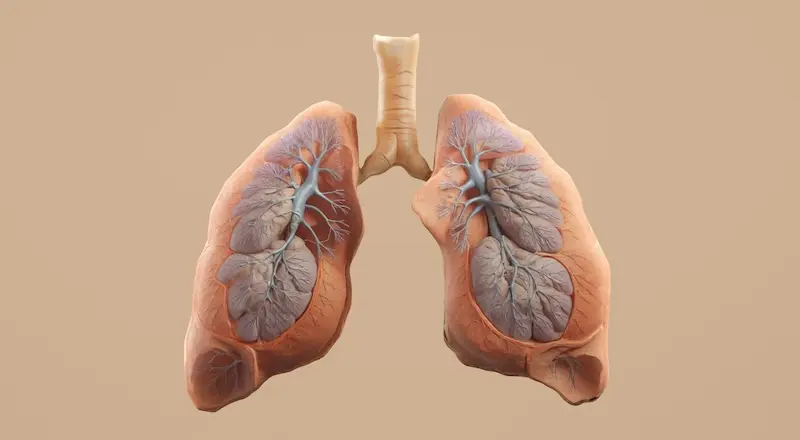
The flight of stairs you climbed without thinking five years ago now requires a stop at the landing. A short conversation leaves you out of breath. You have noticed yourself quietly declining invitations that involve walking — not because you are not interested, but because the breathlessness afterward has become its own kind of dread.
Around 3 million people worldwide are living with idiopathic pulmonary fibrosis (IPF), the most common and best-studied form of pulmonary fibrosis. The honest reality of the diagnosis is one that conventional medicine has struggled with for decades: median survival from diagnosis is 3 to 5 years, and the two approved drugs — pirfenidone and nintedanib — can slow the disease but cannot stop or reverse it. Lung transplantation exists as an option for a small fraction of patients, but donor supply, age limits, and the burden of lifelong immunosuppression place it out of reach for most people who carry this diagnosis.
This is the context in which patients begin searching for something else. In recent years, stem cell therapy for pulmonary fibrosis has moved from a theoretical concept into early-phase clinical trials, with peer-reviewed data now available in journals such as Chest and Stem Cells Translational Medicine. What the trials show is more nuanced than the marketing claims you may have seen elsewhere — and, we think, more useful.
Our clinic in Malaysia has been working in regenerative medicine for over seven years, with more than 200 patients treated using allogeneic (donor-derived) umbilical cord mesenchymal stem cells across multiple conditions. We do not offer this treatment as a cure for pulmonary fibrosis, and we will be direct in this article about what the data does and does not support.
Table of Contents
- Why Pulmonary Fibrosis Cannot Heal Through Natural Repair
- The Limits of Antifibrotic Drugs for Pulmonary Fibrosis
- Lung Transplant for Pulmonary Fibrosis: When It Works and When It Isn't an Option
- How Stem Cells Approach Pulmonary Fibrosis at the Tissue Level
- What Published Pulmonary Fibrosis Stem Cell Trials Have Actually Shown
- The Allogeneic Umbilical Cord MSC Approach for Pulmonary Fibrosis
- Who Is a Realistic Candidate for Pulmonary Fibrosis Stem Cell Therapy
- A Patient's Twelve-Month Account After Pulmonary Fibrosis Stem Cell Therapy
- Honest Risks and What Stem Cells Cannot Do for Pulmonary Fibrosis
- FAQ About Pulmonary Fibrosis Stem Cell Therapy
- If You're Considering Pulmonary Fibrosis Stem Cell Therapy
- References
Why Pulmonary Fibrosis Cannot Heal Through Natural Repair
How Alveolar Damage Triggers the Scarring Process in Pulmonary Fibrosis
The lungs are built around a specific architecture. At the end of the smallest airways sit alveoli — tiny, balloon-like sacs lined by a single layer of epithelial cells. This thin lining is where oxygen passes from inhaled air into the bloodstream. There are roughly 300 million alveoli in each adult lung, and the total surface area they create is comparable to the size of a tennis court.
Pulmonary fibrosis begins when these alveolar epithelial cells are damaged faster than they can be replaced. The triggers vary — environmental exposures, autoimmune disease, certain medications, and in IPF specifically, a still-unknown initiating injury — but the downstream process follows a similar path. Damaged cells release signals that recruit repair cells called fibroblasts. In a healthy response, the fibroblasts lay down a temporary scaffold, the epithelial layer is rebuilt over it, and the scaffold is broken down.
In pulmonary fibrosis, this orderly process breaks down. The fibroblasts continue depositing collagen and other matrix proteins long after the original injury, and many of them transform into a more aggressive form called myofibroblasts. The result is scar tissue — fibrosis — that progressively replaces the delicate alveolar walls. Once this tissue is laid down, the body lacks an effective biological mechanism to remove it.
Why the Scar Tissue in Pulmonary Fibrosis Continues to Spread
The cruelest feature of pulmonary fibrosis is that the scarring is not a single, contained event. Stiff scar tissue distorts the mechanical forces inside the lung, which itself can trigger further epithelial damage at the borders of existing fibrosis. Each new area of damage initiates the same dysfunctional repair process, and the disease advances.
This is why pulmonary fibrosis tends to be relentlessly progressive rather than stable. The pathology is self-reinforcing, and unlike conditions where there is at least some opportunity for tissue maintenance, the lung’s intrinsic repair systems are overwhelmed by the very damage they are trying to address.
Understanding this is essential to understanding both why current treatments hit a ceiling, and why the biological mechanisms that stem cells may offer have drawn serious clinical interest.
The Limits of Antifibrotic Drugs for Pulmonary Fibrosis
What Pirfenidone and Nintedanib Actually Achieve in Pulmonary Fibrosis
Pirfenidone (Esbriet) and nintedanib (Ofev) — the two antifibrotic medications approved for IPF — represent the most important pharmaceutical advance in pulmonary fibrosis treatment in decades. The CAPACITY, ASCEND, and INPULSIS pivotal trials demonstrated that both drugs slow the rate of forced vital capacity (FVC) decline by roughly half compared to placebo. Forced vital capacity is the standard measurement of how much air a person can forcefully exhale, and it is the most reliable single number tracked in pulmonary fibrosis follow-up.
That is genuine, hard-won clinical benefit, and these drugs are appropriately considered the foundation of pulmonary fibrosis care. Patients who can tolerate them and start treatment early tend to do measurably better than those who do not.
What these medications do not do is reverse fibrosis, restore lost lung function, or stop the disease entirely. A patient on pirfenidone or nintedanib continues to decline — just more slowly. The drugs alter the slope of the trajectory; they do not bend it back toward recovery.
The Side Effect Burden That Limits Antifibrotic Treatment for Pulmonary Fibrosis
The other reality of antifibrotic therapy is tolerability. Pirfenidone commonly causes photosensitivity, gastrointestinal upset, fatigue, and a distinctive skin reaction in sun-exposed areas that affects daily life for many patients. Nintedanib produces diarrhea in approximately 60 percent of patients in trials, sometimes severely enough to require dose reduction or discontinuation, alongside elevated liver enzymes that require regular monitoring.
A meaningful proportion of patients reduce their dose, discontinue treatment, or never start because of these side effects. For those patients, the standard treatment ceiling arrives much earlier than for others.
This is the gap that drives many pulmonary fibrosis patients to look beyond their pulmonologist’s office for additional options. The drugs help — they just do not help enough, and for some patients they cannot be tolerated at all.
Lung Transplant for Pulmonary Fibrosis: When It Works and When It Isn’t an Option
Why Lung Transplantation Is Considered the Most Effective Pulmonary Fibrosis Treatment
For appropriately selected patients with advanced pulmonary fibrosis, lung transplantation is the most effective treatment available. It is also the only treatment that addresses the underlying problem of fibrotic tissue replacement — by replacing the affected lung with a healthy one.
Five-year survival after lung transplant for IPF is approximately 50 percent, which is a substantial improvement over the natural course of advanced disease. For patients who reach transplant in good condition and tolerate the procedure, the change in daily life can be dramatic: breathlessness resolves, oxygen requirements end, and physical capacity returns to ranges most patients have not experienced for years.
Why Most Pulmonary Fibrosis Patients Will Never Receive a Lung Transplant
The reality of access is more sobering. Donor lung supply is severely limited in every country in the world, and demand from end-stage pulmonary disease patients consistently exceeds availability by a large margin. Age limits — generally around 65 to 70 — exclude the majority of pulmonary fibrosis patients, since the disease typically presents in older adults.
Beyond access, transplant carries substantial risk. The surgery itself has mortality in the range of 10 to 15 percent in the first year. Lifelong immunosuppression brings infections, kidney damage, and increased cancer risk. Chronic lung allograft dysfunction — a progressive, immune-related deterioration of the transplanted lung — affects most recipients within 5 to 10 years.
For many pulmonary fibrosis patients in their late 60s and 70s, on optimal antifibrotic therapy but watching their lung function decline anyway, transplant is not a realistic option. It is precisely this population that has driven much of the patient interest in cell-based approaches.
How Stem Cells Approach Pulmonary Fibrosis at the Tissue Level
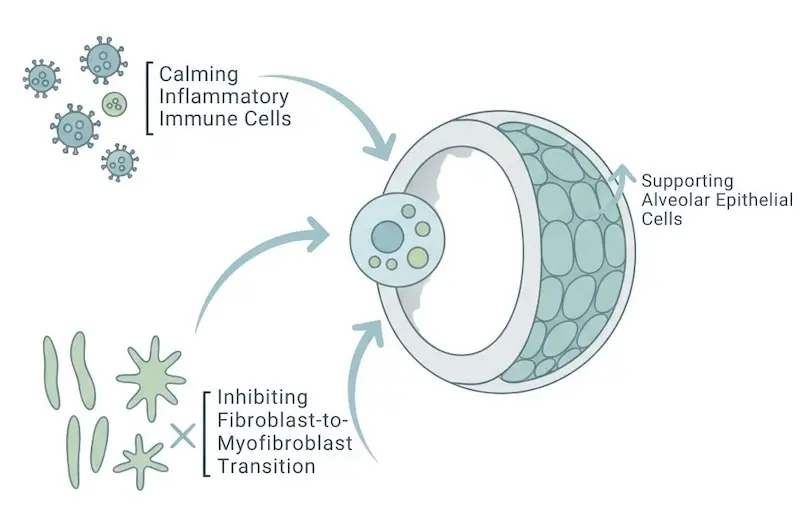
Three Biological Mechanisms Behind Stem Cell Therapy for Pulmonary Fibrosis
Mesenchymal stem cells (MSCs) — the type used in most pulmonary fibrosis clinical trials — do not work by transforming themselves into new lung tissue and physically replacing fibrotic areas. That early hypothesis has not held up under closer biological investigation. What the research has identified instead are three indirect but potentially meaningful mechanisms.
The first is immunomodulation. Pulmonary fibrosis is driven in part by chronic, low-grade inflammation that keeps the fibroblast population active and the scarring process running. MSCs release signaling proteins that calm this inflammatory environment, shifting immune cells in the lung from a pro-inflammatory state toward a more balanced one. This is similar to the mechanism that has been studied in autoimmune inflammatory conditions such as rheumatoid arthritis, where stem cell therapy modulates immune-driven tissue damage rather than blocking a single downstream protein.
The second mechanism is anti-fibrotic signaling. MSCs secrete molecules that directly inhibit the fibroblast-to-myofibroblast transition — the cellular shift that drives ongoing collagen deposition. In animal models of pulmonary fibrosis, MSC administration has been shown to reduce collagen accumulation and decrease the activity of the enzymes that drive fibrotic remodeling.
The third mechanism is alveolar epithelial support. The epithelial cells lining the alveoli have a limited intrinsic capacity to repair themselves once they are damaged. MSCs release growth factors that support the survival and function of remaining alveolar epithelial cells, and may help maintain the integrity of the alveolar barrier that is progressively lost in advancing pulmonary fibrosis.
How Stem Cell Mechanisms Differ from Antifibrotic Drug Action in Pulmonary Fibrosis
The mechanistic distinction between stem cells and antifibrotic drugs is worth making clearly. Pirfenidone and nintedanib are small molecules that block specific signaling pathways involved in fibrosis. They produce their effect by occupying receptors or inhibiting enzymes, and the effect lasts only as long as the drug remains in the body — which is why they must be taken every day.
MSCs operate differently. They release a broad spectrum of signaling molecules into the local tissue environment, and they appear to shift the behavior of resident cells already in the lung. A similar conceptual framework applies in other chronic conditions where ongoing tissue damage is the central problem rather than a single repairable injury — for example, in heart failure, where stem cell therapy targets the inflammatory environment around viable but stressed cardiac muscle rather than rebuilding scar tissue.
It is important to be clear about the limits of this approach: these mechanisms do not regenerate already-fibrotic lung tissue. What they may do is slow the rate of further damage and create conditions in which the remaining functional lung can be preserved longer. This is meaningfully different from a cure, and we frame it as such with every patient.
What Published Pulmonary Fibrosis Stem Cell Trials Have Actually Shown
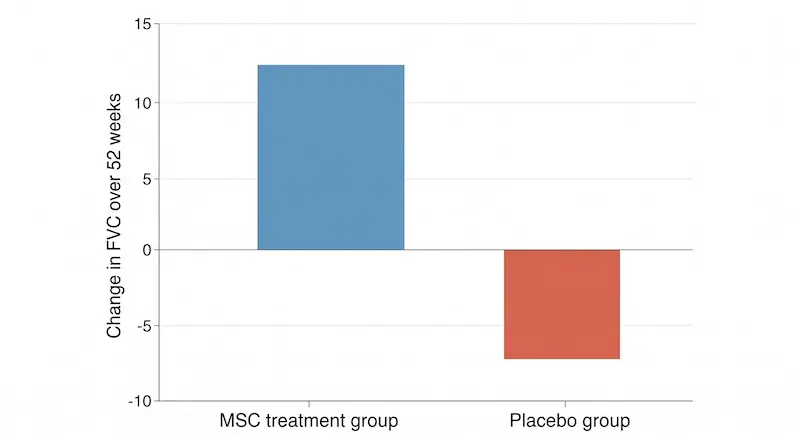
Key Clinical Trials on Stem Cell Therapy for Pulmonary Fibrosis
The clinical trial landscape for pulmonary fibrosis stem cell therapy is genuinely younger than for cardiac applications, but several Phase I and early Phase II studies have now been completed and published in peer-reviewed journals.
The AETHER trial (Glassberg et al., Chest, 2017) was the first U.S.-based study designed to evaluate the safety of allogeneic bone marrow-derived MSCs in IPF. Nine patients with mild-to-moderate IPF received a single intravenous infusion at one of three doses: 20, 100, or 200 million cells. Over 60 weeks of follow-up, no serious adverse events attributable to the stem cells were observed. Two deaths occurred during the study, both from IPF progression rather than treatment-related causes. The trial established that allogeneic MSC infusion was feasible and well-tolerated in IPF patients — a necessary first step before efficacy could be properly assessed.
A particularly informative study by Averyanov and colleagues (Stem Cells Translational Medicine, 2020) took a different approach. Twenty patients with rapidly progressing IPF received either high cumulative doses of bone marrow-derived MSCs (up to 2 billion cells delivered in multiple infusions) or placebo, with 52 weeks of follow-up. The treated group showed an increase in forced vital capacity over the treatment period, while the placebo group continued the expected decline. Six-minute walk distance also improved meaningfully in the treated group. Diffusing capacity (DLCO), a measure of how efficiently oxygen crosses from alveoli into the bloodstream, was also better preserved in the treated group.
The Tzouvelekis study (Journal of Translational Medicine, 2013) used a different cell type — adipose-derived stromal vascular fraction — delivered endobronchially in 14 patients with IPF. At six months, the trial reported marginal improvements in six-minute walk distance and forced vital capacity, with no serious adverse events related to the cells.
More recent work has explored autologous P63-positive lung progenitor cells isolated from a patient’s own airway epithelium and expanded in laboratory culture before bronchoscopic delivery. The Phase 1 trial of this approach showed safety and preliminary signals of efficacy, though with the caveat that it requires laboratory expansion of patient-derived cells and is not yet available outside trial settings.
What These Pulmonary Fibrosis Stem Cell Trial Numbers Actually Mean
A few observations are worth making honestly.
First, the trials are small. AETHER had nine patients in the dose-escalation phase. The Averyanov study had twenty. Tzouvelekis had fourteen. These are Phase I and early Phase II numbers, not the thousands of patients enrolled in pivotal antifibrotic drug trials. The signal of efficacy — particularly in the Averyanov data showing improvement against placebo decline — is encouraging, but it has not yet been confirmed in the large randomized trials that would establish standard-of-care status.
Second, response is variable. Across the published studies, some patients showed measurable improvement in lung function parameters, others remained stable, and some continued to decline. There is currently no biomarker that reliably predicts who will respond and who will not.
Third, the trials studied patients with relatively preserved baseline function — generally FVC above 50 percent of predicted and DLCO above 30 to 35 percent. Patients with end-stage disease have not been a focus of these trials, and the limited data available does not support stem cell therapy for advanced pulmonary fibrosis with extensive established fibrosis.
We share these numbers and qualifications openly because the alternative — selective reporting of best-case outcomes — does not help patients make informed decisions. The published data justifies cautious optimism in the right patient profile. It does not justify the “80 percent improvement” claims that some clinic websites display without accompanying trial citations.
The Allogeneic Umbilical Cord MSC Approach for Pulmonary Fibrosis
Why Cell Source Matters in Pulmonary Fibrosis Treatment
Stem cell therapy for pulmonary fibrosis can be structured around two fundamentally different cell sources, and the difference has meaningful clinical implications.
Autologous treatment — using cells harvested from the patient’s own body, typically from bone marrow or adipose tissue — has the advantage of immunological compatibility. There is no rejection risk because the cells are genetically the patient’s own. This is the approach most commonly used in Japan under the existing regenerative medicine framework.
The disadvantage, particularly relevant for pulmonary fibrosis patients who are typically in their 60s or 70s, is that the cells reflect the age and health status of the body they came from. Studies have shown that MSCs from older donors and from patients with chronic inflammatory disease have reduced proliferative capacity, lower secretion of beneficial signaling molecules, and diminished anti-fibrotic potency. For a pulmonary fibrosis patient in their seventh decade, the cells available from their own body may be a less robust starting point than would be ideal.
Why We Use Allogeneic Umbilical Cord-Derived MSCs for Pulmonary Fibrosis
The cells we use in Malaysia are sourced from the umbilical cord tissue of healthy newborns, donated with full parental consent at the time of a routine delivery. The cells are extracted from a layer called Wharton’s jelly, which contains a particularly potent population of MSCs.
These cells are young in biological terms — produced from tissue collected within minutes of birth. They have not been exposed to decades of environmental stressors, chronic inflammation, or pharmaceutical exposures. In laboratory studies, umbilical cord MSCs consistently demonstrate higher proliferative capacity, stronger immunomodulatory function, and greater secretion of beneficial signaling molecules compared to adult-derived MSCs.
Because they express low levels of the surface markers that ordinarily trigger immune rejection, umbilical cord MSCs are tolerated when administered to unrelated recipients. The AETHER trial specifically demonstrated that allogeneic MSC infusion in IPF patients did not provoke significant immune reactions over 60 weeks of follow-up, addressing what was once a major theoretical concern in the field.
The clinical relevance for pulmonary fibrosis is that the cells delivered to a patient’s lungs come from a young, healthy biological source rather than from the patient’s own aged, inflammation-exposed tissue. Whether this difference produces consistently better outcomes than autologous approaches has not been definitively settled in head-to-head pulmonary fibrosis trials. It is one factor among several in a treatment decision, and we discuss it openly with patients rather than presenting it as a settled superiority claim.
Who Is a Realistic Candidate for Pulmonary Fibrosis Stem Cell Therapy
Pulmonary Fibrosis Patients Who May Benefit From Stem Cell Therapy
Based on the published trial data and our clinical experience, the patient profile most likely to derive benefit from MSC therapy for pulmonary fibrosis shares several characteristics. A confirmed diagnosis of pulmonary fibrosis with imaging consistent with usual interstitial pneumonia or another well-defined fibrotic interstitial lung disease. Mild to moderate disease severity, generally with FVC at or above 50 percent of predicted and DLCO at or above 30 to 35 percent of predicted. Disease that is stable or only slowly progressing on current antifibrotic therapy, rather than rapidly decompensating. Patients who are tolerating their antifibrotic medication and can continue it during and after stem cell treatment — we do not ask patients to discontinue established therapy. Reasonable overall health, without active malignancy, active infection, or other contraindications to cell therapy. And realistic expectations: an understanding that stem cell therapy is intended to slow further decline and potentially modestly improve lung function in responders, not to reverse established fibrosis.
Pulmonary Fibrosis Situations Where Stem Cell Therapy Is Not Appropriate
There are patient profiles where we either decline treatment or have a direct conversation about why we do not think this is the right path.
End-stage pulmonary fibrosis with FVC well below 50 percent, severe oxygen dependence, and extensive honeycombing throughout both lungs represents a stage at which the remaining viable tissue is limited, and the published trials have not included this population. For these patients, transplant evaluation (if eligible) or palliative care planning is the more appropriate conversation.
Acute exacerbation of pulmonary fibrosis — a sudden, rapid worsening that can be triggered by infection or unknown causes — is a medical emergency that requires hospital-based management, not an elective cell therapy procedure.
Active pulmonary infection, untreated tuberculosis, or active malignancy are contraindications. Significant pulmonary hypertension with right heart strain requires careful evaluation, as some patients with advanced cardiopulmonary compromise are not suitable candidates for intravenous cell infusion.
We are also direct with patients who are seeking a cure or guaranteed reversal. The current evidence does not support those framings, and any clinic that offers them is not representing the published data accurately.
A Patient’s Twelve-Month Account After Pulmonary Fibrosis Stem Cell Therapy
Why One Pulmonary Fibrosis Patient Pursued Stem Cell Therapy
A man in his mid-sixties had been living with a diagnosis of idiopathic pulmonary fibrosis for three and a half years when he first contacted us. He was on nintedanib at a reduced dose, having struggled with severe diarrhea at the standard dose. His most recent pulmonary function tests showed FVC at 64 percent of predicted and DLCO at 41 percent of predicted — moderate disease, declining slowly but steadily despite treatment. He was using supplemental oxygen during exercise but not at rest. Walking from his car to a restaurant table required a stop midway. He had previously been an avid cyclist; he had not been on a bicycle in two years.
After detailed review of his imaging, his pulmonary function trend, and his current regimen, we accepted him for treatment. Before any infusion, we were direct with him about three things. We could not predict his individual response. We would not ask him to modify his nintedanib regimen — that decision belonged to his pulmonologist. And the goal of treatment was to slow further decline and potentially stabilize his current function, not to restore lost capacity.
How Lung Function Changed Over Twelve Months After Pulmonary Fibrosis Treatment
He received allogeneic umbilical cord MSC infusion over three sessions during a two-week visit to Malaysia in early 2025.
The first two months produced no noticeable change. He described this period as discouraging, particularly given the travel involved. By the fourth month, he reported that his morning routine — historically the most breathless part of his day — was easier. By the six-month follow-up, his FVC had increased to 67 percent of predicted, and his DLCO had stabilized at 42 percent. Six-minute walk distance had improved by 38 meters. He had not eliminated supplemental oxygen, and he had not returned to cycling. But he could walk his dog around the block without stopping.
At twelve months, his lung function parameters had not declined further. He continues on nintedanib at the same reduced dose. He describes the change as “a year of holding ground rather than losing it” — a framing that captures what realistic outcomes in this treatment look like for many responders.
※ This is an anonymized account based on actual clinical experience. Individual results vary and cannot be guaranteed for any specific patient. A significant minority of patients in this disease category do not show measurable improvement.
Honest Risks and What Stem Cells Cannot Do for Pulmonary Fibrosis
Known Side Effects of Stem Cell Therapy in Pulmonary Fibrosis Trials
The safety profile of allogeneic MSC infusion in pulmonary fibrosis trials has been generally reassuring. This is not a dismissal of risk — it is what the accumulated clinical data shows.
Mild fever in the 24 to 48 hours after infusion is reported by a minority of patients, generally thought to reflect mild immune recognition of the donor cells rather than a clinically significant reaction. Transient fatigue and mild headache are also reported. These effects typically resolve without intervention.
The theoretical risk of pulmonary embolism from intravenous infusion of MSCs has been discussed extensively in the field. The cells are larger than red blood cells, and animal studies have shown that a substantial proportion lodge in the pulmonary vasculature during the first pass after IV infusion. In clinical trials with appropriate dose and infusion rates, clinically significant pulmonary embolic events have been very uncommon. The AETHER trial reported no serious infusion-related events at doses up to 200 million cells.
Concerns about pro-fibrotic reprogramming — the theoretical possibility that MSCs delivered into a fibrotic lung environment might themselves differentiate into fibroblasts and worsen scarring — have been raised in preclinical literature. The clinical trial data to date has not shown this effect, but long-term follow-up data beyond two years remains limited, and this is an honest area of ongoing investigation.
What Stem Cell Therapy Cannot Do for Pulmonary Fibrosis
This section matters as much as any other in this article.
Stem cell therapy cannot reverse established fibrosis. The scar tissue that has already replaced functional alveolar units does not regenerate. Patients hoping for restoration of lung function lost to long-standing disease are likely to be disappointed by realistic outcomes.
Stem cell therapy is not a substitute for antifibrotic medication. Patients who proceed with cell therapy continue their pirfenidone or nintedanib unless their pulmonologist directs otherwise — and that decision belongs to their pulmonologist, not to us.
A meaningful proportion of patients show no measurable response. Across the published trials, response rates have varied substantially, and there is currently no reliable way to predict in advance who will respond. We share this fact with every patient before they make a decision.
Long-term durability of any benefit is an open question. The longest follow-up periods in published pulmonary fibrosis MSC trials extend to one or two years. Whether benefits seen at six to twelve months persist over multi-year horizons, and whether repeat infusions are necessary to maintain effect, are questions the field has not yet answered.
If a clinic has told you that stem cell therapy will reverse your pulmonary fibrosis, restore your lung function to normal, or replace your antifibrotic medication, that clinic is not representing the evidence accurately.
What Recovery After Pulmonary Fibrosis Stem Cell Therapy Looks Like
The recovery from intravenous MSC infusion is minimal in physical terms. There is no incision, no general anesthesia, and no extended hospital stay. Most patients are comfortable traveling home within two to three days of the final infusion.
The biological response, however, unfolds slowly. Most patients who respond do not notice changes in the first six to eight weeks. Improvements in functional capacity — reduced breathlessness on familiar activities, longer walking distance, less anticipatory dread about exertion — typically begin to emerge between weeks 8 and 16. Changes in objective pulmonary function parameters, when they occur, are usually visible at the three to six month follow-up.
Patients who have not noticed any subjective or objective change by six months have generally not gone on to show changes at one year. This is honest information, and we share it before treatment so that expectations are calibrated.
FAQ About Pulmonary Fibrosis Stem Cell Therapy
No. We specifically ask patients to continue their pirfenidone or nintedanib at the dose prescribed by their pulmonologist. Stem cell therapy is intended to work alongside established treatment, not as a replacement. Any modification of antifibrotic medication should be made by your treating pulmonologist based on tolerability and response, not by us.
The most important difference is the cell source. In Japan, the regulatory framework typically supports autologous treatment, meaning cells are harvested from the patient’s own bone marrow or adipose tissue. In Malaysia, we use allogeneic umbilical cord-derived MSCs, which are sourced from healthy newborns and are biologically younger and more potent than cells available from an older patient’s own body. There is no harvesting procedure required for the patient, and no waiting period for laboratory expansion of patient-derived cells.
The honest answer is that we do not yet have long-term data extending beyond two years from published clinical trials. Some patients in our program have maintained stable lung function over 12 to 18 months of follow-up; others have continued to decline despite treatment. Whether repeat infusions would extend or restore any benefit is an open question that the broader field is actively researching.
Patients who use supplemental oxygen only during exercise or sleep are generally candidates if other criteria are met. Patients who require continuous oxygen at rest typically have more advanced disease, and the published trial data is more limited in this population. We evaluate each case individually based on current pulmonary function, imaging, and overall clinical status.
In Malaysia, this treatment is conducted under the country’s regulated medical practice framework for cell-based therapy. Pulmonary fibrosis stem cell therapy is not currently approved as a standard of care by major regulatory authorities such as the U.S. FDA or European EMA, and remains in the clinical investigation stage globally. Patients considering treatment should understand they are receiving a therapy supported by Phase I and early Phase II clinical evidence rather than by completed Phase III pivotal trials.
If You’re Considering Pulmonary Fibrosis Stem Cell Therapy
Living with pulmonary fibrosis means doing daily mental arithmetic on small things — how far the parking spot is, how many stairs are between you and the next room, whether a planned outing is worth the breathlessness that will follow. If you have reached the point where your current treatment is no longer enough but transplant is not a realistic option, you may be looking honestly at whether stem cell therapy fits your specific situation.
We offer free online consultations for exactly this kind of conversation. We will review your imaging, your pulmonary function trend, and your treatment history, and tell you honestly whether your case falls within the range where published evidence suggests potential benefit — or whether it does not. There is no obligation attached to the consultation. Many people use it simply to understand their options more clearly before making any decision.
References
- Glassberg MK, Minkiewicz J, Toonkel RL, et al. “Allogeneic Human Mesenchymal Stem Cells in Patients With Idiopathic Pulmonary Fibrosis via Intravenous Delivery (AETHER): A Phase I Safety Clinical Trial.” Chest. 2017;151(5):971–981. https://doi.org/10.1016/j.chest.2016.10.061
- Averyanov A, Koroleva I, Konoplyannikov M, et al. “First-in-human high-cumulative-dose stem cell therapy in idiopathic pulmonary fibrosis with rapid lung function decline.” Stem Cells Translational Medicine. 2020;9(1):6–16. https://doi.org/10.1002/sctm.19-0037
- Tzouvelekis A, Paspaliaris V, Koliakos G, et al. “A prospective, non-randomized, no placebo-controlled, phase Ib clinical trial to study the safety of the adipose derived stromal cells-stromal vascular fraction in idiopathic pulmonary fibrosis.” Journal of Translational Medicine. 2013;11:171. https://doi.org/10.1186/1479-5876-11-171
- Cheng W, Zeng Y, Wang D. “Stem cell-based therapy for pulmonary fibrosis.” Stem Cell Research & Therapy. 2022;13:492. https://doi.org/10.1186/s13287-022-03181-8
- Maher TM, Bendstrup E, Dron L, et al. “Global incidence and prevalence of idiopathic pulmonary fibrosis.” Respiratory Research. 2021;22:197. https://doi.org/10.1186/s12931-021-01791-z
- Richeldi L, Collard HR, Jones MG. “Idiopathic pulmonary fibrosis.” Lancet. 2017;389(10082):1941–1952. https://doi.org/10.1016/S0140-6736(17)30866-8
- Lederer DJ, Martinez FJ. “Idiopathic Pulmonary Fibrosis.” New England Journal of Medicine. 2018;378:1811–1823. https://doi.org/10.1056/NEJMra1705751