
Post-Viral Fatigue Stem Cell Therapy | Can MSCs Help When Recovery Stalls?

You used to bounce back from a cold in three days. After this last infection — whether it was COVID, an Epstein-Barr reactivation, a flu that wouldn’t quit, or something your doctor never quite identified — something different happened. The acute illness passed. The cough faded. But the exhaustion stayed.
Six months later, you are still sleeping nine hours and waking unrefreshed. A short walk in the afternoon sets you back for two days. Brain fog has made it harder to do work that used to feel automatic. You have already tried the standard advice — pacing, rest, vitamin protocols, possibly low-dose naltrexone, possibly a beta blocker for racing heart, possibly cognitive behavioral therapy. Some of it has helped. None of it has actually fixed what is wrong.
You are not alone in this. As of late 2024, the world had recorded more than 777 million confirmed COVID-19 cases, and meta-analyses suggest that roughly 36 to 43 percent of those who recovered from acute infection went on to experience some form of long COVID. Among those, around 45 percent develop symptoms consistent with chronic fatigue syndrome. And post-viral fatigue did not begin with COVID. It has long been documented after Epstein-Barr virus, influenza, dengue, mononucleosis, and other infections — affecting an estimated 17 to 30 million people globally even before the pandemic, under the umbrella diagnosis of myalgic encephalomyelitis/chronic fatigue syndrome (ME/CFS).
This article is for people whose recovery has stalled. We will look at what stem cell therapy for post-viral fatigue actually involves, what the clinical trial data does and does not show, who is a realistic candidate, and where the honest limits sit. We have been working in regenerative medicine in Malaysia for over seven years, treating more than 200 patients across multiple conditions using allogeneic umbilical cord-derived mesenchymal stem cells. We are not going to claim this is a cure for post-viral fatigue. The current evidence does not support that framing, and we think you deserve a clearer picture than that.
Table Of Contents
- Why Post-Viral Fatigue Persists Long After the Virus Is Gone
- Where Standard Post-Viral Fatigue Care Reaches Its Ceiling
- How Mesenchymal Stem Cells Engage With Post-Viral Fatigue Biology
- What Clinical Trials Have Shown for Post-Viral Fatigue Stem Cell Therapy
- Allogeneic Cord MSCs vs. Autologous Cells for Post-Viral Fatigue
- One Patient's Account of Post-Viral Fatigue Recovery After MSC Therapy
- Who Is — and Is Not — Right for Post-Viral Fatigue Stem Cell Therapy
- The Honest Risks and Limitations of Post-Viral Fatigue Stem Cell Therapy
- FAQ About Post-Viral Fatigue Stem Cell Therapy
- Next Step
- References
Why Post-Viral Fatigue Persists Long After the Virus Is Gone
What Happens Inside the Body When Post-Viral Fatigue Becomes Chronic
In a normal infection, the immune system mounts a response, clears the pathogen, and stands down. The fever breaks, the inflammation resolves, and within a few weeks energy returns. This is what most people experience after most infections, most of the time.
In post-viral fatigue, that final step — standing down — does not happen properly. The acute virus may be gone, but the immune system continues to behave as if a threat is still present. Inflammatory signaling proteins called cytokines, which act as the body’s chemical alarm bells, remain elevated. Specific immune cell populations stay activated when they should have returned to a resting state. Research on long COVID has identified persistent activation of T-cells, abnormal antibody patterns, and signs of a slow-burning inflammatory state that simply does not resolve on its own timeline.
Several biological mechanisms have been proposed to explain why this happens, and they are not mutually exclusive. Some patients show evidence of viral reservoirs — small amounts of viral protein that linger in tissue and continue to provoke an immune response. Others show signs of autoimmunity, where the immune system has begun mistakenly targeting the body’s own proteins after misfiring during the acute infection. A third group shows mitochondrial dysfunction, where the small structures inside cells responsible for producing energy have been damaged and are not functioning at normal capacity. And a fourth group shows autonomic nervous system dysregulation — the system that controls heart rate, blood pressure, and digestion has lost its calibration.
The unifying thread across these mechanisms is that the body’s recovery machinery has been knocked out of its proper rhythm, and unlike a broken bone or a healing wound, there is no clear biological signal that tells it to reset.
How the Post-Viral Fatigue Cycle Sustains Itself
Once post-viral fatigue takes hold, it tends to maintain itself through a self-reinforcing cycle that is genuinely difficult to interrupt.
Persistent low-grade inflammation drives ongoing damage to mitochondria, reducing cellular energy production. Reduced cellular energy production manifests as profound fatigue and exercise intolerance — the hallmark feature where even minor exertion produces a disproportionate crash, often called post-exertional malaise. The reduced activity that follows leads to physical deconditioning, which compounds the fatigue. Meanwhile, the immune dysregulation continues independently, producing the cognitive symptoms (brain fog), sleep disturbances, and autonomic symptoms that make the condition so disabling.
This is why pacing alone — while genuinely valuable for symptom management — does not resolve post-viral fatigue at its root. Pacing can prevent crashes, but it does not address the upstream immune dysregulation that is driving the entire cascade. Patients who manage their symptoms well can often stabilize, but stabilization is not the same as recovery, and the gap between those two states is where many post-viral fatigue patients find themselves stuck for years.
Where Standard Post-Viral Fatigue Care Reaches Its Ceiling
What Conventional Post-Viral Fatigue Treatments Can and Cannot Do
The current standard of care for post-viral fatigue is, honestly, more about management than treatment. There is no approved drug specifically indicated for ME/CFS or long COVID anywhere in the world. What exists is a collection of off-label medications and supportive interventions that target specific symptoms — and for some patients, these are genuinely helpful.
Pacing and graded activity management help patients stay within their energy envelope and reduce the frequency of crashes. Low-dose naltrexone is increasingly used off-label for its potential anti-inflammatory effects on the central nervous system, with some patients reporting modest improvements in fatigue and pain. Beta blockers and ivabradine are used to manage postural orthostatic tachycardia syndrome (POTS), which frequently accompanies post-viral fatigue. Antihistamines and mast cell stabilizers help patients whose symptoms include mast cell activation features. Cognitive rehabilitation strategies and sleep optimization protocols address specific symptom clusters.
What none of these interventions do is address the underlying immune dysregulation that drives post-viral fatigue. They manage downstream consequences. They make the condition more livable. But they do not push the immune system back toward its proper resting state, and most patients reach a ceiling beyond which symptom management alone stops producing further improvement.
Why Many Post-Viral Fatigue Patients Are Looking for Something More
The clinical reality for many post-viral fatigue patients is a kind of plateau. They have been ill for one, two, three, or more years. They have done the work of pacing, of finding the right medications, of building support systems. They have stabilized — but stabilization at 40 or 50 percent of their previous functional capacity is not, for most people, an acceptable end point if alternatives exist.
The questions we hear most often from these patients are versions of the same thing. Is there something that addresses the immune dysregulation itself, rather than its downstream effects? Is there an intervention that might shift the trajectory rather than just maintain the current level? Are there options that have actual clinical trial data behind them, not just clinic marketing?
The honest answer is that the evidence base for any of these alternatives — including stem cell therapy — is still developing, and we do not have the kind of large randomized controlled trials that exist for, say, blood pressure medication. But the evidence we do have for mesenchymal stem cell therapy in post-viral fatigue is more substantive than is sometimes acknowledged, and worth examining carefully rather than dismissing or oversimplifying.
How Mesenchymal Stem Cells Engage With Post-Viral Fatigue Biology
The First Mechanism: Recalibrating the Immune Response in Post-Viral Fatigue
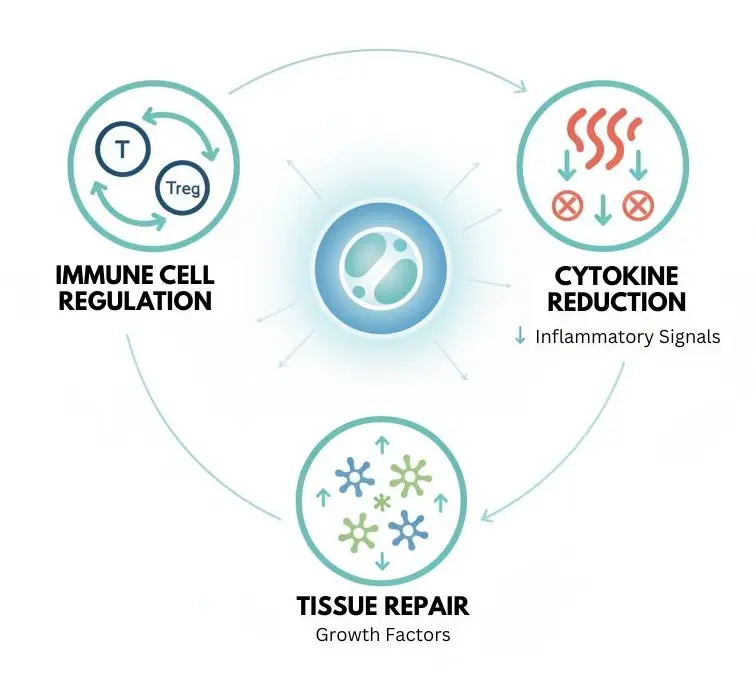
The most important thing to understand about how mesenchymal stem cells (MSCs) work is that they are not pharmaceuticals in the conventional sense. They do not block a single receptor or suppress a single inflammatory pathway. They function as biological signal-modulators — cells that release a wide spectrum of molecules that, taken together, shift the surrounding environment back toward balance.
In the context of post-viral fatigue, the most relevant aspect of this signaling is its effect on the immune system. MSCs have been shown to suppress the activity of overactive T-cells (the immune cells most directly implicated in the chronic immune activation seen in long COVID and ME/CFS) while simultaneously stimulating the expansion of regulatory T-cells, or Tregs. Tregs are a specialized population of immune cells whose primary job is to tell the rest of the immune system to stand down once a threat has passed.
This bidirectional effect — turning down the attack mode while turning up the restraining mode — is mechanistically distinct from anything currently approved for post-viral fatigue. It is also the mechanism most directly aligned with what is going wrong in the condition: an immune system that has not received the signal to return to baseline.
The Second Mechanism: Lowering Inflammation Throughout the Post-Viral Fatigue Body
Beyond their effect on specific immune cells, MSCs reduce the broader inflammatory environment that characterizes post-viral fatigue. They secrete molecules that suppress the production of TNF-alpha, interleukin-6, and other inflammatory cytokines that have been shown to be elevated in patients with long COVID and ME/CFS.
This matters because chronic low-grade inflammation does not just feel bad. It contributes directly to the cellular symptoms of post-viral fatigue. Inflammatory cytokines disrupt mitochondrial function, sensitize pain pathways, interfere with sleep architecture, and impair cognitive processing. Lowering systemic inflammation has the potential to relieve multiple symptoms simultaneously — not because each is being targeted individually, but because a common upstream driver is being addressed.
A similar inflammation-modulating approach has shown clinical benefit in autoimmune conditions like rheumatoid arthritis, where MSC therapy has been studied for over a decade with documented effects on disease activity scores. The biological overlap is real, even though the conditions present very differently.
The Third Mechanism: Supporting Cellular Repair in Post-Viral Fatigue
The third mechanism is more general, but potentially significant. MSCs release growth factors and exosomes (small membrane-bound packets of signaling molecules) that support the survival and repair of stressed cells in surrounding tissue.
In post-viral fatigue, this matters most in tissues that have been chronically inflamed or directly damaged by the original infection — including endothelial cells lining blood vessels, neurons that have been affected by viral or inflammatory injury, and possibly mitochondria within muscle and other high-energy tissues. The growth factors that MSCs secrete do not regenerate destroyed tissue, but they may support the recovery of cells that are damaged but still viable.
This is meaningfully different from drug-based symptom management. Drugs interrupt specific pathways. MSCs provide a broader signaling environment that nudges multiple repair systems toward better function simultaneously.
What Clinical Trials Have Shown for Post-Viral Fatigue Stem Cell Therapy
Key Clinical Studies on Post-Viral Fatigue Stem Cell Therapy
The clinical evidence for MSC therapy in post-viral fatigue is younger and smaller in scale than the evidence for, say, knee osteoarthritis or heart failure. We want to be specific about what does and does not exist, because vagueness in this area tends to favor either over-promising or dismissive framing — neither of which is useful to a patient trying to make a decision.
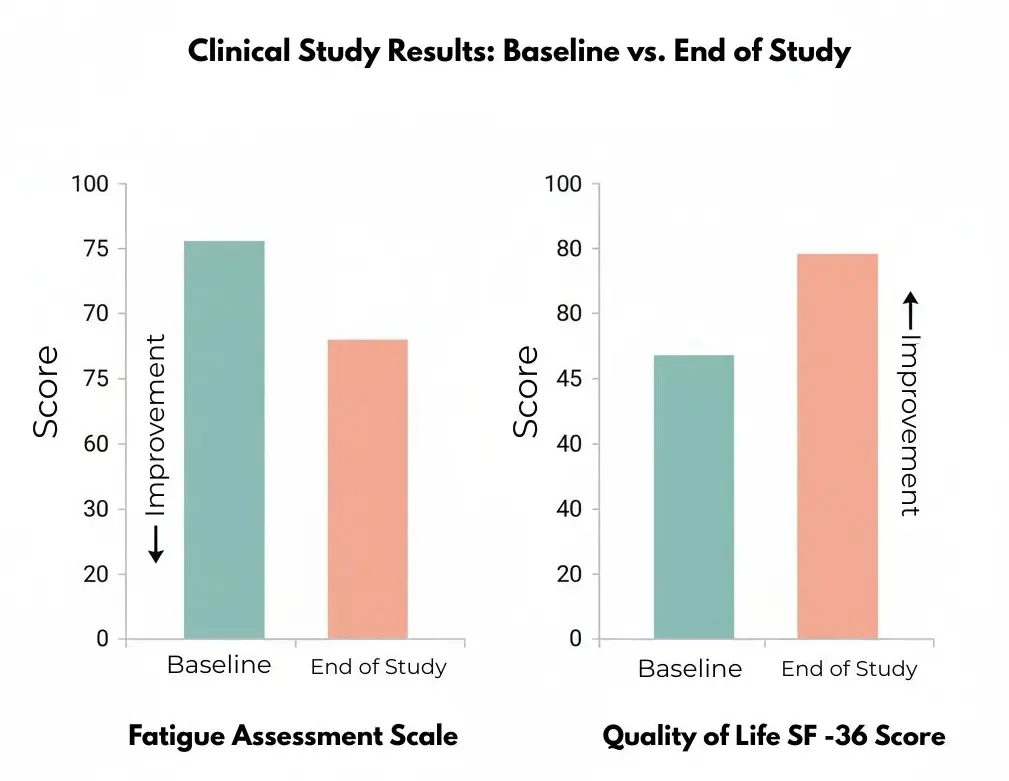
A 2023 expanded access program by Utrero-Rico and colleagues, published in Stem Cells Translational Medicine, enrolled 10 patients with post-COVID-19 syndrome who received five intravenous infusions of autologous adipose-derived MSCs over 14 weeks, with follow-up to 40 weeks. The results showed significant improvements in Visual Analog Scale (VAS) symptom scores and Fatigue Assessment Scale scores compared to baseline (P = 0.0039), along with quality-of-life improvements measured by the SF-36 questionnaire. Most reported adverse events were mild, with no serious adverse events recorded. This was a small, single-arm study without a placebo control, but it provided early signal that MSC therapy could meaningfully affect fatigue symptoms in post-viral patients.
A more methodologically rigorous body of evidence comes from a series of randomized, double-blind, placebo-controlled trials of allogeneic umbilical cord-derived MSCs (UC-MSCs) in severe COVID-19 patients, with extended follow-up to assess long COVID outcomes. The original trial enrolled 100 patients with severe COVID-19, randomized to receive UC-MSC infusions or placebo on days 0, 3, and 6. The 2-year follow-up published in 2023 reported long-term safety with no MSC-related adverse events of concern, but also a notable finding that efficacy of MSC treatment was not significantly sustained through the end of the 2-year follow-up period. The 3-year follow-up data published in 2025 confirmed continued safety with similar patterns on long-term efficacy.
A 2024 study using MSC-conditioned medium (the secreted factors from cultured MSCs rather than the cells themselves) in patients with general fatigue reported that in 19 patients experiencing fatigue, no serious side effects were observed following administration, and nearly half of the patients reported symptom improvement after a single dose, with some showing reduced inflammation markers.
Multiple Phase 1 and Phase 2 trials are currently ongoing specifically for long COVID, including studies evaluating intravenous UC-MSC therapy for persistent symptoms. The field is in active clinical development.
What These Numbers Mean for Post-Viral Fatigue Patients in Practice
We want to be careful here, because this is exactly the kind of section that gets distorted in marketing copy.
The Utrero-Rico data is encouraging but small. Ten patients in an open-label trial showing fatigue improvement is a meaningful early signal — but it is not the same as a 200-patient placebo-controlled trial. The improvements documented were real and measurable, but the absence of a control group means we cannot fully separate treatment effect from placebo, regression to the mean, and natural recovery patterns.
The long-term Chinese UC-MSC follow-up data is sobering on a specific point: in severe COVID survivors, the early benefits seen at 6 and 12 months attenuated over the longer follow-up period. This does not mean MSC therapy is ineffective — patients who received treatment still showed favorable patterns on several measures — but it does mean that whatever benefit is achieved may not persist indefinitely, and repeat treatment may be a clinical reality rather than a one-and-done intervention. Patients deserve to know this before making a decision.
What the data collectively supports is a measured framing: MSC therapy in post-viral fatigue has shown signal in early-phase trials, has a generally favorable safety profile, and may produce meaningful improvements in fatigue and quality of life for a subset of patients. It is not yet supported by the kind of large, long-duration, definitive randomized controlled trial evidence that would let us speak with full confidence about magnitude and durability of effect. Anyone who tells you otherwise is overstating what the literature actually shows.
Allogeneic Cord MSCs vs. Autologous Cells for Post-Viral Fatigue
Why Cell Source Matters in Post-Viral Fatigue Treatment
Stem cell therapy can be structured around either the patient’s own cells (autologous) or cells from a healthy donor (allogeneic). The choice has real clinical implications, particularly for post-viral fatigue.
In Japan, the regulatory framework permits autologous treatment, in which cells are typically harvested from the patient’s bone marrow or adipose tissue, expanded in a laboratory, and reinjected. The advantage is the absence of immune rejection risk, since the cells are genetically identical to the patient.
The disadvantage, in the specific context of post-viral fatigue, is biologically meaningful. The immune dysregulation that defines this condition affects the patient’s own cells — including, potentially, the MSCs that would be harvested for autologous treatment. There is laboratory evidence suggesting that MSCs from individuals with chronic inflammatory or autoimmune conditions can themselves carry signs of that dysregulation: reduced proliferative capacity, altered cytokine secretion profiles, and diminished immunomodulatory potency. For a patient whose immune system has been stuck in an activated state for two years, the cells available from their own body may be a less robust starting point for therapy.
The Case for Allogeneic Umbilical Cord MSCs in Post-Viral Fatigue
The treatment we provide in Malaysia uses allogeneic MSCs derived from umbilical cord tissue, specifically the Wharton’s jelly layer surrounding the cord. These cells come from healthy newborn donors, collected at the time of delivery with full consent, and are characterized by several properties relevant to post-viral fatigue treatment.
They are biologically young, with high proliferative capacity and strong secretion of immunomodulatory and growth factors. They have not been exposed to the chronic inflammatory environment of an adult body affected by post-viral fatigue. They show low immunogenicity — meaning the recipient’s immune system generally tolerates them well, allowing donor-derived cells to be used without significant rejection risk. And they can be prepared in standardized, quality-controlled batches, allowing for consistent dosing across patients and across treatment sessions.
For a post-viral fatigue patient specifically, this means the therapeutic signal being introduced comes from outside the patient’s existing inflammatory milieu — bringing fresh, potent immunomodulatory capacity rather than amplifying signals from cells that have already been affected by the underlying condition. Whether this difference is clinically decisive in post-viral fatigue specifically is not yet definitively established, but the underlying biology favors allogeneic cord-derived cells in conditions characterized by chronic immune dysregulation.
One Patient’s Account of Post-Viral Fatigue Recovery After MSC Therapy
A Long COVID Case After Two Years of Plateau
A woman in her early forties contacted our clinic in mid-2024. She had developed long COVID following an acute infection in early 2022 — initially mild, with no hospitalization required, but with persistent symptoms that emerged over the following weeks and never resolved. Her primary symptoms were profound fatigue, cognitive slowing that she described as feeling “two seconds behind” in conversations, post-exertional malaise that confined her to bed for days after even moderate activity, and orthostatic intolerance that produced a racing heart on standing.
Over the two years before contacting us, she had worked diligently with a long COVID specialist clinic. She had implemented strict pacing, taken a beta blocker for the orthostatic symptoms, tried low-dose naltrexone with modest benefit, used an antihistamine protocol, and worked with a cognitive rehabilitation specialist. She had improved from the lowest point of her illness, but had reached a plateau at what she estimated to be around 40 percent of her previous functional capacity. She could no longer work in her previous role and was on extended medical leave.
She came to Malaysia in late 2024 for allogeneic UC-MSC therapy. Before treatment, we reviewed her case carefully. Her clinical picture was consistent with documented long COVID, her conventional treatment had been thorough, she was medically stable, and she did not have contraindications. We were direct that we could not predict her individual response and that she should not modify her existing treatments based on what happened with the MSC therapy.
How Recovery Unfolded for This Post-Viral Fatigue Patient
The first six weeks after the infusion produced no perceptible change. This is consistent with the timeline we describe to all patients before treatment, and we make a point of preparing people for this latency period because it can otherwise feel like the treatment has failed.
Around week ten, she reported that her sleep felt slightly more restorative — she was waking with marginally more energy than before, which she described as “small but real.” By month three, she was able to take short walks without triggering a multi-day crash, something she had not been able to do consistently in over eighteen months. By month six, she reported that her cognitive symptoms had improved enough that she could read for sustained periods again. Her orthostatic symptoms had improved enough that she had reduced (with her cardiologist’s guidance) her beta blocker dose.
At her twelve-month follow-up, she described herself as functioning at approximately 65 to 70 percent of her previous capacity — still not full recovery, still with limitations, but a meaningful and durable shift from her two-year plateau. She has resumed part-time consulting work in a modified capacity. She continues to pace, continues low-dose naltrexone, and remains under the care of her long COVID specialist. She does not consider herself cured. She considers her situation meaningfully better than it was.
We share this account because individual stories matter in helping patients calibrate expectations — but with a clear caveat. This is one person’s experience over twelve months. Other patients have experienced more modest improvements, no improvements at all, or slower onset. We do not present this as a typical outcome, because there is not yet a reliable definition of what “typical” looks like in this still-developing area.
This is an anonymized account shared with the patient’s consent. Individual outcomes vary, and this experience does not represent guaranteed results for any other patient.
Who Is — and Is Not — Right for Post-Viral Fatigue Stem Cell Therapy
Post-Viral Fatigue Profiles That May Benefit From MSC Therapy
Stem cell therapy is most likely to be worth considering when a post-viral fatigue patient meets several conditions together.
The first is a documented post-viral onset. A clear temporal relationship between an acute infection (most commonly COVID-19, but also Epstein-Barr virus, influenza, dengue, and others) and the onset of persistent fatigue and associated symptoms strongly supports the post-viral fatigue diagnosis and aligns with the patient profiles studied in clinical trials. Patients whose fatigue began without an identifiable infectious trigger may have a different underlying biology and should be evaluated more cautiously.
The second is duration and persistence. Symptoms lasting at least six months, ideally longer, that have not responded adequately to conventional management. We are skeptical of treating very early post-viral fatigue with stem cells, because many patients in the early months do recover spontaneously, and intervening before that natural process has had a chance can confuse the picture.
The third is having engaged with conventional care. Patients who have worked with a knowledgeable physician, tried appropriate symptom-targeted interventions, and reached a plateau are better candidates than those who skip standard treatments and look for stem cell therapy as a first move. This matters both clinically and ethically.
The fourth is overall clinical stability. The patient is not acutely unwell, not experiencing dangerous cardiovascular instability, not currently dealing with another active medical issue that would compete for diagnostic clarity. They are in a state where they can travel, undergo treatment, and have the steady environment to assess whether changes occur over the following months.
The fifth is realistic expectations. The patient understands that stem cell therapy for post-viral fatigue is not currently supported by the kind of definitive evidence base that exists for, say, statin drugs. They are making a considered decision based on currently available evidence, accepting both the possibility of meaningful benefit and the possibility of limited or no benefit.
When We Advise Against Post-Viral Fatigue Stem Cell Therapy
We will say openly when we think this treatment is not appropriate, because the cost and travel involved are not trivial and we do not want patients investing in an option that does not match their situation.
Active untreated infections are a contraindication. Patients with ongoing acute infection, untreated chronic infections, or conditions like active tuberculosis or hepatitis should not undergo MSC therapy, both for safety reasons and because the underlying infection needs to be addressed first.
Active malignancy is a contraindication. The interaction between MSCs and cancer biology is incompletely understood, and current evidence does not support administering MSC therapy in patients with active or recently treated cancers without extensive specialist consultation.
Severe psychiatric instability that has not been addressed is a relative contraindication. Post-viral fatigue frequently coexists with depression and anxiety — partly as a consequence of the illness itself, partly as an independent process — and patients who are in active crisis should have those issues stabilized first, both for their safety and because severe untreated mental health symptoms make assessment of post-treatment changes very difficult.
Patients who are looking for a guaranteed cure or who have been told elsewhere that this treatment will resolve their symptoms entirely should pause before proceeding. We do not offer that framing, and we are concerned when patients arrive expecting it. The realistic goal is meaningful improvement for a subset of patients, not certainty of recovery.
What Recovery After Post-Viral Fatigue Stem Cell Therapy Looks Like
The post-treatment period for post-viral fatigue stem cell therapy is generally uneventful in terms of acute medical events, but it requires patience that we discuss thoroughly with patients before treatment.
The first four to eight weeks typically produce no perceptible improvement. Some patients experience mild fatigue or transient flu-like symptoms in the days immediately following infusion — this is consistent with mild immune activation and resolves on its own. We explicitly counsel patients not to interpret the absence of early change as treatment failure.
Improvements in fatigue, cognitive function, sleep quality, or post-exertional tolerance, when they occur, typically emerge gradually between the second and fourth months. The pattern is rarely dramatic. Patients more often describe a slow shift in their baseline — sleeping more restoratively, recovering more quickly from minor exertion, having clearer thinking on more days — rather than a single moment of recovery.
Patients are explicitly instructed not to alter their existing medications or treatments based on early changes. Any reductions in medication should be made only with the guidance of the treating physician who knows the patient’s overall clinical picture. Stem cell therapy is intended to work alongside ongoing care, not to replace it.
The Honest Risks and Limitations of Post-Viral Fatigue Stem Cell Therapy
Known Side Effects in Post-Viral Fatigue Stem Cell Trials
The safety profile of intravenous allogeneic UC-MSC therapy, across the published clinical trials in COVID-19 and related conditions, has been generally favorable. This is not a dismissal of risk; it is what the accumulated data shows.
The most commonly reported adverse events are mild and self-limiting: low-grade fever in the 24 to 48 hours following infusion, transient fatigue or muscle aches, occasional headache. These are thought to reflect mild immune activation in response to the donor cells and resolve without intervention.
Across the long-term follow-up data from the COVID-19 UC-MSC trials, including the 2-year and 3-year follow-up studies, no MSC-related serious adverse events of concern were observed, and no increase in tumor markers or other long-term safety signals was identified. Long-term safety data beyond three to five years remains limited because the field is relatively new at clinical scale, and we are direct with patients about this gap in our knowledge.
The theoretical risk of immune rejection has not materialized as a clinical issue with allogeneic UC-MSC therapy, which is consistent with the low immunogenicity of these cells. Infection at the infusion site, while a possibility with any IV procedure, is exceedingly rare under standard sterile conditions.
What Post-Viral Fatigue Stem Cell Therapy Cannot Do
This section matters as much as any other, and we are direct about it.
Stem cell therapy will not eliminate post-viral fatigue for everyone. A meaningful proportion of patients — based on currently available data, likely somewhere between 30 and 50 percent of those treated — do not experience clinically significant improvement. We do not currently have reliable predictors for who will respond and who will not.
Stem cell therapy is not a one-time cure. The long-term follow-up data from existing trials suggests that whatever improvements occur may not be permanent, and some patients may benefit from repeat treatment over time. Patients who proceed expecting a single intervention to permanently resolve their condition are setting themselves up for disappointment.
Stem cell therapy does not replace ongoing medical management of post-viral fatigue. Patients should continue working with their long COVID or ME/CFS specialist, continue appropriate pacing, and continue any medications that are providing symptomatic benefit.
Stem cell therapy is not currently supported by the kind of definitive, large-scale, long-duration randomized controlled trial evidence that exists for many other treatments. It is supported by smaller trials, mechanistic studies, and accumulating clinical experience. This is enough to make it a reasonable option for some patients to consider, but it is not enough to make it a standard of care, and we will not present it that way.
For patients whose symptoms are mild, who are in the early months of post-viral recovery, or whose fatigue appears to be improving with conventional management, we generally advise patience and continued conventional care rather than proceeding with stem cell therapy. The biology of post-viral fatigue includes the possibility of natural recovery, particularly in the first year, and intervening too early can both confuse the assessment and incur unnecessary cost.
FAQ About Post-Viral Fatigue Stem Cell Therapy
Most patients notice no change in the first four to six weeks after treatment. Improvements, when they occur, typically emerge gradually between the second and fourth months and may continue developing through six to twelve months. Patients who notice no change at all by six months generally do not go on to experience improvement at later time points.
Yes. Stem cell therapy is intended to work alongside other treatments, not replace them. We specifically advise patients to continue their existing medications and to coordinate any future medication changes with their treating physician.
The mechanistic basis is similar — both ME/CFS and long COVID involve persistent immune dysregulation following infection — and there is biological rationale for expecting comparable response patterns. However, most published clinical data is specifically from long COVID populations, and we are honest with non-COVID ME/CFS patients that the direct evidence base for their specific condition is smaller.
These are different mechanisms with different evidence bases. IVIG has been studied longer in autoimmune conditions but has limited specific evidence in post-viral fatigue. MSC therapy targets immune regulation through a broader, signal-modulating approach. Neither is currently a proven standard of care for post-viral fatigue, and the choice between them depends on individual clinical factors that should be discussed with a knowledgeable physician.
Most patients in our program receive between one and three infusions as an initial course, with the specific number determined during pre-treatment assessment based on disease severity, duration, and prior treatment history. Some patients pursue repeat treatment after twelve to twenty-four months if their initial response has plateaued or partially diminished.
Next Step
If you have read this far, you are probably someone who has lived with post-viral fatigue long enough to be skeptical of easy answers. We respect that. We are not interested in selling you a treatment that is not appropriate for your situation, and we are not going to claim certainty where the data does not support it.
What we do offer is a free online consultation where we can look at your specific case — the timeline, the symptoms, what you have tried, the test results you have available — and tell you honestly whether we think this treatment is worth considering for you, or whether your situation falls outside the patient profile where current evidence supports benefit. There is no obligation to proceed, and many patients use the consultation simply to understand their options more clearly. You do not have to have made any decision before reaching out.
References
- Utrero-Rico A, et al. “Adipose-derived, autologous mesenchymal stem cell therapy for patients with post-COVID-19 syndrome: an intermediate-size expanded access program.” Stem Cells Translational Medicine, 2023. https://doi.org/10.1093/stcltm/szad044
- Shi L, et al. “Human mesenchymal stem cell therapy in severe COVID-19 patients: 2-year follow-up results of a randomized, double-blind, placebo-controlled trial.” eBioMedicine, 2023;91:104577. https://doi.org/10.1016/j.ebiom.2023.104577
- Shi L, et al. “Long-term outcomes of mesenchymal stem cell therapy in severe COVID-19 patients: 3-year follow-up of a randomized, double-blind, placebo-controlled trial.” Stem Cell Research & Therapy, 2025. https://doi.org/10.1186/s13287-025-04162-3
- Shi L, et al. “Effect of human umbilical cord-derived mesenchymal stem cells on lung damage in severe COVID-19 patients: a randomized, double-blind, placebo-controlled phase 2 trial.” Signal Transduction and Targeted Therapy, 2021;6:58. https://doi.org/10.1038/s41392-021-00488-5
- Kobayashi et al. “Intravenous Administration of Human-Derived Mesenchymal Stem Cell-Conditioned Medium for Patients with General Malaise.” 2024. PMC12387221.
- Salari N, et al. “Global prevalence of chronic fatigue syndrome among long COVID-19 patients: A systematic review and meta-analysis.” BioPsychoSocial Medicine, 2022;16:21. https://doi.org/10.1186/s13030-022-00250-5
- Global Prevalence of Long COVID, Its Subtypes, and Risk Factors: An Updated Systematic Review and Meta-analysis. PMC12461872, 2025.
- Vu T, McGill SC. “An Overview of Post-COVID-19 Condition (Long COVID).” Canadian Journal of Health Technologies, 2021;1(9).
- Davis HE, McCorkell L, Vogel JM, Topol EJ. “Long COVID: major findings, mechanisms and recommendations.” Nature Reviews Microbiology, 2023;21:133-146. https://doi.org/10.1038/s41579-022-00846-2
- Estimates of Incidence and Predictors of Fatiguing Illness after SARS-CoV-2 Infection. Emerging Infectious Diseases, CDC, 2024;30(3).