

Parkinson’s Disease Stem Cell Therapy | Can Progression Be Slowed Without More Drugs?

The hand that pours your morning coffee no longer cooperates the way it once did. Buttoning a shirt has become an exercise in patience. Your handwriting has shrunk in a way you didn’t notice at first, and now sentences crowd into the corner of the page. The medication helps — most days — but you can feel the effect tapering an hour before the next dose, and lately the tremor seems to push back even when the drugs are working.
If this sounds familiar, you are part of a global population estimated at 10 to 11 million people living with Parkinson’s disease — a number that has more than doubled over the past quarter century, and is projected to approach 14 million by 2040. Most patients in this position know the standard treatment progression by heart. Levodopa, dopamine agonists, MAO-B inhibitors. Adding more medications as the response to the first one fades. Eventually, conversations about deep brain stimulation surgery. The drugs work — and they often work well, especially in the early years. But they manage symptoms. They do not slow the underlying loss of dopamine-producing neurons in the brain that defines the disease.
This article is for people who have already started asking whether something exists beyond symptom management. We will look at what stem cell therapy for Parkinson’s disease actually is — including the important distinction between two very different stem cell strategies — what the published clinical trials have shown, and where the honest limits lie. Our team has been working in regenerative medicine in Malaysia for over seven years, with more than 200 patients treated. We do not believe stem cell therapy is right for every Parkinson’s patient, and we will be specific about why.
Table of Contents
- The Specific Challenge of Parkinson's Disease
- Where Today's Parkinson's Disease Treatments Reach Their Limit
- The Biological Logic of Stem Cell Therapy in Parkinson's Disease
- Two Different Stem Cell Strategies for Parkinson's Disease: MSCs and iPSC-Derived Cells
- What Clinical Trials Have Shown for Parkinson's Disease Stem Cell Therapy
- A Patient's Experience with Parkinson's Disease Stem Cell Therapy in Malaysia
- Who Should — and Shouldn't — Consider Parkinson's Disease Stem Cell Therapy
- Honest Risks and Limitations of Parkinson's Disease Stem Cell Therapy
- FAQ About Parkinson's Disease Stem Cell Therapy
- A Conversation, Not a Decision
- References
The Specific Challenge of Parkinson’s Disease
Why Dopamine Neurons in Parkinson’s Disease Don’t Come Back
Parkinson’s disease is, at its core, a problem of cells that the body cannot replace. The motor symptoms most people associate with the condition — tremor, rigidity, slowness of movement, postural instability — arise from the gradual loss of a specific population of brain cells called dopaminergic neurons, located in a small region of the midbrain called the substantia nigra. These cells produce dopamine, a chemical messenger that the brain uses to coordinate smooth, intentional movement. By the time motor symptoms become noticeable, somewhere between 50 and 70 percent of these dopamine-producing neurons have already been lost. The disease has been quietly progressing for years before the first visible tremor.
The fundamental difficulty in treating Parkinson’s disease is that the adult human brain has extremely limited capacity to replace lost neurons. Unlike skin cells, which renew themselves every few weeks, or bone tissue, which remodels continuously, the dopamine-producing neurons of the substantia nigra are not meaningfully replenished by the body’s own repair systems. Once they die, they are gone. The remaining neurons compensate for a time by working harder, but this very compensation appears to accelerate their own demise.
How Neuroinflammation Drives Parkinson’s Disease Progression
There is another layer to the disease that has gained increasing attention over the past decade, and it is one of the reasons stem cell therapy is being studied in Parkinson’s at all. The substantia nigra in a person with Parkinson’s disease is not just losing cells. It is also chronically inflamed. The brain’s resident immune cells, called microglia, become persistently activated in regions where dopamine neurons are dying, and this activation produces inflammatory signals — proteins called cytokines — that appear to accelerate further neuronal death. Aggregates of a misfolded protein called alpha-synuclein, which accumulate inside affected neurons, also trigger inflammatory responses in surrounding tissue.
This creates a self-reinforcing cycle that the standard medications were never designed to address. Neuronal death triggers inflammation; inflammation accelerates further neuronal death. Levodopa, the cornerstone of Parkinson’s treatment, replaces the dopamine that the dying neurons can no longer produce. It does not interrupt the cycle of inflammation and neurodegeneration that continues underneath the symptom relief. Understanding this distinction — between dopamine replacement and disease modification — is essential to understanding both why current treatments eventually reach their limits and what stem cell therapy is actually trying to accomplish.
Where Today’s Parkinson’s Disease Treatments Reach Their Limit
The Gradual Erosion of Levodopa’s Effectiveness in Parkinson’s Disease
Levodopa is one of the most consequential medications ever developed in neurology. For a newly diagnosed Parkinson’s patient, the response can be transformative — tremor calms, movement loosens, and many of the daily limitations that defined the months before treatment recede dramatically. Combined with carbidopa to reduce side effects, levodopa remains the most effective symptomatic therapy for Parkinson’s disease that medicine has produced. We are not minimizing this.
But levodopa works by replacing the dopamine that surviving neurons can no longer make in adequate quantities. As more neurons are lost over time, the brain’s capacity to convert levodopa into dopamine — and to release it in the patterned, controlled way the basal ganglia require — gradually deteriorates. This is why long-term Parkinson’s patients describe a familiar sequence of changes. The window of effectiveness after each dose grows shorter. Periods of “wearing off” appear before the next dose is due. Involuntary movements, called dyskinesias, begin to emerge as side effects of the medication itself. The therapeutic window — the gap between not enough dopamine and too much — narrows.
For some patients, dose adjustments and the addition of supporting medications such as MAO-B inhibitors, COMT inhibitors, or dopamine agonists can extend the period of stable control by years. But all of these strategies share a fundamental property: they manage the consequences of dopamine loss without addressing why the loss is occurring in the first place.
When Deep Brain Stimulation Becomes the Next Step in Parkinson’s Disease
For patients whose Parkinson’s disease is no longer adequately controlled by medication alone, deep brain stimulation surgery is often the next conversation. DBS involves the surgical implantation of fine electrodes into specific regions of the brain — most commonly the subthalamic nucleus or globus pallidus — connected to a pulse generator placed under the skin near the collarbone. By delivering carefully tuned electrical signals to these regions, DBS can dramatically reduce tremor, rigidity, and motor fluctuations in carefully selected patients.
DBS is genuinely effective, and for the right patient it can restore years of meaningful motor function. It is also brain surgery, with the inherent risks that implies: hemorrhage, infection, hardware complications, and the need for periodic battery replacements over time. Like medication, DBS is symptomatic rather than disease-modifying. The underlying loss of dopaminergic neurons continues. The stimulator masks the symptoms of that loss; it does not slow the loss itself. Many Parkinson’s patients in their late fifties through their seventies find themselves in a clinically stable but progressive position: managed effectively for now, but watching the disease continue beneath the surface, knowing that symptom-management options have a ceiling and that the trajectory of the underlying biology has not changed. It is precisely this group that increasingly asks whether anything exists that targets the disease itself rather than its consequences.
The Biological Logic of Stem Cell Therapy in Parkinson’s Disease
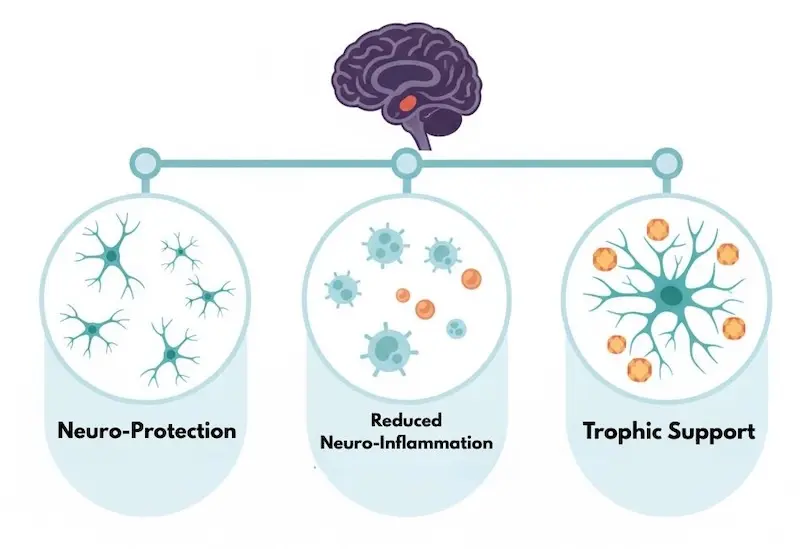
What Mesenchymal Stem Cells Do — and Don’t Do — for Parkinson’s Disease
Before going further, the most important misconception to address is what mesenchymal stem cells actually do once they are administered to a person with Parkinson’s disease. The clinic-friendly version often suggested in marketing materials — that the cells travel to the brain, transform into new dopamine-producing neurons, and replace what has been lost — is not what the published evidence supports.
What MSCs do, based on more than a decade of laboratory and clinical research, is something different and more indirect. They function as biological signaling agents. When introduced into the body, they release a complex mixture of molecules — growth factors, anti-inflammatory cytokines, exosomes carrying genetic and protein cargo — that act on the cells already present in the target tissue. The MSCs themselves typically do not survive long-term in the brain. Their influence comes from the messages they release while they are present.
For Parkinson’s disease specifically, three of these signaling effects are particularly relevant. The first is neuroprotection. MSCs secrete proteins known as neurotrophic factors — including glial cell line-derived neurotrophic factor (GDNF) and brain-derived neurotrophic factor (BDNF), molecules that act as survival signals for vulnerable neurons. In animal models of Parkinson’s disease, these factors have been shown to slow the death of dopaminergic neurons that are stressed but not yet lost. The clinical question is whether human Parkinson’s patients with substantial remaining viable neurons can benefit from this same neuroprotective signaling.
The second is reduction of neuroinflammation. As discussed earlier, chronic activation of microglia — the brain’s resident immune cells — appears to accelerate the loss of dopamine neurons in Parkinson’s disease. MSCs have a well-documented capacity to shift inflamed microglia from a destructive, pro-inflammatory state toward a more tissue-supportive, anti-inflammatory state. This is the same broad immunomodulatory mechanism that underlies MSC effects in conditions like rheumatoid arthritis and chronic ischemic heart failure, though the cellular targets differ.
The third is trophic support for surviving neurons and supporting glial cells. The brain’s astrocytes, which normally provide metabolic and structural support to neurons, become impaired in Parkinson’s disease. MSC-derived signals appear to improve astrocyte function and the broader tissue environment in which the remaining dopaminergic neurons must continue to operate.
Why Allogeneic Umbilical Cord MSCs Are Used for Parkinson’s Disease
The choice of where the stem cells come from has direct implications for what they can do once administered. In Japan, the established regulatory framework for stem cell therapy permits autologous cells — cells harvested from the patient’s own body, typically from bone marrow or adipose tissue, then expanded in a laboratory and reinjected. The advantage is the absence of any immune compatibility concern. The disadvantage is that the cells reflect the patient’s biological age and disease state. The MSCs available from a 65-year-old with neurodegenerative disease are functionally different from those of a healthy young donor — typically with reduced proliferative capacity, lower secretion of trophic factors, and diminished immunomodulatory potency.
The treatment we offer in Malaysia uses allogeneic mesenchymal stem cells derived from donated umbilical cord tissue — specifically the Wharton’s jelly layer of cords collected at the time of healthy term deliveries, with full donor consent. These cells are biologically young, highly proliferative, and have not been exposed to the cumulative environmental stressors that affect adult-derived cells. They also express low levels of the surface proteins that ordinarily trigger immune rejection, which is why allogeneic umbilical cord MSCs have been used safely across thousands of patients in published trials without significant rejection responses.
For a Parkinson’s disease patient — whose dopaminergic neurons need the strongest possible neuroprotective and anti-inflammatory signaling that current cell biology can provide — this distinction in cell source matters. A patient’s own cells, harvested at age 65 from a body already living with neurodegeneration, are not the same biological tool as cells drawn from healthy newborn cord tissue.
Two Different Stem Cell Strategies for Parkinson’s Disease: MSCs and iPSC-Derived Cells
How MSC Therapy Differs from iPSC-Derived Dopaminergic Cell Replacement
Anyone researching stem cell therapy for Parkinson’s disease will encounter two fundamentally different approaches in the scientific literature, and it is essential to understand the distinction. The first approach — and the one we use clinically in Malaysia — is mesenchymal stem cell therapy. As described above, this approach uses MSCs to deliver neuroprotective and immunomodulatory signals to the brain, with the goal of supporting the patient’s remaining dopaminergic neurons and slowing further loss. MSC therapy does not attempt to replace neurons that have already died.
The second approach is induced pluripotent stem cell (iPSC) derived dopaminergic cell replacement. In this approach, stem cells are reprogrammed in a laboratory to differentiate into dopaminergic neuron precursors, which are then surgically transplanted into the brain — specifically into the putamen, where they are intended to mature into functional dopamine-producing neurons that integrate into the patient’s existing brain circuitry. This is a fundamentally different strategy: cellular replacement, rather than supportive signaling.
iPSC-based dopaminergic replacement is among the most actively researched directions in regenerative neurology. The Kyoto University clinical trial led by Dr. Jun Takahashi has been conducting human trials of allogeneic iPSC-derived dopaminergic progenitor transplantation, with safety and preliminary efficacy data reported in peer-reviewed publications. The first reported autologous iPSC-derived neuron transplant in a Parkinson’s patient was published in the New England Journal of Medicine in 2020 by Schweitzer and colleagues, with sustained engraftment documented over multiple years of follow-up.
We want to be clear about where this approach currently stands: iPSC-derived dopaminergic replacement therapy is investigational. It involves neurosurgical implantation of cells directly into the brain. It is not commercially available outside formal clinical trial protocols. The early results are encouraging, but the technology is years away from being a routine treatment option for the average Parkinson’s patient.
Why MSC Therapy Is Available Now While iPSC Therapy Remains Investigational
The treatment we offer in Malaysia uses allogeneic umbilical cord-derived MSCs delivered intravenously and, in selected protocols, by direct intrathecal injection into the cerebrospinal fluid. The mechanism is signaling — neuroprotection, anti-inflammation, trophic support — not neuron replacement. This is biologically and clinically a more modest intervention than iPSC-derived replacement therapy, and we want to be honest about that distinction.
The reason MSC therapy is clinically available while iPSC therapy is not comes down to several factors. MSCs have been studied in a much wider range of conditions over a longer period of time. Their safety profile is extensively documented across thousands of patients. They do not require neurosurgical implantation. And their immunomodulatory signaling does not need to integrate into existing neural circuits to produce its effect. iPSC-derived neurons, by contrast, must survive, mature, integrate, and function within the brain — a much higher technical bar that is still being established in formal trials.
Patients who are considering stem cell therapy for Parkinson’s disease should understand which approach a given clinic is offering and what the realistic biological expectation is. We offer the MSC approach. We are clear that this is supportive and potentially disease-modifying — not regenerative in the strict sense of replacing lost dopamine neurons.
What Clinical Trials Have Shown for Parkinson’s Disease Stem Cell Therapy
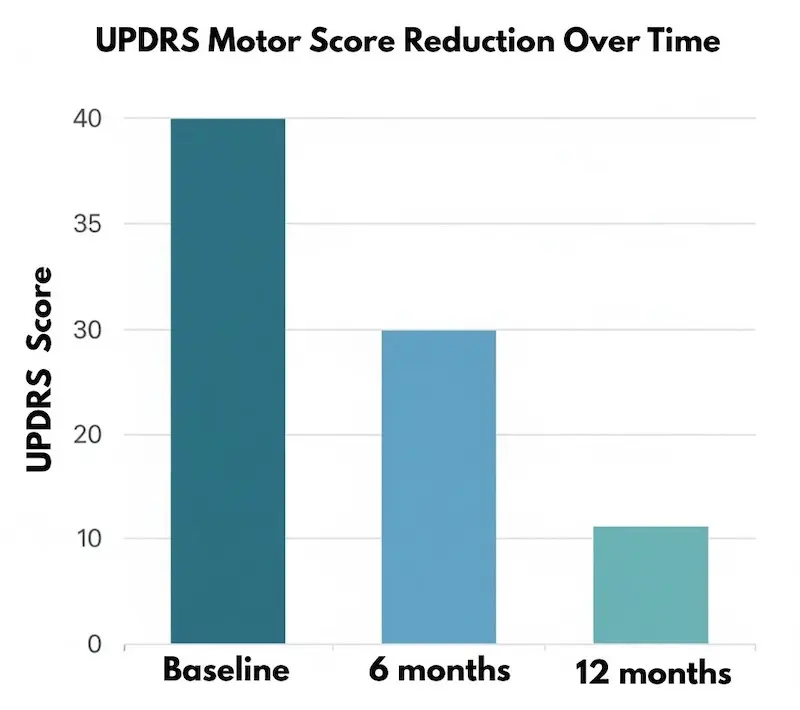
Key Published Trials of MSC Therapy in Parkinson’s Disease
The clinical evidence base for MSC therapy in Parkinson’s disease is younger and smaller than the evidence for many other applications of mesenchymal stem cells, and we want to represent it accurately rather than selectively.
The earliest published clinical study using MSCs in Parkinson’s disease was a small open-label trial by Venkataramana and colleagues, published in Translational Research in 2010. Seven patients with advanced Parkinson’s disease received autologous bone marrow-derived MSCs delivered by stereotactic injection into the substantia nigra. At follow-up out to 36 months, the procedure was demonstrated to be safe — no serious adverse events related to the cells were reported — and three of the seven patients showed sustained reductions in their Unified Parkinson’s Disease Rating Scale (UPDRS) motor scores in the off-medication state, with reductions in their daily levodopa requirements. The remaining four patients showed no clear benefit. This was a small study, and its primary contribution was establishing that MSC delivery was feasible and safe in this population.
Subsequent open-label studies have evaluated allogeneic bone marrow-derived and umbilical cord-derived MSCs delivered by various routes — intravenous, intranasal, and intrathecal — in patients with idiopathic Parkinson’s disease. Across these studies, the consistent findings have been acceptable safety profiles, signals of motor and non-motor improvement on standardized scales in subgroups of patients, and no serious treatment-related adverse events.
A 2022 systematic review of MSC therapy in neurodegenerative diseases summarized the available Parkinson’s evidence as follows: across small Phase I and Phase II trials, MSC administration has been consistently shown to be safe and tolerable, with signals of potential benefit on motor function in subgroups of patients, but without the methodological rigor of larger placebo-controlled trials needed to establish efficacy with confidence. Several ongoing trials registered in clinical trial registries are expected to provide more rigorous evidence over the next several years. The current state of the field is best described as: safety reasonably well established, efficacy signals present but requiring larger controlled studies to confirm.
What Realistic Improvement Looks Like in Parkinson’s Disease MSC Trials
We want to be specific about what the improvements observed in published trials actually mean in daily life, because vague descriptions help no one make a decision.
A reduction of 6 to 10 points on the UPDRS motor score — which is the order of magnitude observed in responders across small Parkinson’s MSC trials — corresponds clinically to noticeable improvements in things like the speed of finger movements, the smoothness of arm pronation and supination, the size of handwriting, and the steadiness of gait. It does not typically mean elimination of tremor, return to pre-disease motor function, or the ability to discontinue Parkinson’s medications.
The most consistent pattern observed across the small published trials is that improvements, when they occur, emerge gradually over the course of three to six months following treatment, may persist for a year or longer in some patients, and are often partial rather than complete. A meaningful proportion of treated patients — based on the published data, somewhere in the range of 30 to 50 percent depending on the trial and the patient selection — experience measurable improvement on standardized scales. The remaining patients experience little to no change relative to their baseline trajectory.
We are deliberately conservative in how we describe this evidence. Selective reporting of best-case outcomes is common in this space and produces unrealistic expectations that do real harm to patients. The honest framing is that MSC therapy for Parkinson’s disease has shown enough promise to justify continued clinical investigation and to be considered as an option for appropriately selected patients, while not yet having the body of evidence that would establish it as a standard treatment.
A Patient’s Experience with Parkinson’s Disease Stem Cell Therapy in Malaysia
A Parkinson’s Patient’s Decision to Try MSC Therapy After Six Years on Levodopa
A man in his mid-sixties had been diagnosed with Parkinson’s disease six years before he contacted our clinic. His initial response to levodopa had been excellent, but over the previous eighteen months he had experienced increasing wearing-off effects between doses, occasional dyskinesias, and mild cognitive slowing that worried him more than the motor symptoms. His neurologist had begun discussing the possibility of DBS evaluation within the next year or two.
He had researched stem cell therapy carefully before reaching out, and he came to our consultation with specific questions about cell source, mechanism, realistic expectations, and the difference between MSC therapy and the iPSC research he had read about. After reviewing his medical history, recent neurological examination findings, and current medication regimen, we determined that he was an appropriate candidate for allogeneic umbilical cord MSC therapy. We were direct that we could not predict his individual response and that we would not ask him to modify his existing medication regimen.
How the Recovery Period Unfolded for One Parkinson’s Disease Patient
For the first six weeks following treatment, he reported no clear changes. This is consistent with what we tell every patient before treatment: the biological mechanisms of MSC therapy take time, and the first one to two months should not be interpreted as predictive of eventual outcome.
By the third month, he described his morning function as more reliable — fewer episodes where he felt his medication had not yet “kicked in” before he needed to begin daily activities. At the six-month follow-up evaluation, his UPDRS motor score in the off-medication state had decreased by approximately 8 points compared to his pre-treatment baseline. His handwriting had become more legible. His daily levodopa dose remained unchanged, in coordination with his neurologist’s preference to avoid medication adjustments during the assessment period.
At twelve months, his improvements had largely stabilized — neither continued progress nor regression to baseline. His neurologist documented the sustained improvement and elected to defer DBS discussion. His Parkinson’s disease has continued to be present and ongoing; the disease has not been cured. What changed for him was the slope of the trajectory, which had felt steep before treatment and now feels manageable for the foreseeable future.
This is an anonymized account based on actual clinical experience. Individual outcomes vary considerably, and this account does not represent what every patient will experience. A meaningful proportion of patients undergoing this treatment do not experience improvements of this magnitude.
Who Should — and Shouldn’t — Consider Parkinson’s Disease Stem Cell Therapy
Parkinson’s Disease Profiles Most Likely to Benefit from MSC Therapy
Stem cell therapy for Parkinson’s disease is most likely to provide benefit in patients who share a recognizable clinical profile. These patients typically have a confirmed idiopathic Parkinson’s diagnosis, generally between two and ten years from initial diagnosis. They retain a meaningful response to levodopa or dopamine agonists — the medications still work, but with diminishing duration of effect or emerging fluctuations. Their disease is in Hoehn and Yahr stage 2 or 3, meaning bilateral motor involvement with preserved postural reflexes, but not yet at the stage of significant balance impairment or wheelchair dependence. They are generally in stable health without active malignancy, severe cardiac or pulmonary disease, or uncontrolled autoimmune conditions.
Patients in this profile have substantial remaining viable dopaminergic neurons that can potentially benefit from neuroprotective and anti-inflammatory signaling. They have not yet reached the stage at which the dominant clinical issues are postural instability and falls — issues that arise from extensive cumulative neuronal loss and that respond poorly to disease-modifying interventions of any kind.
Realistic expectations are essential. Patients who understand that MSC therapy is intended to support their existing brain biology and potentially slow further deterioration — rather than restore them to pre-disease function — are best positioned to assess their response to treatment fairly.
Parkinson’s Disease Profiles Where MSC Therapy Is Unlikely to Help
There are clearly identifiable situations in which we advise against this treatment.
Patients with advanced Parkinson’s disease — Hoehn and Yahr stage 4 or 5, with significant postural instability, frequent falls, or wheelchair dependence — are unlikely to experience meaningful benefit from MSC therapy. The dominant clinical problem at that stage is the cumulative loss of dopaminergic neurons that has already occurred, and there is too little remaining biological substrate for the neuroprotective signaling of MSCs to support.
Patients with atypical parkinsonian syndromes — including multiple system atrophy, progressive supranuclear palsy, and corticobasal syndrome — should not assume the same approach applies to their condition. These conditions involve different underlying biology, often with much faster progression and more limited response to dopaminergic medications. Some early studies have explored MSCs in these conditions, but the evidence base is even more limited than in idiopathic Parkinson’s disease, and we do not recommend this treatment for atypical parkinsonism without explicit individual assessment and frank discussion of the lower likelihood of benefit.
Patients with significant cognitive impairment or active psychosis associated with their Parkinson’s disease are not appropriate candidates for international travel-based treatment, regardless of the underlying intervention being considered. Active cancer, untreated systemic infection, severe immunocompromise, and pregnancy are all contraindications. So is the expectation of dramatic transformation. Patients seeking a guarantee of recovery are not appropriately served by what this treatment realistically offers.
Why Continuing Levodopa and Other Parkinson’s Medications Matters
We want to be unambiguous on this point: patients undergoing MSC therapy for Parkinson’s disease should not modify or discontinue their existing medications based on this treatment. Decisions about medication adjustment must remain with the treating neurologist, and should be made based on their direct clinical assessment over time — not preemptively in anticipation of a stem cell effect that may or may not materialize.
This is for several reasons. The magnitude of motor benefit that patients lose by discontinuing levodopa rapidly is generally larger than the magnitude of benefit that MSC therapy might add. Abruptly stopping dopaminergic medication can produce serious withdrawal phenomena. And the natural fluctuation in Parkinson’s symptoms over weeks and months is substantial, which means disentangling the effects of medication changes from the effects of MSC therapy requires careful clinical observation over time.
If a patient eventually experiences sustained motor improvement after MSC therapy, their neurologist is the appropriate person to determine whether that improvement justifies a careful, gradual medication adjustment. We do not initiate or recommend such changes from our clinic.
Honest Risks and Limitations of Parkinson’s Disease Stem Cell Therapy
Known Side Effects of Parkinson’s Disease MSC Treatment
The safety profile of allogeneic MSC therapy, across the small published Parkinson’s trials and the much broader body of trials in other conditions, has been generally favorable. The most commonly reported effects following infusion are mild, transient, and self-limiting: low-grade fever in the 24 to 48 hours after the infusion (reported by approximately 15 to 20 percent of patients across MSC trials, thought to reflect the immune system recognizing the donor cells), fatigue, and occasional headache. These effects typically resolve without specific intervention.
In trials specifically evaluating MSC therapy in Parkinson’s disease, no treatment-related serious adverse events have been reported in the small samples studied to date. Long-term safety data — what happens at five, ten, or twenty years after treatment — remains limited because the field is relatively young, and we disclose this honestly to every patient.
For patients receiving intrathecal administration in addition to intravenous infusion, the risks of the lumbar puncture procedure itself include post-procedure headache (typically resolving within 48 hours) and, in rare cases, infection. We perform this procedure under sterile conditions following established neurology guidelines.
Patients with concurrent medical conditions — significant cardiovascular disease, kidney impairment, or autoimmune conditions on immunosuppressive therapy — require additional pre-treatment evaluation because these conditions can affect tolerance of the procedure or interaction with the cells.
What Parkinson’s Disease Stem Cell Therapy Cannot Do
We want to be specific about the limits of this treatment, because the absence of clarity in this space causes real harm to patients making decisions.
MSC therapy cannot regenerate dopamine-producing neurons that have already been lost. The cells used in this treatment do not become new neurons in the patient’s brain in any clinically meaningful way. The mechanism is supportive and immunomodulatory — protecting and supporting remaining viable cells — not regenerative in the strict sense of replacing what is gone.
MSC therapy cannot eliminate the need for Parkinson’s medications. Patients who respond well typically continue their existing medication regimen indefinitely. Some patients may eventually be able to reduce certain medications under their neurologist’s guidance, but this is not predictable in advance and should not be expected.
MSC therapy cannot reverse advanced disease. Patients with extensive postural instability, frequent falls, severe cognitive symptoms, or wheelchair dependence have crossed thresholds at which the available biological substrate for MSC support is too depleted for the treatment to make a meaningful difference.
MSC therapy is not equivalent to the iPSC-based dopaminergic neuron replacement strategy being developed in research settings. Patients who are seeking cellular replacement should understand that this approach remains investigational and is not what we offer clinically.
A meaningful proportion of patients — somewhere in the range of 50 to 70 percent based on published trial data — do not experience clearly measurable improvements following MSC therapy. We do not currently have reliable predictors for who will and who will not respond, beyond the candidate selection criteria described earlier in this article. Patients deserve to know this number before making a decision.
FAQ About Parkinson’s Disease Stem Cell Therapy
These are two fundamentally different strategies, and the distinction matters when you are evaluating what is actually being offered.
MSC therapy — the approach we offer in Malaysia — uses mesenchymal stem cells to deliver biological signals to the brain. The cells secrete neurotrophic factors and anti-inflammatory molecules that aim to protect remaining dopamine-producing neurons and slow further loss. The cells themselves do not become new neurons. The mechanism is supportive and disease-modulating.
iPSC-derived neuron transplantation, including the Kyoto University trials and the case reported by Schweitzer and colleagues in the New England Journal of Medicine, is a cellular replacement strategy. Stem cells are reprogrammed in a laboratory to become dopaminergic neuron precursors, then surgically implanted into the brain through a neurosurgical procedure. The goal is for these cells to mature into functional dopamine-producing neurons that integrate into existing brain circuitry.
iPSC therapy is genuinely promising research, but it remains investigational and is not commercially available outside formal clinical trial protocols. MSC therapy has a longer track record of safety data across many conditions and does not require neurosurgery. Patients should understand which approach a given clinic is offering before making a decision.
This is one of the questions where we have to be honest about the limits of current evidence rather than offer a confident number.
In the small published trials of MSC therapy in Parkinson’s disease, follow-up periods have generally extended to between 12 and 36 months. Patients who experienced motor improvements typically reached their peak effect somewhere between 3 and 6 months after treatment, with the improvements either stabilizing or gradually attenuating over the subsequent year or two.
What we cannot tell you with confidence is what happens at the five-year or ten-year mark, because that data does not yet exist at meaningful sample sizes for Parkinson’s specifically. Some patients in our clinical experience have maintained the gains they achieved at 6 months for well over a year without repeat treatment. Others have noticed the effect diminishing over time and have elected to undergo a second course of treatment.
The honest framing is this: MSC therapy is not a one-time permanent fix. It is a biological intervention whose effects appear to be measurable in a meaningful subset of patients for at least one to two years, with longer-term durability still being established.
In principle, yes — the two interventions address Parkinson’s disease through entirely different mechanisms and are not biologically incompatible. DBS modulates abnormal electrical activity in the basal ganglia using implanted electrodes. MSC therapy works at the cellular and inflammatory level. Patients who have received DBS in the past can be evaluated for MSC therapy, and patients who undergo MSC therapy do not lose the option of considering DBS later if their disease progression warrants it.
However, the timing and clinical context matter. We generally do not recommend pursuing both interventions simultaneously, because doing so makes it impossible to assess what each is contributing. If a patient is currently scheduled for DBS evaluation, we typically suggest completing that pathway first, since DBS effects are immediately observable and the surgical decision has its own timeline. If a patient already has DBS in place and is still experiencing inadequate symptom control or ongoing progression, MSC therapy can be considered as a separate evaluation.
This decision should be made together with the neurologist managing the patient’s overall care, not unilaterally based on a stem cell consultation alone.
The most significant difference is in the cell source and the regulatory framework.
Japan’s regenerative medicine framework primarily supports autologous stem cell therapy — meaning cells harvested from the patient’s own bone marrow or adipose tissue, expanded in a laboratory, and reinjected. This approach has the advantage of no immune compatibility concerns since the cells are the patient’s own. The disadvantage, particularly relevant in a neurodegenerative context, is that the cells reflect the patient’s biological age and disease state. The MSCs available from a 65-year-old with established Parkinson’s disease have reduced proliferative capacity and lower secretion of neurotrophic factors compared to cells from healthy young donors.
In Malaysia, we use allogeneic mesenchymal stem cells derived from donated umbilical cord tissue collected at the time of healthy term deliveries. These cells are biologically young, highly active in their secretion of supportive signaling molecules, and produced under standardized conditions that allow for verified cell viability and consistent dosing. They have low immunogenicity, meaning rejection responses are extremely rare even though the cells come from an unrelated donor.
For Parkinson’s disease specifically — where the goal is to deliver the strongest possible neuroprotective and anti-inflammatory signaling to vulnerable brain tissue — the difference between cells from an aged, disease-affected patient and cells from healthy newborn cord tissue is not a minor technical detail. It is a meaningful biological distinction.
This depends on the patient’s response and how their disease evolves over time, and we want to set expectations honestly rather than commit to a fixed schedule that may not reflect individual circumstances.
Some patients who experience meaningful improvement after their first course of treatment maintain that improvement for well over a year without any further intervention. For these patients, repeat treatment is something we revisit only if there are signs of waning effect or renewed disease progression that the patient and their neurologist agree might benefit from another course.
Other patients elect to undergo a second course of treatment 12 to 18 months after the first, based on their own observation that the gains they experienced are gradually diminishing. We do not recommend this routinely or schedule it in advance — the decision is made based on actual clinical course rather than a preset protocol.
Patients who do not experience clear improvement after the first course are generally not advised to undergo repeat treatment in the hope of a different outcome. If MSC therapy did not produce a meaningful response the first time, a second course is unlikely to do so. We would rather have an honest conversation about this than schedule repeat treatments that are unlikely to help.
A Conversation, Not a Decision
If you have read to this point, you are likely someone who has been thinking carefully about Parkinson’s disease — your own or someone you care for — and trying to assess whether stem cell therapy is a credible option or an overpromised one.
We offer free online consultations for exactly this kind of conversation. The goal is not to sell treatment. The goal is to look at the specific clinical situation honestly and tell you whether we think this approach is appropriate, and if it isn’t, why not. Bring your medical history, your current medication list, your most recent neurological assessment, and your questions. You do not need to have made any decisions before reaching out.
References
- GBD 2016 Parkinson’s Disease Collaborators. “Global, regional, and national burden of Parkinson’s disease, 1990–2016: a systematic analysis for the Global Burden of Disease Study 2016.” The Lancet Neurology. 2018;17(11):939–953. https://doi.org/10.1016/S1474-4422(18)30295-3
- Venkataramana NK, Kumar SK, Balaraju S, et al. “Open-labeled study of unilateral autologous bone-marrow-derived mesenchymal stem cell transplantation in Parkinson’s disease.” Translational Research. 2010;155(2):62–70. https://doi.org/10.1016/j.trsl.2009.07.006
- Schweitzer JS, Song B, Herrington TM, et al. “Personalized iPSC-Derived Dopamine Progenitor Cells for Parkinson’s Disease.” New England Journal of Medicine. 2020;382(20):1926–1932. https://doi.org/10.1056/NEJMoa1915872
- Dorsey ER, Bloem BR. “The Parkinson Pandemic — A Call to Action.” JAMA Neurology. 2018;75(1):9–10. https://doi.org/10.1001/jamaneurol.2017.3299
- Le Blanc K, Ringdén O. “Immunomodulation by mesenchymal stem cells and clinical experience.” Journal of Internal Medicine. 2007;262(5):509–525. https://doi.org/10.1111/j.1365-2796.2007.01844.x
- Hua P, Liu J, Tao J, Yang S. “Application and Progress of Combined Mesenchymal Stem Cell Transplantation in the Treatment of Parkinson’s Disease.” Stem Cells International. 2022;2022:2358562. https://doi.org/10.1155/2022/2358562