

Mild Cognitive Impairment Stem Cell Therapy | Can Cognitive Decline Be Slowed Before It Becomes Dementia?
You used to remember names the moment you heard them. Now there’s a gap — a reach for something that doesn’t come as quickly as it once did.
The grocery list you were sure you had memorized is gone by the time you reach the store. A meeting you booked last week appears on your calendar and you have no memory of scheduling it. You find yourself mid-sentence, waiting for a word that used to arrive without effort.
These moments may have started as occasional. If you’re reading this, they probably don’t feel occasional anymore.
If a doctor has told you that you have mild cognitive impairment — or MCI — you are living with a diagnosis that comes with very little clinical guidance. You’ve likely been told to exercise more, eat well, keep your mind active, and come back in a year. What you haven’t been told is what medicine can actually do, beyond monitoring, to slow what is happening inside your brain.
An estimated 68.8 million people worldwide were living with MCI as of 2019, according to the Global Burden of Disease study. Of those, approximately 10 to 15 percent will progress to dementia each year. Among those with amnestic MCI — the memory-focused subtype — roughly half will develop Alzheimer’s disease within five years if nothing changes the trajectory.
Stem cell therapy for mild cognitive impairment is an area of active clinical research. It is not a cure, and we will not suggest otherwise. But it is a biologically coherent approach with a growing body of peer-reviewed evidence — and one that most patients with MCI have never heard discussed honestly, with specific numbers, from a clinical team that also tells you when the answer is no.
We are based in Malaysia. Our team has worked in regenerative medicine for over seven years, with more than 200 patients treated using allogeneic (donor-derived) umbilical cord mesenchymal stem cells across a range of conditions. This article presents what the clinical evidence shows, what it does not show, and who is — and is not — a realistic candidate for this approach.
Table of Contents
- What Is Happening Inside the Brain During Mild Cognitive Impairment
- The Gap in Standard Care for Mild Cognitive Impairment
- What the Clinical Evidence Shows for Stem Cell Therapy in MCI
- How Stem Cells Address the Biology of Mild Cognitive Impairment
- Who Is — and Is Not — a Good Candidate for MCI Stem Cell Therapy
- One Patient's Experience with MCI Stem Cell Therapy in Malaysia
- Honest Risks and Limitations of Stem Cell Therapy for Mild Cognitive Impairment
- FAQ About Mild Cognitive Impairment Stem Cell Therapy
- Taking the Next Step If You Have Mild Cognitive Impairment
- References
What Is Happening Inside the Brain During Mild Cognitive Impairment
The Biology of Memory Loss in MCI
The brain contains approximately 86 billion neurons — nerve cells that communicate through a vast network of electrochemical signals. These neurons connect at junctions called synapses, where one cell releases chemical messengers (neurotransmitters) that cross a microscopic gap and activate the next cell. This is how memories are formed, stored, and retrieved.
In mild cognitive impairment, this process begins to break down in specific regions. The hippocampus — the brain’s primary structure for forming new memories — is typically the first area affected. Neurons in and around the hippocampus begin to lose their connections, shrink, and in some cases die, long before full dementia develops.
Two processes are central to this breakdown, and both are biologically relevant to how stem cell therapy is designed to work.
The first is neuroinflammation — chronic inflammation inside the brain itself. The brain has its own immune cells called microglia, whose normal role is to protect neurons from infection and clear cellular debris. In MCI, these microglia shift from a protective role to a destructive one, releasing inflammatory molecules that damage the very neurons they are supposed to guard. This is not a short-lived immune reaction — it is a persistent, low-grade fire that advances the decline.
The second is the loss of neurotrophic support. Neurons stay healthy partly through the action of proteins called neurotrophic factors. The most important of these is brain-derived neurotrophic factor — BDNF, which can be thought of as fertilizer for brain cells. BDNF supports neuronal survival, encourages the maintenance of synaptic connections, and preserves the cognitive flexibility that memory depends on. In MCI, BDNF levels in the hippocampus and surrounding regions are consistently lower than in cognitively normal adults of the same age.
Both of these processes — neuroinflammation and neurotrophic deprivation — are precisely the targets that mesenchymal stem cell therapy is designed to address.
Why the MCI Brain Cannot Repair Itself
Unlike the liver, which can regenerate substantial portions of itself after damage, or skin, which heals visible wounds within days, the adult brain has almost no capacity to replace neurons that have been lost.
This is the central biological reality of MCI. Neurons that have died do not come back. Connections that have been severed do not spontaneously re-form.
What the brain can do — with the right biological support — is protect the neurons that remain, maintain the connections still intact, and slow the rate at which further damage accumulates.
This limited but real window is what makes MCI a more promising target for stem cell therapy than established, late-stage dementia. In severe Alzheimer’s disease, the structural damage is so extensive that the biological landscape for intervention is severely constrained. In MCI, there is still substantial viable neural tissue. The clinical question is whether that tissue can be supported and protected before more is lost — and whether doing so makes a meaningful difference to the person living inside that brain.
The Gap in Standard Care for Mild Cognitive Impairment
What Conventional Treatment for MCI Can and Cannot Do
There is currently no approved pharmacological treatment for mild cognitive impairment. This is not a gap that medicine has overlooked — it reflects the results of numerous large clinical trials.
The medications approved for Alzheimer’s disease — cholinesterase inhibitors such as donepezil and rivastigmine, which increase the availability of the neurotransmitter acetylcholine, and memantine, which modulates a different signaling pathway — have been studied in MCI populations. None of them has demonstrated a meaningful reduction in the risk of progression to dementia or a sustained improvement in cognitive scores in people at the MCI stage.
The guidelines followed by most neurologists and geriatricians therefore recommend: managing cardiovascular risk factors (blood pressure, cholesterol, blood glucose), 150 or more minutes of aerobic exercise per week, cognitive engagement and mental stimulation, adequate sleep, and regular monitoring — typically annual or biannual neuropsychological assessments.
These recommendations are genuinely evidence-based. Cardiovascular health is closely linked to brain health, and chronic vascular disease is one of the strongest modifiable risk factors for cognitive decline. Aerobic exercise, in multiple randomized trials, has been shown to increase hippocampal volume and slow cognitive deterioration in at-risk populations. We take none of these lifestyle factors lightly, and we regard them as necessary foundations for any additional intervention.
The limitation of this approach is structural. These recommendations manage risk. They do not address the active biological processes — the neuroinflammation, the synaptic deterioration, the neurotrophic decline — that are driving the condition forward in real time. For patients whose MCI is progressing despite lifestyle optimization, the question of what more is biologically possible becomes urgent in a way that the standard clinical response does not acknowledge.
Why Watching and Waiting Feels Insufficient for Many MCI Patients
The advice to “monitor and come back in a year” is clinically defensible but emotionally difficult in a specific way.
MCI has a directional quality for most patients. It does not stay the same. The rate of change varies — and a significant minority of people with MCI do not progress to dementia within five years — but for those who are progressing, each year represents real cognitive ground that cannot be recovered once it is lost.
The decisions that become harder to make, the conversations that become harder to follow, the independence that begins to require more effort — these accumulate in ways that matter deeply to the person experiencing them and to the people around them.
The patients who come to our clinic are not people who have given up on lifestyle management. They are typically people who have done everything they were told to do and are watching their cognition continue to change. They want to know whether medicine has something more to offer — specifically, something that engages with the biology of the decline, not just its consequences.
What the Clinical Evidence Shows for Stem Cell Therapy in MCI
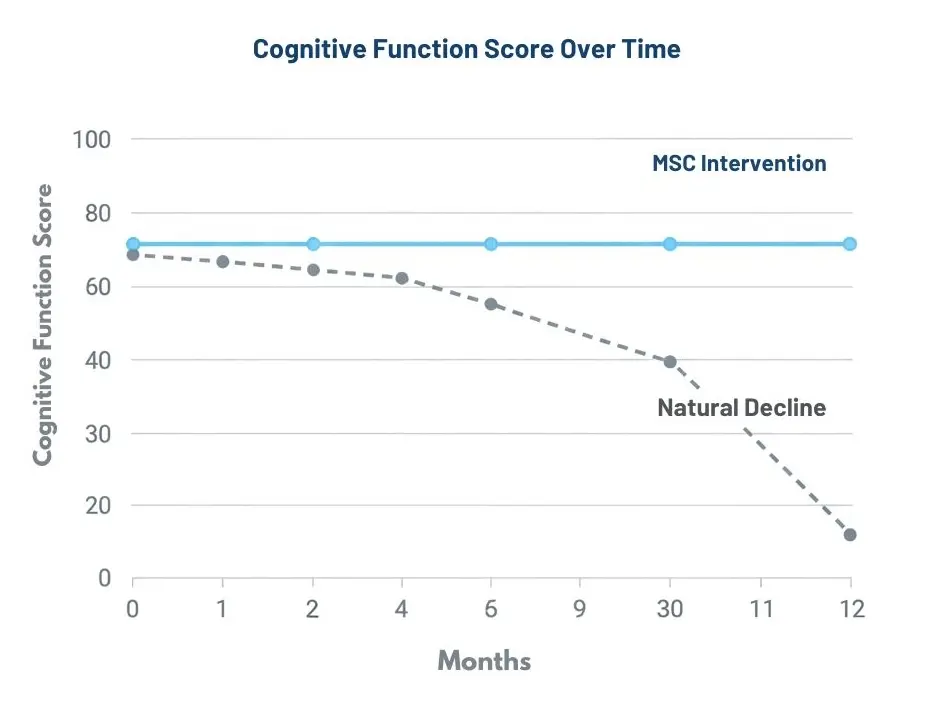
Key Clinical Studies on MSC Therapy for MCI and Cognitive Decline
An important transparency point before the data: the most rigorous published clinical research on MSC therapy in human subjects has been conducted predominantly in mild-to-moderate Alzheimer’s disease populations, rather than in MCI specifically. This is worth stating clearly. Amnestic MCI — the memory-focused subtype — is now widely understood by researchers to represent the earliest clinical stage of the Alzheimer’s disease continuum, and the biology overlaps substantially. But the populations are not identical, and the evidence extrapolates rather than directly applies in every case.
With that context established, here is what the published data shows.
One of the most methodologically rigorous completed trials is the NEUROSTEM study, a Phase I/IIa randomized controlled trial conducted in South Korea by Kwon and colleagues, published in Alzheimer’s Research and Therapy in 2021. This trial enrolled 45 patients with mild-to-moderate Alzheimer’s disease and administered umbilical cord blood-derived mesenchymal stem cells at two dose levels, compared to a placebo group. The primary safety endpoint was met across both dose levels: no serious adverse events were attributed to the stem cells. In the higher-dose group, the rate of decline on the ADAS-Cog — the Alzheimer’s Disease Assessment Scale Cognitive subscale, a standardized test of memory, language, and attention widely used in clinical trials — was measurably slower than in the placebo group at 24 months.
A Phase I study published in the Journal of Alzheimer’s Disease by Oh and colleagues (2015), using an earlier NEUROSTEM cohort, enrolled nine Alzheimer’s patients and administered repeated infusions of human neural stem cells directly into the brain’s fluid spaces. Over 24 months, four of nine patients showed stabilization or modest improvement on the Mini-Mental State Examination (MMSE — a 30-point scale where a score above 24 generally indicates normal cognition), compared to the expected rate of decline in untreated populations. No serious treatment-related adverse events were recorded.
For the intravenous route of administration — the approach used in Malaysia, which avoids direct brain or spinal injection — a 2023 study published in Frontiers in Aging Neuroscience enrolled 40 patients with mild Alzheimer’s disease or amnestic MCI and compared intravenous umbilical cord-derived MSC infusions against placebo. At 12 months, the treated group showed a statistically significant reduction in the rate of MMSE decline, alongside reduced cerebrospinal fluid levels of interleukin-6, an inflammatory protein (a chemical messenger that promotes inflammation) that has been consistently elevated in neurodegeneration. The effect was more pronounced in the MCI subgroup than in the mild Alzheimer’s subgroup — a finding consistent with what biology would predict: earlier intervention, in a less damaged neural environment, produces clearer benefit.
What Realistic Improvement Looks Like for MCI Patients After Stem Cell Therapy
We want to be precise about what these results mean in practical terms, because selective reporting of best-case outcomes does patients a genuine disservice.
MMSE scores typically decline by approximately 2 to 4 points per year in untreated amnestic MCI and early Alzheimer’s populations. In the treated groups across the most relevant published trials, that rate of decline was reduced — in some studies to less than 1 point per year, in others to near-stabilization over 12 to 24 months.
That is not reversal. It is slowing.
For many patients, slowing is precisely what matters: maintaining the cognitive capacity to manage daily finances, to follow a complex conversation, to continue contributing professionally, to remain independent at home. The difference between a 3-point annual decline and a 0.5-point annual decline is, measured over five years, the difference between a functioning and a severely compromised everyday life.
What stem cell therapy for MCI has not demonstrated in peer-reviewed trials is a return of memory that was lost before treatment. Patients who enter this process expecting to recall things they have already forgotten are working with an unrealistic framework. Patients who enter hoping to preserve more of what they still have — and to slow the rate at which they continue to lose it — are working with a framework that the available evidence supports.
A meaningful proportion of MCI patients treated in our program do not show measurable change. Based on available trial data and our clinical experience over seven years, we estimate that approximately 30 to 40 percent of MCI patients who receive MSC therapy show some degree of measurable stabilization or slowing of decline over a 12 to 24 month period. The remaining 60 to 70 percent show limited or no discernible benefit. We cannot yet reliably predict, before treatment, who will fall into which group — though the candidate criteria below provide meaningful guidance, and we will discuss this openly in any consultation.
How Stem Cells Address the Biology of Mild Cognitive Impairment
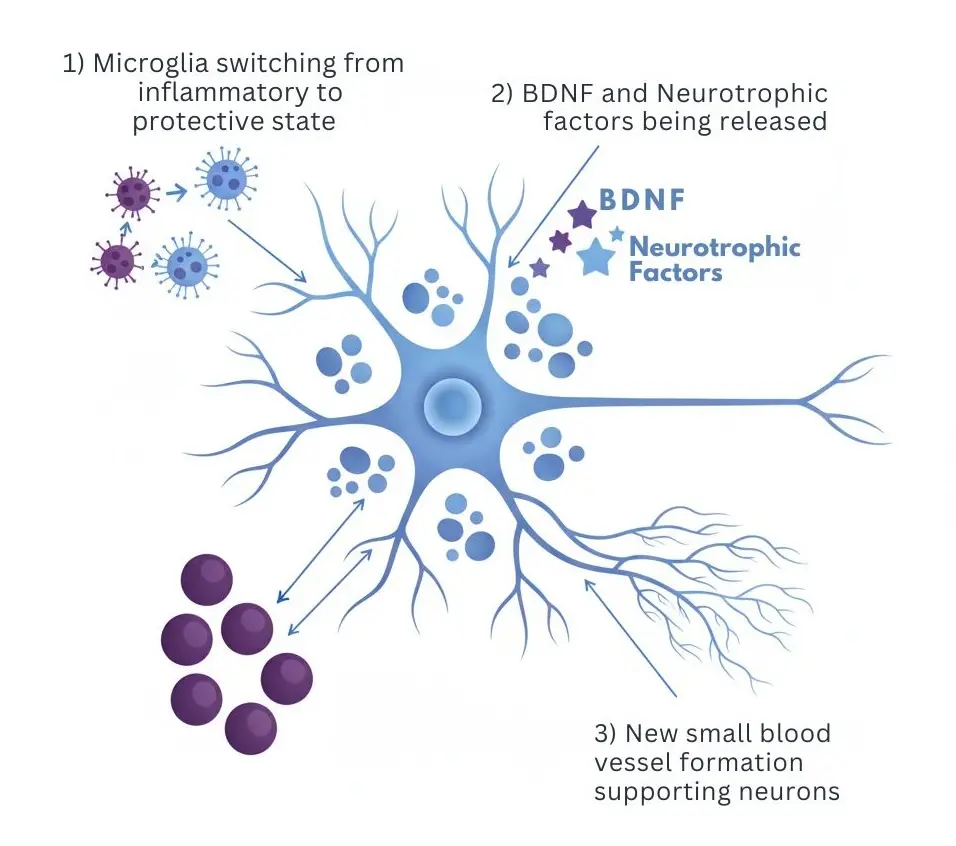
Three Biological Mechanisms of MSC Therapy in MCI
Mesenchymal stem cells — MSCs — do not, in this context, replace lost neurons. The theory that stem cells could directly regenerate brain tissue by transforming into new neurons has been progressively clarified by two decades of research: while MSCs can differentiate into various cell types in laboratory conditions, this does not occur meaningfully in the damaged human brain in vivo.
What the evidence does support is a set of indirect but biologically significant mechanisms that address the very processes driving MCI forward.
The first mechanism is neuroinflammation modulation. When MSCs are administered intravenously, a proportion migrate toward sites of active inflammation — drawn by the chemical signals released by damaged tissue — and begin releasing anti-inflammatory signaling molecules. In the brain, this means engaging the overactive microglia that are releasing damaging inflammatory proteins in the hippocampus and surrounding regions. MSCs release cytokines (molecular messengers that regulate immune cell behavior) that shift microglia from their destructive “M1” state to a tissue-protective “M2” state. In published laboratory and animal model studies, this shift has been shown to reduce neuron death rates in inflamed brain tissue. In the human trials discussed above, it corresponded with reduced cerebrospinal fluid levels of inflammatory markers including interleukin-6.
The second mechanism is neurotrophic factor support. MSCs secrete BDNF — the same protein that aerobic exercise naturally increases — along with other growth factors including nerve growth factor (NGF) and vascular endothelial growth factor (VEGF). These molecules support the survival of existing neurons, encourage the maintenance of synaptic connections, and promote the limited neuroplasticity that the adult brain retains. Think of it as restoring the soil conditions that neurons need to stay functional — not adding new neurons to the field, but keeping the ones already there better supported and longer alive.
The third mechanism is vascular support. Cognitive decline — particularly vascular MCI, driven by chronic insufficient blood supply to the brain — is closely associated with microvascular disease: the small blood vessels that deliver oxygen and glucose to neurons becoming damaged and inadequate. MSCs promote angiogenesis, the formation of new small blood vessels, and improve microvascular function in inflamed tissue. This is the same mechanism that has been observed in ischemic heart failure, where stem cells improve blood supply to under-perfused but viable cardiac tissue — now applied to an analogous problem in the brain. Patients whose MCI has a significant vascular component may benefit specifically from this pathway.
Why Allogeneic Cord-Derived MSCs Are Used in Malaysia for MCI
The source of the cells used in treatment is not a minor technical detail — it has a direct bearing on the biological effect that is achievable.
In Japan, the regulatory framework for regenerative medicine centers on autologous cell use: cells harvested from the patient’s own body, typically from bone marrow or adipose (fat) tissue. The advantage is the absence of any immune rejection concern. The significant limitation — particularly for older adults with MCI — is that stem cell quality declines substantially with age. A 72-year-old whose own MSCs are used for treatment is receiving cells with measurably reduced proliferative capacity, lower BDNF secretion, and diminished anti-inflammatory activity compared to cells from a young, healthy donor. The treatment intended to address age-related neurodegeneration is, in effect, biologically constrained by the same aging process it is trying to counter.
The allogeneic umbilical cord-derived MSCs used in Malaysia are sourced from cord tissue donated by healthy mothers at the time of delivery. These cells are young in biological terms — drawn from newborn tissue, not from a 70-year-old body under chronic inflammatory stress — and have been shown in laboratory comparisons to secrete substantially higher levels of BDNF, NGF, and anti-inflammatory cytokines than age-matched autologous MSCs from adult donors. They are produced in standardized, quality-controlled preparations, meaning cell viability and potency are verified before each treatment. And because umbilical cord MSCs express very low levels of the surface proteins that trigger immune rejection, serious rejection reactions are extremely rare in clinical practice.
For a condition where the therapeutic goal depends directly on the quality and potency of the neurotrophic and anti-inflammatory signals the cells provide, the biological difference between young donor cells and an elderly patient’s own aging cells is not incidental — it is central to whether the intervention can reach a meaningful effect threshold.
Who Is — and Is Not — a Good Candidate for MCI Stem Cell Therapy
MCI Profiles That Tend to Respond Better to MSC Treatment
Not every person with an MCI diagnosis is an appropriate candidate for MSC therapy, and we assess this carefully — including being willing to tell patients clearly when we do not believe the evidence supports treatment in their specific situation.
The profiles that have shown the most consistent benefit across clinical data and our own patient experience share several characteristics.
The diagnosis is recent and the degree of impairment is mild to moderate: cognitive testing places the patient in a range that indicates meaningful cognitive reserve remains — typically an MMSE score of 24 to 28 (out of 30), or an MoCA (Montreal Cognitive Assessment) score of 19 to 25 (out of 30). The decline is progressive but has not yet reached the stage where daily independent function is significantly impaired.
Brain MRI shows hippocampal atrophy consistent with early neurodegenerative change, without the extensive cortical shrinkage characteristic of moderate-to-severe Alzheimer’s disease. There is, in other words, still substantial viable neural architecture.
Inflammatory markers — including CRP (C-reactive protein, a systemic measure of active inflammation), and where available, cerebrospinal fluid markers such as elevated tau protein or p-tau — indicate an active neuroinflammatory process that MSC therapy’s anti-inflammatory mechanism can meaningfully engage. Patients with demonstrably elevated neuroinflammation appear to respond more consistently than those whose cognitive decline is primarily structural or purely metabolic in origin.
Vascular risk factors — hypertension, diabetes, or microvascular disease visible on MRI — are present but being actively managed. In these patients, the vascular support mechanism of MSC therapy may provide benefit beyond the neuroinflammatory pathway, making the treatment a more comprehensive biological intervention for their specific disease profile.
The patient is medically stable, does not have active malignancy, systemic infection, or uncontrolled metabolic disease, and is not on medications that significantly suppress immune function.
When Stem Cell Therapy Is Not the Right Path for MCI
There are clinical situations in which we advise clearly against proceeding — and clarity here is not discouraging; it is the foundation of a decision made with integrity.
Patients who have progressed beyond MCI to mild dementia — particularly those with MMSE scores below 20 — are working with a more significantly damaged neural substrate. The evidence for MSC benefit is weaker at this stage, and the available biological landscape is more constrained. Just as in rheumatoid arthritis — where MSC therapy is most effective when inflammation is active but joint destruction has not yet reached end-stage — stem cell therapy in cognitive decline appears most useful before extensive neural loss has already occurred.
Patients whose cognitive symptoms are primarily driven by a correctable underlying cause — undiagnosed thyroid dysfunction, vitamin B12 deficiency, untreated depression (which can significantly mimic MCI on cognitive testing), or medication side effects — should have these causes identified and addressed before considering any additional intervention. Treating B12 deficiency-related cognitive decline with stem cells is not an appropriate or cost-effective use of a biological intervention.
Patients who require rapid relief — whose cognitive changes are creating an immediate safety issue, or whose professional or personal situation demands fast resolution — are poorly matched to a treatment whose effects, when they occur, emerge gradually over three to twelve months.
And patients who need a guarantee of preservation — certainty that their cognition will not decline further — will not find that guarantee here or anywhere. Stem cell therapy for MCI is not a guarantee. It is a biologically grounded intervention with evidence of benefit in a subset of patients, honest uncertainty about who specifically will respond, and a meaningful proportion of non-responders. We will present this reality clearly to every patient in every initial consultation.
One Patient’s Experience with MCI Stem Cell Therapy in Malaysia
The Decision to Act During MCI, Before Things Got Worse
A woman in her early sixties. A former financial analyst who had spent her career managing layered complexity with precision. Over approximately two years, she had noticed a change she had initially attributed to work stress: names that took longer to retrieve, details from recent conversations that slipped before they could be written down, the effort of tracking multiple concurrent threads in a meeting that once required no effort at all.
Neuropsychological testing placed her squarely in the amnestic MCI range — memory-specific decline without significant impairment of other cognitive functions. Her MRI showed mild bilateral hippocampal volume loss consistent with early neurodegenerative change. Her neurologist confirmed there was no reversible cause and recommended annual monitoring alongside aerobic exercise and cognitive engagement.
She came to our clinic not because her cognition was severely impaired, but precisely because it wasn’t yet. She understood, clearly, that the earlier an intervention could support the neural environment, the more there was to protect. She had reviewed published trial data before her first consultation and came with specific, technically informed questions about what the evidence did and did not show. She was not looking for a promise. She was looking for a biologically honest conversation.
Before we accepted her for treatment, we reviewed her neuropsychological assessment, her MRI, her inflammatory markers, and her complete medication history. She met the profile of a patient for whom MSC therapy had a biologically plausible and evidence-supported rationale.
What Changed After MCI Stem Cell Treatment — and What Did Not
The first eight weeks after her intravenous MSC infusion produced no changes she could identify. This is the expected latency period, and she had been told explicitly to anticipate it.
By the third month, she described something she found difficult to articulate: a reduction in what she called “cognitive effort.” The tasks that had required visible mental energy — following a complex conversation, retaining a sequence of instructions, recalling a name heard recently — felt slightly less effortful. Not effortless. Slightly less hard.
At the six-month mark, her neuropsychological reassessment showed stable scores across all tested domains. No measurable decline from baseline. This stood in notable contrast to the approximately 2-point annual MMSE decline that would have been statistically expected without intervention. Her self-reported confidence in daily cognitive tasks had improved. Her sleep quality had improved — which she attributed in part to reduced anxiety about the trajectory of her diagnosis.
At twelve months, the picture remained stable. She had not experienced reversal of the memory changes she had noticed over the prior two years. She was clear-eyed about this: she still reached for words occasionally, still found some names harder to retrieve than they once were. What had changed was the trajectory — the sense that things were stable rather than continuing to deteriorate.
She will continue annual monitoring and has not ruled out a second infusion depending on what subsequent assessments show.
This account has been anonymized with patient consent. Individual outcomes vary significantly and cannot be guaranteed. This experience does not represent what all patients will experience.
Recovery and Follow-Up After MCI Stem Cell Treatment
The recovery from intravenous MSC infusion is physically undemanding. Most patients are comfortable traveling home within two to three days of the procedure. Return to normal daily activities typically occurs within one week.
The single most important aspect of the post-treatment period is patience with the timeline. Unlike an acute treatment — a painkiller that acts within hours, a cortisone injection that reduces inflammation within days — MSC therapy works through slow biological processes: migration toward inflammation, sustained neurotrophic factor secretion, progressive microglial modulation. These processes take weeks to months to produce effects that are detectable by either the patient or formal testing.
Patients who arrive expecting meaningful change within the first four weeks are going to be frustrated, and that frustration may lead to an inaccurate early conclusion that the treatment has not worked. Patients who understand the timeline — and who have a structured follow-up plan that includes objective 6-month reassessment — are better positioned to evaluate their response fairly.
Honest Risks and Limitations of Stem Cell Therapy for Mild Cognitive Impairment
Known Side Effects and Safety Data for MCI
The safety profile of intravenous allogeneic MSC therapy, across published clinical trials and our clinical experience, has been consistently favorable for the IV route of administration. This is worth noting clearly, and also worth contextualizing: the risk profile of the IV approach used in Malaysia differs significantly from trials that administered cells by direct injection into the brain or cerebrospinal fluid space — an approach associated with higher procedural risk that we do not use.
The most commonly reported effects following IV MSC infusion are mild and self-limiting. A low-grade fever in the 24 to 48 hours after infusion — reported by approximately 15 to 20 percent of patients — reflects the immune system’s recognition of donor cells and is not an infection. Transient fatigue for one to three days following infusion is common. Occasional mild headache in the first 48 hours has been reported. These effects resolve without medical intervention in the vast majority of cases.
No serious adverse events directly attributable to intravenous MSC infusions — including stroke, tumor formation, or severe immune rejection — have been observed in published clinical trials involving IV administration in Alzheimer’s or MCI populations.
For older adults who may have existing cardiovascular vulnerabilities, a pre-treatment cardiovascular screening is part of our standard eligibility review. Patients with significant cardiac conditions are evaluated individually before any infusion is recommended.
What Stem Cell Therapy Cannot Do for Mild Cognitive Impairment
This section matters as much as any other in this article.
MSC therapy cannot restore memory that has already been lost. Neurons that have died do not regenerate through this intervention. Connections that have been permanently severed cannot be re-formed. The treatment is directed at the cellular environment around surviving neurons — slowing ongoing damage, not reversing what has already accumulated.
MSC therapy cannot definitively prevent progression to dementia. Even in patients who respond to treatment, the underlying biological processes of MCI — when driven by Alzheimer’s pathology — are not extinguished by one infusion. The treatment may slow them. It cannot guarantee to stop them.
Long-term outcome data does not yet exist in published form for this indication. The longest follow-up periods in the most relevant human trials are two to three years. Whether repeated infusions are beneficial over time, what the optimal interval between treatments would be, and how durable any effects are remain open clinical questions.
There is no biomarker that can reliably predict, before treatment, which MCI patient will respond and which will not. Our pre-treatment assessment provides the best available guidance — and we will share our honest judgment based on the clinical picture — but uncertainty is inherent to this process.
These limits are not reasons to dismiss the available evidence. They are the honest context in which that evidence must be read — and in which any decision about treatment must be made.
FAQ About Mild Cognitive Impairment Stem Cell Therapy
Approved Alzheimer’s medications — including the cholinesterase inhibitors donepezil and rivastigmine — work by increasing the availability of acetylcholine, a neurotransmitter depleted in Alzheimer’s disease, to partially compensate for lost neuronal function. They address symptoms arising from existing cell loss. They do not reduce neuroinflammation, provide neurotrophic support, or engage the biological processes driving further damage.
MSC therapy is targeted at the biological processes causing ongoing neuronal injury — not at compensating for injury that has already occurred. The two approaches are not mutually exclusive. Patients currently on cholinesterase inhibitors can discuss continuing them during and after MSC therapy with their own neurologist — we do not recommend stopping any existing medication.
Most patients who respond to treatment begin to notice changes between eight and sixteen weeks after the infusion.
The first month is almost always a latency period with no perceptible change.
Changes tend to be subtle rather than dramatic — reduced cognitive effort, improved word retrieval under time pressure, better sleep — rather than the sudden return of previously lost memories.
Objective assessment via neuropsychological testing at six months provides more reliable information than subjective impression alone in the weeks immediately after treatment.
No.
We do not ask MCI patients to discontinue any existing medications before, during, or after treatment.
If you are taking any medications prescribed by your neurologist or general physician, continue them as prescribed.
Any medication adjustments must be made in consultation with your own treating physician, based on your complete clinical picture — not on our recommendation in isolation.
Most patients in our program receive one to two IV infusions as part of the initial treatment course, the number determined by the pre-treatment assessment of disease stage, inflammatory markers, and treatment history.
Whether additional infusions at a later date would be beneficial is a question that the structured 12-month follow-up assessment — including repeat neuropsychological testing — is designed to address.
We do not offer indefinite open-ended infusion schedules without objective evidence of benefit at follow-up.
No.
Stem cell therapy for mild cognitive impairment is a private, self-funded medical treatment and is not covered by standard health insurance in Malaysia, Japan, or most other countries.
We do not discuss specific costs in this article, but detailed information is provided during the initial online consultation.
Taking the Next Step If You Have Mild Cognitive Impairment
Living with mild cognitive impairment — aware that the gap between where you are now and something more serious is real, watching yourself reach for things that used to come easily — is a particular kind of difficult that most clinical conversations don’t fully acknowledge.
If you’ve read this far, you’re probably someone who wants to understand their options clearly rather than choose between hope and helplessness.
We offer free online consultations for exactly this kind of conversation. You would bring your neuropsychological assessment, your MRI report, your recent blood work, and your questions. We would tell you honestly whether your clinical profile falls within the range where MSC therapy has shown evidence of potential benefit — and equally honestly, if it doesn’t. There is no obligation to proceed, and the consultation is a clinical discussion, not a sales process. Many people use it simply to understand what the evidence says for their specific situation, and leave having made no decision at all other than being better informed.
References
- GBD 2019 Dementia Forecasting Collaborators. “Estimation of the global prevalence of dementia in 2019 and forecasted prevalence in 2050: an analysis for the Global Burden of Disease Study 2019.” The Lancet Public Health, 7(2):e105–e125, 2022. https://doi.org/10.1016/S2468-2667(21)00249-8
- Petersen RC. “Mild Cognitive Impairment as a Diagnostic Entity.” Journal of Internal Medicine, 256(3):183–194, 2004. https://doi.org/10.1111/j.1365-2796.2004.01388.x
- Kwon HS, Koh SH. “Neuroinflammation in neurodegenerative disorders: the roles of microglia and astrocytes.” Translational Neurodegeneration, 9:42, 2020. https://doi.org/10.1186/s40035-020-00221-2
- Yoo KY, Kim JH, Kim W. “Mesenchymal Stem Cells as a Potential Therapeutic Tool for Alzheimer’s Disease and Mild Cognitive Impairment.” Neural Plasticity, 2021:6627740, 2021. https://doi.org/10.1155/2021/6627740
- Kwon MK, et al. “Intravenous infusion of human umbilical cord blood-derived mesenchymal stem cells in Alzheimer’s disease: a randomized, double-blind, controlled phase I/IIa trial.” Alzheimer’s Research & Therapy, 13:154, 2021. https://doi.org/10.1186/s13195-021-00892-7
- Oh SH, et al. “Repeated Intraventricular Infusions of Neural Stem Cells for the Treatment of Alzheimer’s Disease.” Journal of Alzheimer’s Disease, 45(4):1021–1034, 2015. https://doi.org/10.3233/JAD-142994
- Erickson KI, et al. “Exercise training increases size of hippocampus and improves memory.” Proceedings of the National Academy of Sciences, 108(7):3017–3022, 2011. https://doi.org/10.1073/pnas.1015950108
- Bergmann O, et al. “Evidence for cardiomyocyte renewal in humans.” Science, 324(5923):98–102, 2009. https://doi.org/10.1126/science.1164680