

Frozen Shoulder Stem Cell Therapy | Can You Regain Shoulder Mobility Without Surgery?
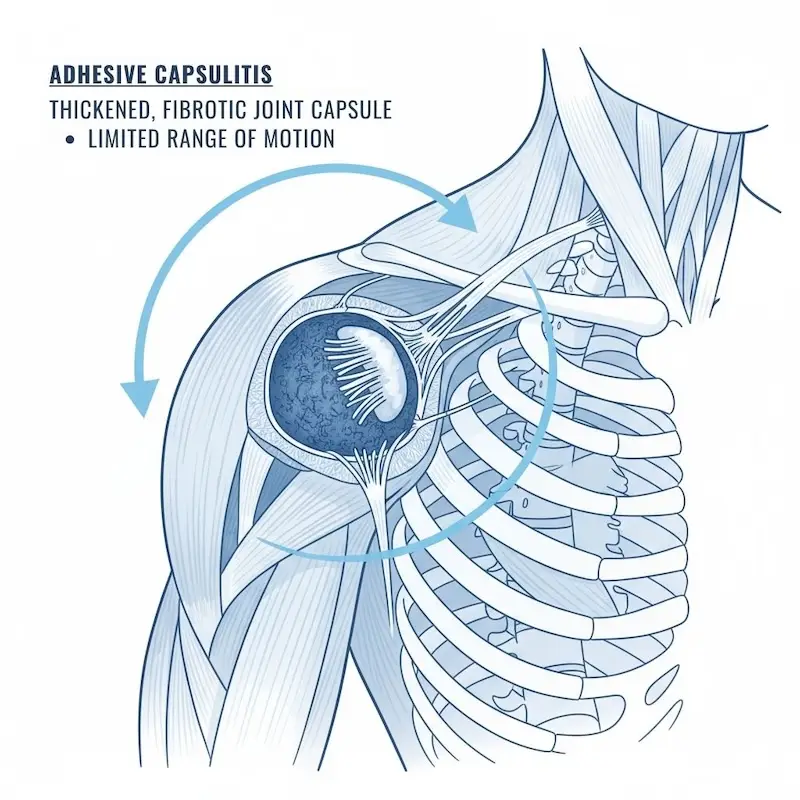
Reaching for a seatbelt has become a two-handed operation. Pulling a shirt over your head requires a moment of strategy — and occasionally produces a sharp stab of pain that stops you mid-motion. Sleeping on your affected side is no longer an option, and even resting your arm at your side for too long builds into a deep, aching pressure.
If you have been diagnosed with frozen shoulder — medically known as adhesive capsulitis — you already know how completely this condition can take over the ordinary details of a day.
And you may have already heard the standard answer: it usually resolves on its own, in one to three years. For many people, that answer is not enough.
Frozen shoulder affects an estimated 2 to 5 percent of the general population worldwide, with peak incidence between the ages of 40 and 60. The condition has a particularly strong connection to diabetes: people with diabetes are approximately five times more likely to develop it than those without, and in patients with established frozen shoulder, the rate of diabetes or prediabetes can exceed 80 percent in some study populations. In a subset of patients — particularly those with diabetes or with more severe capsular involvement — the shoulder does not fully thaw on its natural timeline, and conventional treatment provides only partial relief.
This article is for people in that situation: those who have tried physiotherapy and corticosteroid injections, found themselves still limited, and are now asking whether stem cell therapy might offer a different biological approach.
We will explain what actually happens inside the shoulder joint in frozen shoulder, how stem cell therapy is hypothesized to address the underlying biology, what the current evidence shows honestly — including where direct clinical trial data for frozen shoulder is limited — who is a realistic candidate, and what the treatment process looks like at our clinic in Malaysia. We have been working in regenerative medicine for over seven years, with more than 200 patients treated using allogeneic umbilical cord-derived mesenchymal stem cells (MSCs). We do not believe this treatment is right for everyone, and we will be direct about both the potential and the limits.
Table of Contents
- Why Frozen Shoulder Refuses to Resolve on Its Own
- Where Standard Frozen Shoulder Treatments Fall Short
- How Stem Cell Therapy Approaches the Biology of Frozen Shoulder
- What the Research Evidence Shows — and Where the Gaps Are
- Who Is and Is Not a Good Candidate for Frozen Shoulder Stem Cell Therapy
- A Patient's Experience With Frozen Shoulder Stem Cell Treatment in Malaysia
- Honest Risks and Limitations of Frozen Shoulder Stem Cell Therapy
- FAQ About Frozen Shoulder Stem Cell Therapy
- If You Have Been Waiting Long Enough
- References
Why Frozen Shoulder Refuses to Resolve on Its Own
The Biology of Capsular Fibrosis in Frozen Shoulder
To understand why frozen shoulder is so resistant to treatment — and why it sometimes takes years to improve — it helps to understand what is physically happening inside the shoulder joint.
The shoulder joint is enclosed by a flexible sleeve of connective tissue called the joint capsule. Under normal conditions, this capsule is loose enough to allow the shoulder’s remarkable range of motion — the widest of any joint in the body. In frozen shoulder, the capsule undergoes a progressive process of thickening, contraction, and fibrosis.
Fibrosis is the replacement of normal, flexible tissue with dense scar-like material — the same process that stiffens internal organs in certain chronic diseases. Inside the frozen shoulder capsule, specialized cells called myofibroblasts become abnormally activated. These cells produce and deposit excess collagen — the structural protein that forms connective tissue — far beyond what the shoulder needs. The result is a capsule that becomes progressively thicker, stiffer, and smaller in volume. As the internal space of the joint shrinks, the shoulder loses its range of motion — not because of bone, cartilage, or muscle problems, but because the envelope containing the joint has contracted around it.
The inflammatory process that drives this fibrosis involves elevated levels of cytokines (chemical messengers that control inflammation) including TGF-beta (transforming growth factor beta), interleukin-6, and TNF-alpha within the joint capsule. These are the same families of inflammatory signals involved in the joint damage seen in conditions like rheumatoid arthritis. The key difference is location: in frozen shoulder, the primary target is the capsule itself, rather than the cartilage or bone.
Why the Three Stages of Frozen Shoulder Can Take Years to Complete
Frozen shoulder classically progresses through three overlapping stages.
The freezing stage — typically lasting two to nine months — is characterized by progressive, often severe pain, particularly at night, combined with increasing loss of motion in all directions. Most people seek care during this stage, and it is also when the inflammatory activation driving the fibrotic process is most intense.
The frozen stage — which can last four to twelve months — is characterized by stabilized but significant stiffness, with pain often somewhat reduced from its peak. Daily function is most limited during this phase.
The thawing stage — potentially lasting five to twenty-four months — involves gradual, often incomplete, return of motion as the fibrotic process slowly resolves on its own.
The biological reason recovery is so slow is that the resorption of excess collagen is a passive process — the body must break down the abnormal capsular tissue without the same inflammatory urgency that created it. In people with diabetes, this process is further complicated by advanced glycation end-products (AGEs), which are compounds formed when excess glucose attaches to proteins including collagen. These glycated collagen fibers are more rigid, less responsive to normal enzymatic breakdown, and contribute to a capsule that is more fibrotic and less likely to resolve fully over time.
Understanding this biology is essential to understanding both why conventional treatments have limited reach — and what stem cell therapy is specifically attempting to address.
Where Standard Frozen Shoulder Treatments Fall Short
Corticosteroid Injections and Physiotherapy: What They Can and Cannot Do for Adhesive Capsulitis
The standard treatment pathway for frozen shoulder is well-established and genuinely helpful — up to a point.
Corticosteroid (steroid) injections delivered into the shoulder joint reduce the inflammatory load in the early stages of frozen shoulder. They can meaningfully reduce pain during the freezing and early frozen stages, enabling patients to engage more effectively with physiotherapy. Multiple clinical guidelines recommend them as a first-line intervention.
Physiotherapy — specifically guided stretching and mobilization — addresses the mechanical consequences of capsular contraction. It works by gradually reintroducing range of motion against the resistance of the tightened capsule, and there is evidence it improves functional outcomes when delivered consistently.
The limitation of both approaches is the same: they manage the symptoms and functional consequences of capsular fibrosis without directly addressing the fibrotic process itself. Steroid injections reduce inflammation during the active phase, but they do not inhibit the myofibroblast activity that is laying down the excess collagen. Physiotherapy stretches a tight capsule but does not change the tissue composition of the capsule itself. When the inflammatory process driving fibrosis is particularly intense — as is often the case in diabetic frozen shoulder — these approaches may provide relief without altering the underlying trajectory.
For a subset of patients, multiple corticosteroid injections lose effectiveness over time, and physiotherapy reaches a plateau where continued sessions yield diminishing returns on mobility. This is the point at which many people begin asking whether anything can address the fibrotic biology more directly.
Manipulation Under Anesthesia for Frozen Shoulder: Effective but Not Without Drawbacks
When conservative approaches fail after several months, surgical intervention may be offered. The most common option is manipulation under anesthesia (MUA) — a procedure in which the patient is sedated and the surgeon physically moves the arm through its range of motion, rupturing the adhesions inside the contracted capsule.
MUA can be effective, and it often produces an immediate, significant improvement in range of motion. However, it is not without drawbacks. The procedure involves general anesthesia. Controlled tearing of the capsule carries a small but genuine risk of fracture of the humerus (the upper arm bone), tearing of the labrum (the cartilage rim of the shoulder socket), or damage to surrounding nerves and blood vessels. Post-procedural physiotherapy is intensive and can be uncomfortable as the shoulder is mobilized through the newly created range. And for patients with diabetic frozen shoulder — the group most likely to have failed conservative care — recurrence rates after MUA are higher than in non-diabetic patients.
Arthroscopic capsular release, the surgical alternative to MUA, involves cutting the thickened capsule with a small instrument under direct camera guidance. It provides more controlled release than MUA and is associated with good outcomes in appropriately selected patients, but it is nonetheless a surgical procedure with all the associated recovery demands.
For many patients in their forties and fifties — with active professional and personal lives, and medical risk factors such as diabetes that complicate surgical recovery — the question of whether a biological approach might interrupt the fibrotic process without requiring surgery is a reasonable one to ask.
How Stem Cell Therapy Approaches the Biology of Frozen Shoulder
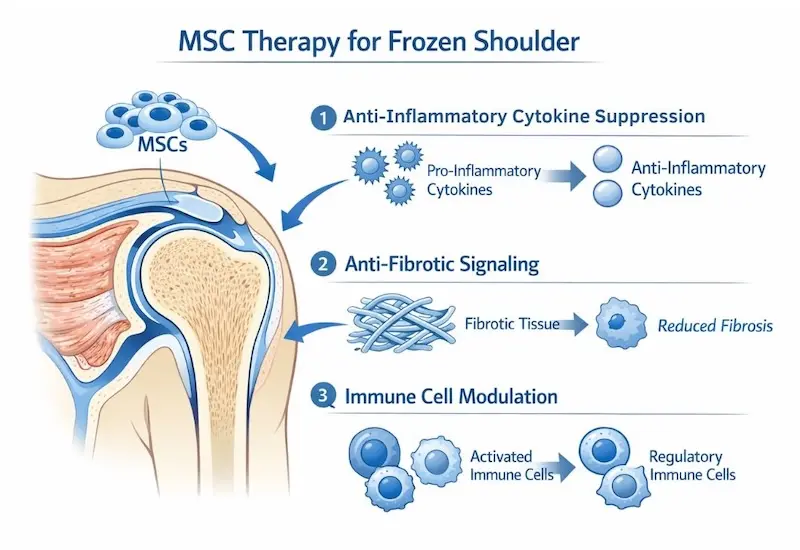
Mechanism 1: Interrupting the Inflammatory-Fibrotic Cascade in Frozen Shoulder
The central problem in frozen shoulder is a self-sustaining loop in which chronic inflammation signals fibroblasts (cells that produce connective tissue) to continuously deposit collagen. Mesenchymal stem cells (MSCs) release a broad spectrum of signaling molecules — including cytokines — that shift the local tissue environment away from a pro-inflammatory state.
Specifically, MSCs have been shown to suppress TGF-beta signaling, one of the primary drivers of myofibroblast activation and collagen deposition in the frozen shoulder capsule. They also reduce the levels of interleukin-6 and TNF-alpha — inflammatory proteins that sustain the capsular inflammation.
The practical significance of this is that MSCs are not simply reducing pain the way a steroid injection does. They are working upstream of the fibrotic process — at the level of the signals that tell cells to keep producing scar tissue — rather than downstream at the symptomatic level. This is a biologically different kind of intervention from anything in the standard treatment pathway.
Mechanism 2: Directly Suppressing Capsular Fibrosis in Frozen Shoulder
Preclinical research has specifically examined whether MSC-derived products can inhibit the fibrotic process inside a frozen shoulder capsule.
A 2022 study published in PMC investigated the effects of bone marrow stem cell-derived extracellular vesicles (small particles released by MSCs that carry signaling molecules) on capsular fibrosis. The study found that these vesicles inhibited the fibrogenic process in both laboratory cell cultures and a mouse shoulder immobilization model — reducing abnormal collagen production, suppressing activation of the fibrotic pathway, and improving shoulder range of motion in the animal model. The mechanism identified was suppression of the TGFBR1 pathway through a specific signaling molecule called let-7a, a finding that points to a precise biological explanation for how MSC products might interfere with capsular fibrosis rather than just reduce general inflammation.
It is important to be transparent: this is preclinical evidence, not a human clinical trial. The findings support a plausible mechanism, but they do not establish clinical efficacy in humans. We will return to this distinction when we discuss the full evidence picture.
Mechanism 3: Immune Modulation Relevant to Frozen Shoulder
MSCs also interact with macrophages — immune cells that play a dual role in frozen shoulder. During the freezing stage, inflammatory macrophages contribute to the cascade that activates fibroblasts. MSCs have been documented across multiple disease contexts to shift macrophages from an inflammatory state toward a tissue-repair state — reducing their contribution to the fibrotic signal.
In patients whose frozen shoulder has a strong inflammatory component — particularly those in the active freezing stage or those with elevated systemic inflammatory markers — this immunomodulatory mechanism may be particularly relevant. The same mechanism is central to the evidence base for MSC therapy in rheumatoid arthritis, where chronic joint inflammation and immune dysregulation are also the primary drivers of damage.
What the Research Evidence Shows — and Where the Gaps Are
Direct Evidence: MSC Research Specific to Shoulder Capsular Fibrosis
The most specific human evidence for MSC activity in frozen shoulder comes from the extracellular vesicle research described above. This preclinical work establishes a biologically plausible mechanism but has not yet been translated into a completed human randomized controlled trial specifically for adhesive capsulitis with MSC therapy.
This is an important fact to state clearly, because most competitor clinics do not say it. There is no large randomized controlled trial specifically comparing allogeneic MSC injection to placebo in frozen shoulder patients. The direct evidence base is preclinical and mechanistic rather than clinical.
For some conditions — such as osteoarthritis — a strong body of randomized trial evidence has accumulated over the past decade. For frozen shoulder specifically, the clinical trial literature is at an earlier stage of development. Patients deserve to know this distinction before making any decision.
Transferable Evidence: What Shoulder and Joint MSC Trials Tell Us
While frozen shoulder-specific trial data is limited, a broader base of evidence is relevant and worth discussing honestly.
A randomized controlled trial published in Scientific Reports (Kim et al.) enrolled 24 patients with chronic shoulder pain from partial supraspinatus tendon tears — a different shoulder diagnosis, but one involving the same joint, the same inflammatory environment, and the same tissue types that are targeted in frozen shoulder treatment. Patients received either MSC injection in fibrin glue, a fibrin glue control, or saline. The MSC group showed progressive improvement in shoulder pain and function scores over 12 months. Two-year follow-up confirmed sustained benefit without serious adverse events in any participant.
This is not direct evidence for frozen shoulder, but it is evidence that MSC injection into the shoulder joint is safe and biologically active in the same anatomical environment.
More broadly, the evidence base for MSC therapy in joint inflammation and fibrosis is substantial. A 2025 meta-analysis in Frontiers in Cell and Developmental Biology, which analyzed randomized controlled trials of MSC therapy for osteoarthritis, found statistically significant reductions in pain scores (mean difference of 4.08 points on the visual analog scale) and improvements in joint function at 24-month follow-up. While the joint affected was the knee rather than the shoulder, and the pathology was cartilage degeneration rather than capsular fibrosis, the anti-inflammatory and immunomodulatory mechanisms of MSCs operate in the same way regardless of joint location.
Honest Assessment: Where the Evidence Has Limits for Frozen Shoulder Stem Cell Therapy
We believe patients should understand the current state of evidence clearly.
For frozen shoulder specifically, there are no published large-scale randomized controlled trials of MSC injection. The most relevant direct evidence is preclinical — mechanistic studies showing that MSC-derived products can inhibit capsular fibrosis in laboratory and animal models. This is promising and biologically coherent, but it is not the same as proven clinical efficacy in humans.
The transferable evidence from MSC therapy in related shoulder and joint conditions supports the safety and biological activity of the approach. But extrapolating results from osteoarthritis trials to frozen shoulder is an imperfect process.
The honest framing of where the science currently stands is this: the biological case for MSC therapy in frozen shoulder is sound, the safety profile across joint MSC trials is reassuring, and the specific anti-fibrotic mechanism identified in preclinical research makes this a biologically coherent approach. The clinical trial data specific to adhesive capsulitis has not yet fully matured. Patients who proceed do so with an understanding that this is a treatment supported by biological reasoning and promising early evidence — not by the kind of large-scale trial record that exists for more established interventions.
Who Is and Is Not a Good Candidate for Frozen Shoulder Stem Cell Therapy
Frozen Shoulder Profiles That May Benefit From Stem Cell Therapy
Not every person with a frozen shoulder diagnosis is the same, and the profile of the patient matters considerably.
People most likely to be suitable candidates for MSC therapy share several characteristics. They are in the freezing or early-to-mid frozen stage of adhesive capsulitis — the period when the inflammatory-fibrotic process is most active and most amenable to biological intervention. They have had a confirmed diagnosis of adhesive capsulitis (by clinical examination and imaging, ruling out rotator cuff tears, severe glenohumeral osteoarthritis, or other structural causes of shoulder pain). They have either tried and achieved insufficient results from corticosteroid injections and physiotherapy, or have medical reasons — such as poorly controlled diabetes — that make them at higher risk of inadequate response to standard conservative care. They understand and accept that stem cell therapy for frozen shoulder involves biological uncertainty, and that results — when they occur — develop gradually over months rather than days.
Patients with diabetic frozen shoulder are a particularly relevant group. The more treatment-resistant and more fibrotic nature of frozen shoulder in diabetes is precisely the context in which a treatment aimed at the fibrotic process itself — rather than just pain management — may offer something standard approaches cannot.
When Frozen Shoulder Stem Cell Therapy Is Not the Right Choice
There are also clear situations in which we do not consider this treatment appropriate.
Patients in the late thawing stage — where the shoulder is already gradually recovering on its natural timeline and range of motion is progressively returning — may gain little from intervention. The natural resolution process is already underway, and the biological targets of MSC therapy are less relevant once the inflammatory-fibrotic activity has subsided.
Patients whose shoulder pain and restriction have a different underlying cause — a large rotator cuff tear, severe glenohumeral osteoarthritis, or a labral injury — are not appropriate candidates for a frozen shoulder treatment protocol. The diagnosis must be accurately established before any treatment is considered.
Patients with active infection in or near the shoulder, active cancer, or uncontrolled systemic illness that would preclude any elective procedure are not suitable.
Patients who need rapid improvement — for urgent professional, sporting, or personal reasons — should understand clearly that the biological timeline of MSC therapy does not produce fast results. If the clinical priority is rapid functional recovery, manipulation under anesthesia or arthroscopic release may be a more time-appropriate option.
And patients who are looking for a guaranteed return to full, pain-free shoulder mobility should understand that this is not what any evidence-based treatment currently offers for severe or diabetic frozen shoulder. The realistic framing is an attempt to interrupt the fibrotic process, reduce the inflammatory burden, and support the shoulder’s own healing capacity — not a guaranteed cure.
A Patient’s Experience With Frozen Shoulder Stem Cell Treatment in Malaysia
The Decision to Pursue Stem Cell Therapy for Frozen Shoulder
A woman in her early fifties with a fourteen-year history of type 2 diabetes was referred to us in late 2024 by her endocrinologist.
She had developed left shoulder pain and progressive stiffness approximately nine months earlier. At its worst, she could not raise her arm above waist height, could not reach behind her back, and was waking repeatedly at night from pain. She had received two corticosteroid injections — the first provided relief for approximately six weeks, the second for approximately three — and had completed twenty sessions of physiotherapy over four months with a documented plateau in her range of motion. Her shoulder consultant had discussed both manipulation under anesthesia and arthroscopic release, but given her diabetes-related cardiovascular risk and her wish to avoid general anesthesia, she was reluctant to proceed with surgery.
She came to us asking whether anything else could be tried before accepting surgery. We reviewed her imaging, her inflammatory markers, and her treatment history. Her MRI confirmed adhesive capsulitis without rotator cuff tear, labral injury, or significant glenohumeral osteoarthritis. She was in the mid-frozen stage. Her HbA1c (a measure of average blood sugar control over three months) was 7.4% — indicating suboptimal glycemic control, which is associated with more treatment-resistant frozen shoulder.
We were honest with her: direct RCT evidence for MSC therapy specifically in frozen shoulder is limited, the biological reasoning is sound, and her profile — diabetic, treatment-resistant, mid-frozen stage — was one where addressing the fibrotic process rather than just pain management made clinical sense. We made no guarantees and told her that a meaningful proportion of patients in similar situations do not achieve significant improvement.
How Recovery Unfolded After Frozen Shoulder Stem Cell Treatment
The first four weeks produced no change. She described this as an anxious period, and we had prepared her for it.
By week six, she noticed that morning stiffness — which had previously lasted for over an hour — was beginning to resolve in thirty to forty minutes instead. By the end of month three, she could reach the top of her head with her affected arm, a movement she had been unable to perform for seven months. External rotation — the movement most characteristically restricted in frozen shoulder — had improved from approximately fifteen degrees to around forty-five degrees.
At her six-month follow-up, active range of motion assessments showed approximately 60 to 70 percent of her normal shoulder mobility had returned. She had resumed driving without pain, was sleeping on her affected side again, and described her functional limitation as minor rather than disabling.
Her progress was meaningful, not miraculous. She continued her diabetes medication throughout. Night pain resolved before daytime pain did. The shoulder was not back to normal, and we discussed that some permanent reduction in the maximum range of motion is a realistic expectation after a severe diabetic frozen shoulder episode regardless of treatment.
She described the experience as having meaningfully shortened what her physiotherapist estimated would otherwise have been another twelve to eighteen months of progressive natural recovery.
This is an anonymized account based on actual clinical experience with patient consent. Individual outcomes vary and cannot be guaranteed.
Why Allogeneic Umbilical Cord MSCs Are Used for Frozen Shoulder in Malaysia
The source of the stem cells used in treatment has meaningful biological implications.
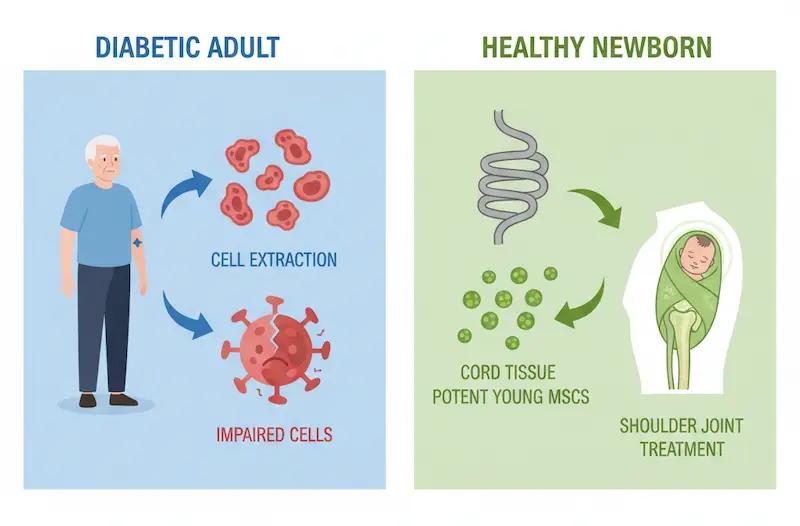
In Japan, autologous approaches — using cells harvested from the patient’s own bone marrow or fat tissue — are the regulatory standard. The advantage is the absence of any immune rejection concern. The significant disadvantage for frozen shoulder patients is that the people most likely to need this treatment — those in their forties and fifties with diabetes — are precisely those whose own MSCs are most likely to be functionally compromised. Chronic hyperglycemia impairs MSC function, reducing their anti-inflammatory and anti-fibrotic capacity.
The allogeneic umbilical cord-derived MSCs we use in Malaysia come from the umbilical cord tissue of healthy newborns at the time of birth. They are among the youngest and most biologically active MSCs available, with higher anti-inflammatory and anti-fibrotic signaling capacity than cells from older, metabolically stressed donors. Their immunogenicity — the degree to which they might trigger an immune response — is low, because they express few of the surface markers that normally provoke immune rejection. This makes it possible to use donor-derived cells with minimal rejection risk, while maintaining the potency advantage of youthful cells.
For patients with osteoarthritis, rheumatoid arthritis, or other joint conditions, this same cell source is used for the same reasons — and the biological rationale for preferring a young, potent cell source applies equally in frozen shoulder.
Honest Risks and Limitations of Frozen Shoulder Stem Cell Therapy
Known Side Effects of Frozen Shoulder Stem Cell Therapy
The safety profile of intra-articular MSC injections, across published clinical trial data in shoulder and joint conditions, has been consistently reassuring.
The most commonly reported side effects are local and temporary: soreness at the injection site, mild swelling in the shoulder joint, and a short-lived increase in stiffness in the first one to two weeks following the injection. These are expected responses to any intra-articular procedure and resolve without medical intervention.
Low-grade fever in the twenty-four to forty-eight hours after injection — reported in approximately 15 to 20 percent of patients receiving allogeneic MSC infusions in other joint studies — may occur and reflects mild immune activation rather than infection. This typically resolves without treatment.
Serious adverse events from intra-articular MSC injection, including infection, tumor formation, or immune rejection, have not been reported in published clinical trials. Two-year follow-up data from the shoulder tendon randomized controlled trial (Kim et al.) confirmed no serious adverse events across any treatment group.
The risk of joint infection (septic arthritis) from the injection procedure itself is a known theoretical risk of any intra-articular procedure. We perform the injection under strict sterile conditions with ultrasound guidance, minimizing but not eliminating this risk. In the unlikely event of infection, antibiotic treatment is typically effective.
What Stem Cell Therapy Cannot Do for Frozen Shoulder
This section is as important as any other.
MSC therapy for frozen shoulder will not produce rapid results. If you need your shoulder to move significantly better within four to six weeks — for a specific professional, sporting, or personal commitment — this is not the appropriate treatment pathway. Corticosteroid injection or surgical intervention will produce faster results for urgent situations.
Not all patients respond. Based on the biological reasoning and the patterns seen in analogous joint conditions, we believe a meaningful proportion of treatment-resistant frozen shoulder patients — particularly those in the active inflammatory-fibrotic stage — may benefit. But we cannot currently guarantee who will and will not respond, and a proportion of patients treated will not achieve significant improvement.
MSC therapy will not reverse end-stage structural changes to the shoulder joint. If a patient has secondary frozen shoulder resulting from severe rotator cuff tear, significant glenohumeral osteoarthritis, or post-surgical scarring, the primary structural problem must be addressed before or instead of a biological capsular approach.
And for the small proportion of frozen shoulder cases that will spontaneously resolve on their natural timeline without residual limitation, the incremental benefit of MSC therapy may not justify the cost and travel involved.
Finally, the clinical trial evidence specifically for frozen shoulder MSC therapy is limited at this stage. Patients who proceed do so with an accurate understanding of where the science currently stands, not because the evidence base is equivalent to what exists for surgical options.
FAQ About Frozen Shoulder Stem Cell Therapy
Corticosteroid injections reduce inflammation — they turn down the inflammatory signal that contributes to pain and fibrosis.
They do not directly inhibit the myofibroblast activity or collagen deposition that causes the capsule to contract.
MSC therapy works through signaling molecules that aim to interrupt the fibrotic process at a cellular level, not just reduce its inflammatory consequences.
The two approaches are not mutually exclusive — steroid injections in the active phase and MSC therapy later in the course are potentially complementary.
Most patients who respond begin to notice changes between six and sixteen weeks after the injection.
The biological process of inflammation modulation and fibrotic remodeling is slow.
Expecting meaningful change in the first four to six weeks is likely to produce an inaccurate early assessment that the treatment has not worked.
Full assessment of the treatment’s effect should be based on six-month outcomes.
This is an important and honest question.
The biological rationale is arguably strongest for diabetic frozen shoulder, because the treatment targets fibrotic mechanisms that are particularly active in diabetic patients.
At the same time, diabetic frozen shoulder is more severe and more treatment-resistant, which means the starting point is more challenging.
Our clinical experience suggests that diabetic patients in the active inflammatory-fibrotic stage who have failed conventional treatment represent the group where this approach is most logically indicated — but also the group in whom results are most variable.
Yes, and this is important.
Physiotherapy is not replaced by MSC therapy — it remains a necessary component of recovery.
The stem cell treatment aims to create a more favorable biological environment inside the shoulder capsule.
Physiotherapy then provides the mechanical stimulus that translates improved tissue biology into actual range of motion.
The two approaches work together.
Generally, we recommend avoiding corticosteroid injection in the same shoulder within six weeks before or after MSC injection.
Corticosteroids are known to suppress MSC activity, which could reduce the effectiveness of the treatment.
The sequencing of treatments is discussed during the initial consultation and planned appropriately for each patient.
If You Have Been Waiting Long Enough
If you have been managing frozen shoulder for more than six months, have found that standard treatments have reached their ceiling, and are asking whether a different biological approach might change the trajectory before accepting surgery — that is exactly the kind of conversation our consultations are designed to have.
We offer free online consultations where we review your imaging, your treatment history, and your current stage of the condition. We will give you our honest assessment of whether we think MSC therapy is clinically appropriate for your situation, including if we think it is unlikely to help. You do not need to have decided anything yet — bring your MRI and your questions.
References
- Zreik NH, Malik RA, Charalambous CP. Adhesive capsulitis of the shoulder and diabetes: a meta-analysis of prevalence. Muscles Ligaments Tendons J. 2016;6(1):26–34. https://doi.org/10.11138/mltj/2016.6.1.026
- Dyer BP, Burton C, Rathod-Mistry T, Blagojevic-Bucknall M, van der Windt DA. Diabetes as a risk factor for the onset of frozen shoulder: a systematic review and meta-analysis. BMJ Open Diabetes Res Care. 2023. https://doi.org/10.1136/bmjdrc-2022-003104
- Kim SH, Lee JW, Yoo SI, et al. A randomized controlled trial of stem cell injection for tendon tear. Sci Rep. 2022;12:869. https://doi.org/10.1038/s41598-021-04656-z
- Hu Y, Li X, Zhang Z, et al. Human bone marrow mesenchymal stem cell-derived extracellular vesicles inhibit shoulder stiffness via let-7a/Tgfbr1 axis. Stem Cell Res Ther. 2022;13:100. https://pmc.ncbi.nlm.nih.gov/articles/PMC8965035/
- Frontiers in Cell and Developmental Biology. Mesenchymal stem cell-based therapy for osteoarthritis: a systematic review and meta-analysis of clinical outcomes and functional recovery. 2025. https://doi.org/10.3389/fcell.2025.1746471
- Liu X, Treister R, Lang M, et al. The epidemiology and etiology of adhesive capsulitis in the U.S. Medicare population. J Shoulder Elbow Surg. 2021. https://pmc.ncbi.nlm.nih.gov/articles/PMC8474744/
- Tighe CB, Oakley WS Jr. The prevalence of a diabetic condition and adhesive capsulitis of the shoulder. South Med J. 2008;101(6):591–595. https://doi.org/10.1097/SMJ.0b013e3181661a53
- Wang AA, Gupta A. Shoulder adhesive capsulitis: epidemiology and risk factors. J Shoulder Elbow Surg. 2018. https://www.tigerortho.com/pdfs/research/shoulder-adhesive-capsulitis-jses.pdf