

Dementia Stem Cell Therapy | Can Cognitive Decline Actually Be Slowed?

She used to remember every grandchild’s birthday without checking a calendar. Now she asks her daughter what day it is — three times in the same conversation. Perhaps it is your father, who walked the same neighborhood route for thirty years and last week could not find his way back to the front door. Or perhaps it is you yourself: the word that will not come, the appointment that slipped past, the small unease that something is shifting in a way you cannot quite name.
For the estimated 57 million people worldwide living with some form of dementia, and the family members walking through the experience alongside them, the question by the time you reach an article like this is rarely what dementia is. You already know. The question is whether anything can actually change the trajectory.
Currently approved medications for dementia — donepezil, memantine, rivastigmine, and the more recent anti-amyloid antibodies lecanemab and donanemab — represent decades of careful research and meaningful clinical progress. They are also, by every honest measure, modest in their effects. Most slow decline by months rather than years. Some come with side effect profiles that families find difficult to manage alongside an already complicated condition. For families who have already started this medication path and are asking what else exists, the conversation often runs short.
This article is written for that conversation. We will explain what stem cell therapy is and is not as it relates to dementia, walk through the specific clinical trials that have been published, and be honest about where the evidence is meaningful, where it is preliminary, and where it does not yet exist. Our team has been practicing regenerative medicine in Malaysia for over seven years, treating more than 200 patients across multiple conditions using allogeneic umbilical cord-derived mesenchymal stem cells. We do not claim this treatment is a cure for dementia. We will be specific about what realistic candidates look like and what realistic expectations involve.
Table of Contents
- Why Dementia Progresses Despite the Brain's Natural Repair Capacity
- The Honest Ceiling of Currently Approved Dementia Medications
- Three Mechanisms: How Stem Cells May Influence the Dementia Brain
- The Blood-Brain Barrier and How Stem Cell Signals Reach the Dementia Brain
- What Phase 1 and Phase 2 Trials Show for Dementia Stem Cell Therapy
- Allogeneic Cord MSCs vs. Autologous Approaches for Dementia
- A Family's Account of Dementia Stem Cell Therapy
- Who May Benefit — and Who Should Not Pursue — Dementia Stem Cell Therapy
- Honest Risks and What Stem Cells Cannot Do for Dementia
- FAQ About Dementia Stem Cell Therapy
- Considering Your Next Step
- References
Why Dementia Progresses Despite the Brain’s Natural Repair Capacity
The Limited Capacity for Brain Self-Repair in Dementia
The adult human brain has some capacity for renewal — it generates new neurons in specific regions like the hippocampus throughout life — but that capacity is dwarfed by the rate at which dementia destroys brain tissue. In Alzheimer’s disease, abnormal proteins (beta-amyloid and tau) accumulate gradually over years, often a full decade before the first noticeable symptom. By the time memory loss appears in a clinically obvious way, billions of synapses — the connections between neurons that allow thought, memory, and language to function — have already been lost.
Unlike skin or liver tissue, brain tissue cannot be regrown in any meaningful clinical sense. The architecture of memory and personality is held together by patterns of connections between neurons that have been built up over a lifetime. When neurons die, the patterns die with them. The brain can sometimes route around small areas of damage, but not extensive ones, and not the kind of diffuse loss seen in advanced dementia.
How Neuroinflammation Drives Dementia Forward
The damage in dementia is not only the buildup of abnormal proteins. A second process — chronic neuroinflammation — is increasingly understood as a major engine of disease progression. Specialized immune cells in the brain called microglia, which normally act as housekeepers clearing debris, become persistently activated in dementia. Instead of cleaning, they begin releasing inflammatory signaling molecules called cytokines (chemical messengers such as TNF-alpha and interleukin-6 that tell other cells to remain in an inflamed state).
This sustained inflammation damages neurons that would otherwise survive. It accelerates the spread of misfolded proteins through brain tissue. It impairs the brain’s small blood vessels, reducing the delivery of oxygen and glucose to areas that are already struggling. The result is a self-reinforcing cycle: damage causes inflammation, inflammation causes more damage, and the brain has no natural off-switch for this loop. This biological reality is one of the central reasons dementia progresses despite even the most diligent medication adherence.
The Honest Ceiling of Currently Approved Dementia Medications
What Cholinesterase Inhibitors and Memantine Can — and Cannot — Do
The first line of pharmaceutical treatment for most types of dementia, particularly Alzheimer’s disease, is a class of drugs called cholinesterase inhibitors — donepezil, rivastigmine, and galantamine. These medications work by increasing the availability of acetylcholine, a brain chemical involved in memory and attention that becomes depleted as Alzheimer’s progresses. Memantine, often added in moderate-to-severe stages, works on a different chemical system to reduce excess glutamate signaling that damages neurons.
These drugs do help. In well-designed clinical trials, they produce measurable improvements in cognitive testing scores and modest delays in functional decline. But the improvements are limited in both magnitude and duration. A typical patient on cholinesterase inhibitor therapy gains roughly six to twelve months of relative stability before decline resumes at approximately the underlying biological rate. The drugs do not slow the underlying neurodegenerative process — they make the remaining brain function work slightly more efficiently, while the disease itself continues.
Side effects, especially nausea, loss of appetite, and sleep disturbances, are common enough that a meaningful proportion of patients discontinue these medications within the first year. For caregivers managing a family member who is already eating poorly and sleeping erratically, the additional burden can be significant.
The Promise and Practical Limits of Anti-Amyloid Therapies for Dementia
The most recent advance in approved dementia medications is the class of anti-amyloid antibody drugs — lecanemab (approved in 2023) and donanemab (approved in 2024) — which are designed to clear beta-amyloid plaques from the brain. The clinical trials supporting their approval did show statistically significant slowing of cognitive decline in early-stage Alzheimer’s patients.
The practical picture is more complicated. The slowing of decline observed in trials was measured in fractions of a point on standardized scales — meaningful at a population level, but often imperceptible to individual families over months of treatment. The medications require regular intravenous infusions, ongoing brain MRI monitoring, and careful screening because a meaningful percentage of patients develop a side effect called ARIA — amyloid-related imaging abnormalities — which can include brain swelling and small bleeds. Patients on certain blood thinners, or with specific genetic profiles, face heightened risk.
The drugs also do not work for all forms of dementia. Vascular dementia, Lewy body dementia, frontotemporal dementia, and mixed dementias do not have an analogous targeted therapy. For families affected by these forms, the conversation about pharmaceutical options is even shorter. It is precisely this gap — between what current medications can offer and what families are hoping for — that drives the search for biological alternatives.
Three Mechanisms: How Stem Cells May Influence the Dementia Brain
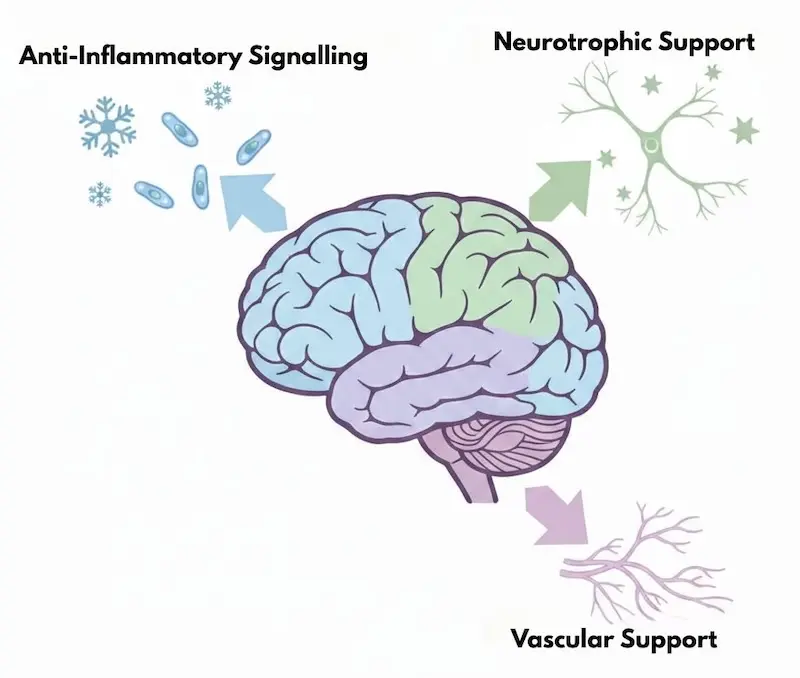
Reducing Neuroinflammation in Dementia
The first and most consistently documented effect of mesenchymal stem cells (MSCs) — the cell type used in our treatment program — in the dementia context is the reduction of chronic neuroinflammation. When MSCs are introduced into the body, they release a continuous spectrum of signaling molecules collectively called the secretome. Among these are cytokines and growth factors that shift overactive microglia from their inflammatory state back toward a more balanced, repair-oriented function.
This is not a generalized immunosuppressive effect like that of a steroid medication. The action is selective and bidirectional — quieting the destructive arm of the immune response while supporting the protective arm. In animal models of Alzheimer’s disease, MSC administration has been associated with reduced levels of pro-inflammatory cytokines in brain tissue and improved cognitive testing in treated animals. The translation to humans is what current clinical trials are working to establish.
Neurotrophic Support for Surviving Neurons in Dementia
The second mechanism is neurotrophic support. MSCs secrete a range of growth factors, most notably brain-derived neurotrophic factor (BDNF), nerve growth factor (NGF), and vascular endothelial growth factor (VEGF) — proteins whose job is to support the survival, repair, and connection-forming capacity of neurons. In a brain affected by dementia, many neurons have not yet died but are functioning under significant stress, with damaged synapses and impaired metabolic activity.
The framing here matters. MSCs do not replace neurons that have already been lost. What they may do is improve the survival and function of neurons that are still alive but compromised. For early- and moderate-stage dementia patients, where a meaningful population of stressed-but-viable neurons still exists, this represents a biologically plausible therapeutic target.
Improving Cerebral Blood Flow in Vascular Dementia
The third mechanism — angiogenesis, or the formation of new small blood vessels — is particularly relevant for vascular dementia and the vascular component of mixed dementias. Through similar paracrine signaling that has been studied in cardiovascular conditions, MSCs appear to support the growth and maintenance of small blood vessels in tissues affected by chronic underperfusion. Patients exploring whether stem cell therapy can help with cardiovascular damage face many of the same questions about vascular biology that arise in vascular dementia.
In the brain, restoration of cerebral blood flow to under-supplied regions can recover function from areas of brain tissue that are alive but operating below capacity due to chronic ischemia. This effect overlaps with but is distinct from the effects in Alzheimer’s-type dementia, and it is one reason mixed dementia patients with significant vascular components may show different response patterns than those with pure Alzheimer’s pathology.
The Blood-Brain Barrier and How Stem Cell Signals Reach the Dementia Brain
Why Most Drugs Cannot Reach Dementia-Affected Brain Tissue
The blood-brain barrier — a layer of tightly joined cells lining the brain’s blood vessels — is one of the central obstacles in treating any brain disease. Its function is to keep the brain protected from circulating toxins, pathogens, and even most of the body’s own immune cells. The downside is that most therapeutic drugs cannot cross it either, or cross it only inefficiently. This is one reason developing effective dementia medications is so difficult.
When mesenchymal stem cells are administered intravenously, very few of the cells themselves cross the blood-brain barrier intact. For some time, this was considered a fundamental limitation of stem cell approaches in neurology. More recent research has changed that understanding considerably.
How Stem Cell Signaling May Reach the Brain in Dementia
Mesenchymal stem cells release small membrane-bound particles called exosomes — packets of signaling molecules including proteins, microRNAs, and growth factors. These exosomes are far smaller than the cells that produce them and can cross the blood-brain barrier more readily. Once inside brain tissue, they deliver the same kinds of anti-inflammatory and neurotrophic signals that the parent stem cells produce.
This shift in understanding — from “stem cells must enter the brain to work” to “stem cell signals can enter the brain even if the cells themselves remain in the periphery” — is one of the conceptual foundations of intravenous MSC therapy for neurological conditions. It also helps explain why some intravenous trials have shown measurable effects despite the limited brain penetration of the cells themselves. Direct delivery routes — intrathecal injection (into the spinal fluid) or stereotactic intracerebral injection (directly into brain tissue) — have been used in some clinical trials when higher concentrations at the target tissue were considered necessary.
What Phase 1 and Phase 2 Trials Show for Dementia Stem Cell Therapy
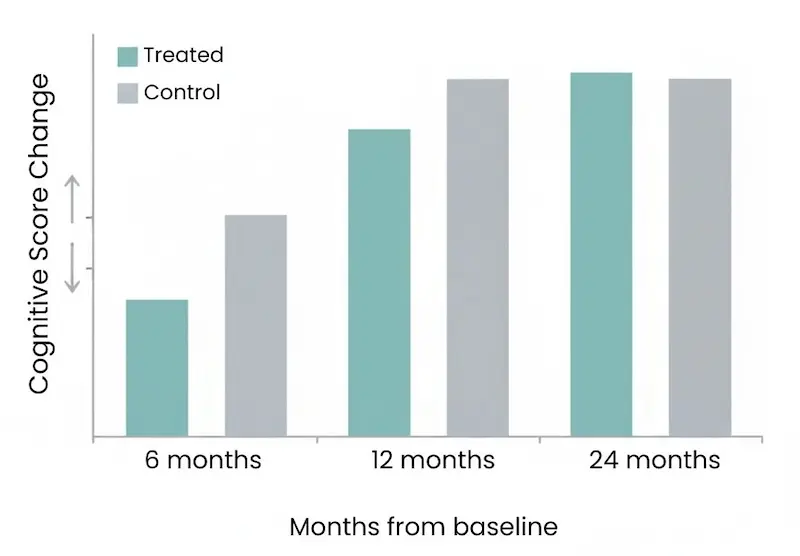
Key Clinical Trials in Dementia Stem Cell Research
The clinical trial landscape for stem cell therapy in dementia is younger than the landscape for cardiac or orthopedic applications, but it is no longer empty. Several Phase 1 and Phase 2 trials have been completed and published in peer-reviewed journals, and the picture they paint is cautiously encouraging while clearly preliminary.
The first significant published trial was conducted by Kim and colleagues at Samsung Medical Center in South Korea, using human umbilical cord blood-derived MSCs delivered by stereotactic injection directly into the brains of nine patients with mild-to-moderate Alzheimer’s disease. The 2015 Phase 1 results, published in Alzheimer’s & Dementia: Translational Research & Clinical Interventions, demonstrated that the procedure was safe, with no serious adverse events. Cognitive testing scores did not show significant improvement in this small early-phase trial, but the safety findings opened the door to larger studies.
A more recent and substantially larger body of evidence has emerged around Lomecel-B — an allogeneic bone marrow-derived MSC product developed for Alzheimer’s disease. The Phase 1 trial reported by Brody and colleagues in Alzheimer’s & Dementia (2023) demonstrated safety across multiple dose levels and identified preliminary signals of reduced cognitive decline and reduced brain volume loss in treated patients compared to placebo. The subsequent Phase 2a CLEAR MIND trial reported additional findings on cognitive trajectory and neuroinflammatory biomarkers in mild Alzheimer’s patients, with the treated group showing slower decline on standardized assessments compared to the placebo arm over the trial period.
For vascular dementia specifically, smaller studies using allogeneic umbilical cord-derived MSCs administered intravenously have reported improvements in cognitive testing scores and cerebral perfusion measures in patients with mild-to-moderate disease. Sample sizes remain small, and large randomized trials specifically for vascular dementia are still in progress.
What Realistic Improvement Looks Like for Dementia Patients
We want to translate these trial findings into terms that are useful for a family considering this path.
A “slowing of decline” of the magnitude seen in current trials does not look like reversal of dementia. It does not look like a parent recovering memories that have already been lost, or returning to the cognitive function they had three years ago. What it can look like, in patients who respond, is a longer plateau — a period of relative stability that extends beyond what conventional medication alone would have provided. Functional improvements, when they appear, often show up first in caregivers’ observations: a parent who is sleeping better, who is more engaged at family meals, who remembers a recent conversation when in the past they would not have.
A meaningful proportion of patients in current trials have not shown significant response. We do not yet have reliable predictors for who will and will not respond, although patient stage, baseline inflammation markers, and underlying dementia subtype all appear to matter. Families considering this treatment deserve to know the response rate is partial, not universal. We will not present otherwise.
Allogeneic Cord MSCs vs. Autologous Approaches for Dementia
Why Cell Source Matters in Dementia Stem Cell Therapy
Stem cell treatments for dementia can use cells harvested from the patient’s own body (autologous) or from a healthy donor (allogeneic). The distinction is not technical detail — it has direct clinical implications, particularly for an older patient population.
Autologous cells have the advantage of immunological compatibility. There is no risk of rejection because the cells are genetically the patient’s own. The disadvantage, especially relevant in dementia, is that the cells reflect the age and health status of the body they came from. A 75-year-old patient with neurodegenerative disease has stem cells whose own potency has been affected by decades of accumulated cellular stress. Studies comparing MSCs from older versus younger donors have consistently shown reduced proliferative capacity and reduced secretion of beneficial signaling molecules in cells from older sources.
In Japan, the regulatory framework for regenerative medicine permits autologous treatment, and many clinics use this approach. The advantage in convenience and immune compatibility comes with the trade-off of potentially less potent cells.
The Allogeneic Umbilical Cord Approach Used in Malaysia for Dementia
The treatment we offer in Malaysia uses allogeneic mesenchymal stem cells derived from donated umbilical cord tissue — specifically the Wharton’s jelly layer that surrounds the umbilical cord at birth. These cells are among the youngest, most metabolically active MSCs available, and they exhibit particularly strong immunomodulatory properties.
Because umbilical cord MSCs express low levels of the surface markers that typically trigger immune rejection, allogeneic use has been clinically tolerated across thousands of administrations in trials worldwide. The cells can be prepared in standardized, quality-controlled batches with verified viability and potency before each treatment — a level of consistency that is harder to achieve with cells freshly harvested from each individual patient. Families exploring whether allogeneic cord-derived MSCs offer advantages over autologous approaches in heart conditions will recognize the same logic applies in the dementia context, where younger and more potent cells appear particularly valuable.
A Family’s Account of Dementia Stem Cell Therapy
A Caregiver’s Decision to Pursue Dementia Stem Cell Therapy
A man in his early seventies. Diagnosed with mild-stage Alzheimer’s disease approximately three years before consulting us. He had been on donepezil for two years and memantine for one. His wife — herself in her late sixties and serving as primary caregiver — had watched him slowly lose interest in the woodworking hobby he had loved for forty years, struggle increasingly with the daily news he used to follow closely, and begin asking the same questions repeatedly within short conversations.
His neurologist had been candid. The medications were doing what they were designed to do, but the trajectory was the trajectory. The new anti-amyloid antibody options had been discussed but ruled out: a previous mini-stroke and an irregular heart rhythm placed him at elevated risk for the brain swelling complication. Surgical or device-based approaches for dementia did not exist in his case.
After researching extensively and having a video consultation with our team, the family elected to proceed with allogeneic umbilical cord MSC therapy in Malaysia in mid-2024. They understood, before traveling, that the response rate in current trials was partial and that we would not promise a specific outcome.
What the Year After Dementia Stem Cell Therapy Looked Like
The first six weeks brought no observable change. The wife described this period as quietly difficult — the part of the experience for which families need to be most prepared. Around month three, she began to notice that her husband was returning to the woodshop in the garage on his own initiative. The objects he made were simpler than before, but the activity itself had returned.
By month six, she reported that morning conversations had become noticeably more coherent. He was retaining the previous day’s events at a higher rate. His sleep — which had become fragmented over the previous year — had stabilized. Standardized cognitive testing performed by his neurologist at the nine-month mark showed scores that were stable rather than declining, in contrast to the trajectory of the prior eighteen months. His MRI showed no new vascular events.
He has not recovered cognitive function he had previously lost. He remains on his existing medications, and his neurologist continues to manage his care. What has changed, in the wife’s words, is that “the slope has flattened, even if it hasn’t reversed.” For a family in this position, that change has meaningful weight in daily life.
This is an anonymized account based on actual clinical experience. Individual results vary, and this outcome cannot be guaranteed for all patients.
Who May Benefit — and Who Should Not Pursue — Dementia Stem Cell Therapy
Profiles That Tend to Respond to Dementia Stem Cell Therapy
Based on published trial data and our clinical experience, dementia patients most likely to benefit from MSC therapy share several characteristics. They have been formally diagnosed with mild-to-moderate dementia — Alzheimer’s, vascular, or mixed forms with documented imaging or biomarker evidence. They have ongoing care with a neurologist or geriatrician and intend to continue that care alongside any regenerative treatment. They are stable on their current medication regimen, with no recent acute decompensation. There is meaningful preserved brain tissue on imaging — atrophy is present but not end-stage — and the family and patient understand that a “responder” outcome typically means slowed decline rather than reversal.
Patients with documented evidence of significant neuroinflammation on relevant biomarkers, or those with a vascular component to their dementia where cerebral blood flow improvement is a plausible target, may have a particularly relevant biological match for the treatment’s mechanisms. Mild stages tend to respond more clearly than advanced stages, simply because more viable brain tissue remains for the treatment to support.
When Stem Cell Therapy for Dementia Is Unlikely to Help
We will be direct about when this treatment is not a sensible choice. End-stage dementia, where the patient has lost most independent function and has profound brain atrophy, is unlikely to respond meaningfully — the structural loss exceeds what any current therapy can address. Patients in active medical instability, including recent stroke, recent major cardiac event, or active systemic infection, should be stabilized before any elective regenerative treatment is considered.
Patients or families seeking a cure, or expecting that the treatment will return cognition to a baseline of years past, are not appropriate candidates. We will say this clearly during initial consultation rather than after travel and treatment have already happened. Patients with active malignancy, uncontrolled autoimmune disease, or those who cannot reasonably consent to and participate in the treatment process are also not appropriate candidates.
A small but real subset of families pursuing dementia treatment are also navigating other inflammatory conditions — patients with co-occurring autoimmune inflammation similar to that seen in conditions like rheumatoid arthritis sometimes show response patterns reflecting the broader anti-inflammatory mechanism of MSC therapy. Each case is assessed individually.
Recovery and Follow-Up After Dementia Stem Cell Therapy
The recovery period after infusion is typically uneventful. Most patients are comfortable traveling home within two to three days. There is no surgical recovery, no rehabilitation requirement, and no immediate cognitive change to expect.
The most important communication we have with families before treatment is about the timeline. The biological processes involved in MSC therapy unfold over months, not days. Most patients who respond do so gradually, with caregivers typically reporting their first observable changes between weeks 8 and 16 after treatment. Setting expectations that something dramatic will happen in the first two weeks reliably leads to disappointment and to incorrect early conclusions about whether the treatment has worked.
Honest Risks and What Stem Cells Cannot Do for Dementia
Known Side Effects of Dementia Stem Cell Therapy
Across published clinical trials of MSC therapy in dementia, the safety profile has been generally favorable. The most commonly reported events following intravenous infusion are mild and self-limiting: a low-grade fever in the 24 to 48 hours after the procedure, transient fatigue, and occasional headache. These typically resolve without specific intervention and are believed to reflect the body’s recognition of the donor cells rather than active illness.
Serious adverse events directly attributed to the cells themselves have been rare in the published literature. The Kim et al. trials reported no significant safety concerns. The Lomecel-B Phase 1 trial reported a similarly clean safety profile across dose levels. Long-term safety data — what happens at five and ten years — remains limited because the field is still relatively young at the clinical scale. We disclose this honestly to every family before treatment.
For patients with significant vascular comorbidities, additional pre-treatment evaluation is conducted because cardiovascular and renal status can affect how the infusion is tolerated.
The Boundaries of Dementia Stem Cell Therapy
We want to be specific about what this treatment cannot do.
It cannot reverse advanced dementia. A brain that has lost the majority of its functional tissue does not regrow it, and stem cell therapy is not an exception to this biological reality. It cannot eliminate the need for ongoing neurological care or the medications a patient is currently taking. We will not ask a family to discontinue conventional treatment, and we recommend continued care with the patient’s neurologist throughout. It cannot guarantee response. A meaningful proportion of patients in current trials show limited or no benefit, and we cannot predict with certainty in advance who will fall into which group. It cannot bring back memories that have already been lost or restore personality changes that have already occurred.
What it can offer, in patients who respond, is a slowing of decline — a flatter slope on the trajectory the family is otherwise watching unfold. For families in early- and moderate-stage dementia, where there is still meaningful function to preserve, this is what the treatment is biologically positioned to provide. For families seeking something dramatically different, we will say so directly.
FAQ About Dementia Stem Cell Therapy
Based on currently available trial data, observable benefits — when they occur — generally emerge between 8 and 16 weeks after treatment and continue to develop over 6 to 12 months as the biological processes mature. The longest published follow-up periods extend to roughly 2 to 3 years, with the Lomecel-B trials showing sustained effects on brain volume and cognitive measures during that window. Whether benefits persist beyond 3 years, and whether repeat dosing is advisable to maintain effects, are still open research questions. We monitor each patient at 3, 6, and 12 months after treatment, and discuss whether a repeat infusion makes sense based on individual response. Realistic framing matters: even where benefits last, dementia continues to be a progressive condition, and stem cell therapy is best understood as flattening the slope rather than stopping it altogether.
Yes — and we recommend that patients continue their existing medications throughout the process. Stem cell therapy is not a replacement for conventional dementia care, and we do not ask any patient to discontinue donepezil, memantine, lecanemab, donanemab, or any other prescribed medication before, during, or after treatment. The two approaches work through entirely different mechanisms: conventional medications act on neurotransmitter systems or clear amyloid plaques, while mesenchymal stem cells modulate inflammation, support surviving neurons, and improve cerebral blood flow. There is no documented harmful interaction between MSC therapy and standard dementia medications in published trials. Decisions about adjusting medication should always remain with the patient’s neurologist, based on observed clinical response over time — not made unilaterally before or after a stem cell infusion.
The most important difference is the cell source. In Japan, the regulatory framework permits autologous treatment, meaning cells are harvested from the patient’s own fat tissue or bone marrow, processed, and reinfused. The advantage is that there is no risk of immune rejection because the cells are genetically the patient’s own. The disadvantage, particularly relevant for an older patient population, is that the cells reflect the age and health status of the body they came from — a 75-year-old patient with neurodegenerative disease has stem cells whose own potency has been affected by decades of cellular stress. The treatment we offer in Malaysia uses allogeneic mesenchymal stem cells from donated umbilical cord tissue (Wharton’s jelly), which are among the youngest and most metabolically active MSCs available. These cells exhibit strong immunomodulatory properties, can be prepared in standardized quality-controlled batches with verified potency before each treatment, and require no invasive harvesting procedure from the patient. Neither approach has been definitively proven superior in head-to-head dementia trials yet, but for older patients, the biological “freshness” of cord-derived cells is a meaningful consideration.
Alzheimer’s disease has by far the largest body of clinical trial evidence for stem cell therapy. The Kim et al. trials at Samsung Medical Center, the Lomecel-B Phase 1 and CLEAR MIND Phase 2a trials by Longeveron, and most ongoing registered studies focus on mild-to-moderate Alzheimer’s. Vascular dementia has emerging evidence, primarily from animal models and small human studies, with research groups at Korea University and other institutions actively investigating cell-based approaches. Mixed dementia — where Alzheimer’s and vascular components coexist — may benefit from both inflammation-modulating and angiogenesis-promoting mechanisms simultaneously, though it is rarely the explicit focus of trial enrollment criteria. Lewy body dementia and frontotemporal dementia have minimal clinical trial evidence to date, and we are direct with families when this is the case. We assess candidacy individually, but families with Alzheimer’s or vascular-component dementia have the strongest evidence base to consider.
No. Stem cell therapy for dementia is currently considered an out-of-pocket medical procedure in essentially every jurisdiction worldwide, including the country where treatment is provided (Malaysia) and the home countries of most patients we see. National health insurance, private medical insurance, and Medicare-equivalent programs do not cover this treatment. The reason is regulatory rather than clinical — the body of clinical trial evidence is still developing, and most national insurance frameworks require Phase 3 randomized controlled trial data and formal regulatory approval as a registered indication before extending coverage. We do not provide specific pricing in this article because cost depends on the individual treatment plan, but we discuss it transparently during the initial online consultation so families can make an informed decision before any travel is arranged.
Considering Your Next Step
Watching cognitive decline progress in someone you love — or in yourself — is one of the harder experiences a family can move through. By the time most families reach an article like this, they have already navigated the conventional pathway and are looking at an honest assessment of what else exists.
We offer free online consultations for families who want to talk through their specific situation. This is not a sales call. We will look at the medical history, the imaging, the medications, and the stage of disease, and tell you whether we believe this treatment has a reasonable chance of being meaningful — or whether it does not. You do not need to have made any decision before the conversation. The goal is for you to walk away with clearer information, regardless of what you ultimately choose.
References
- GBD 2019 Dementia Forecasting Collaborators. “Estimation of the global prevalence of dementia in 2019 and forecasted prevalence in 2050: an analysis for the Global Burden of Disease Study 2019.” Lancet Public Health. 2022;7(2):e105–e125. https://doi.org/10.1016/S2468-2667(21)00249-8
- Kim HJ, Seo SW, Chang JW, et al. “Stereotactic brain injection of human umbilical cord blood mesenchymal stem cells in patients with Alzheimer’s disease dementia: A phase 1 clinical trial.” Alzheimer’s & Dementia: Translational Research & Clinical Interventions. 2015;1(2):95–102. https://doi.org/10.1016/j.trci.2015.06.007
- Brody M, Agronin M, Herskowitz BJ, et al. “Results and insights from a phase I clinical trial of Lomecel-B for Alzheimer’s disease.” Alzheimer’s & Dementia. 2023;19(1):261–273. https://doi.org/10.1002/alz.12651
- Kim HJ, Cho KR, Jang H, et al. “Intracerebroventricular injection of human umbilical cord blood mesenchymal stem cells in patients with Alzheimer’s disease dementia: a phase I clinical trial.” Alzheimer’s Research & Therapy. 2021;13(1):154. https://doi.org/10.1186/s13195-021-00897-2
- Liu XY, Yang LP, Zhao L. “Stem cell therapy for Alzheimer’s disease.” World Journal of Stem Cells. 2020;12(8):787–802. https://doi.org/10.4252/wjsc.v12.i8.787
- Bonsack B, Heyck M, Kingsbury C, et al. “Mesenchymal stem cell therapy alleviates the neuroinflammation associated with acquired brain injury.” CNS Neuroscience & Therapeutics. 2020;26(6):603–615. https://doi.org/10.1111/cns.13378
- Selkoe DJ, Hardy J. “The amyloid hypothesis of Alzheimer’s disease at 25 years.” EMBO Molecular Medicine. 2016;8(6):595–608. https://doi.org/10.15252/emmm.201606210
- Hampel H, Hardy J, Blennow K, et al. “The amyloid-β pathway in Alzheimer’s disease.” Molecular Psychiatry. 2021;26(10):5481–5503. https://doi.org/10.1038/s41380-021-01249-0