
Stem Cells for Retinal Vein Occlusion: Global Phase I/II Trial Validates Safety and Vision Improvement

Recently, a comprehensive research paper published in the internationally renowned journal Ophthalmology announced the detailed results of a critical phase I/II clinical trial. This pioneering study utilized autologous CD34+ bone marrow stem cells (BMSCs) to treat vision loss caused by central retinal vein occlusion (CRVO), a condition affecting millions of people worldwide.
This rigorous, randomized, double-blind, sham-controlled study—named the “TRUST” trial—not only reaffirmed the excellent safety profile and clinical feasibility of the therapy across diverse patient demographics but also observed encouraging preliminary efficacy signals. For the first time under such a stringent global clinical trial design, this regenerative medicine approach has injected optimistic expectations into the future of international ophthalmology.
Research Background and Clinical Trial Design
The Global Treatment Challenges of Retinal Ischemia
Central retinal vein occlusion (CRVO) is universally recognized as one of the leading vascular eye diseases causing monocular (single-eye) vision loss in middle-aged and elderly populations globally. The root cause of this condition lies in the severe obstruction of retinal blood flow. This blockage leads to profound ischemia (a critical shortage of blood and oxygen), which in turn results in progressive nerve cell damage and irreversible functional loss.

Currently, the international medical community relies heavily on medications like anti-VEGF injections to manage secondary complications such as macular edema (fluid buildup). However, there remains a massive global unmet need: ophthalmologists still lack effective, standardized treatments to reverse or repair the retinal nerve damage caused by the ischemia itself. This gap leaves countless patients worldwide at a high risk of permanent, debilitating vision loss, significantly impacting their quality of life and creating a substantial burden on global healthcare systems.
Rigorous Design: Randomized, Double-Blind, Sham Surgery Control
To scientifically evaluate the safety and potential of this therapy on an international standard, Professor Susanna S. Park’s team at the University of California, Davis, led this meticulously designed study. The trial established a rigorous framework that serves as a gold standard for evaluating regenerative therapies globally. The study included 16 patients suffering from CRVO who had a disease duration ranging from 6 to 42 months and were experiencing moderate to severe visual impairment.
Participants were subjected to a sophisticated crossover design, being randomly assigned to two distinct groups to ensure unbiased results. The immediate treatment group received the actual stem cell therapy immediately at the start of the trial, followed by a simulated “sham surgery” (a placebo procedure to maintain blinding) six months later. Conversely, the delayed treatment group received the reverse sequence—starting with the sham surgery and receiving the actual stem cell treatment six months later. Ultimately, all patients received a single intravitreal (inside the eye) injection of an average of 4.3 million autologous CD34+ stem cells, which were harvested directly from their own bone marrow.

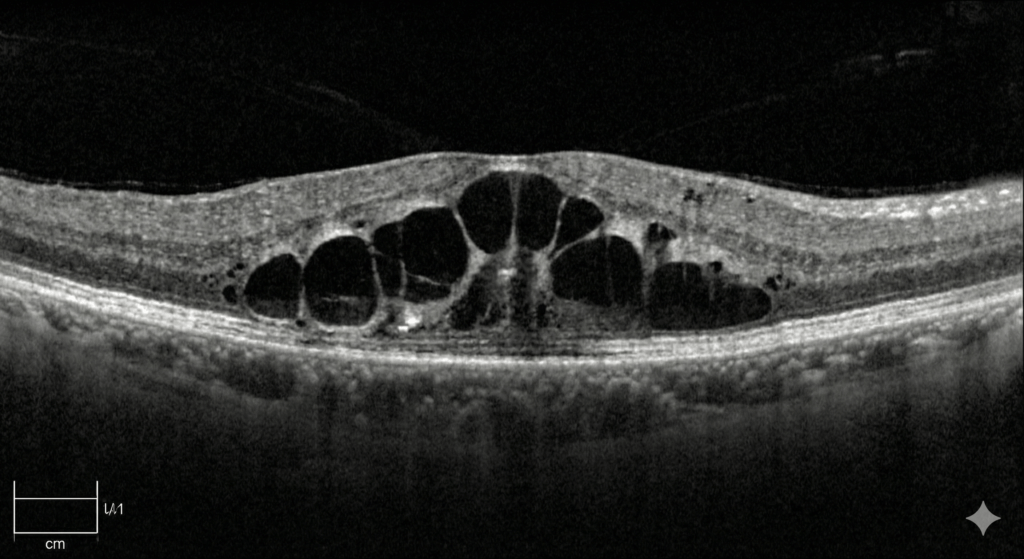
During a comprehensive 12-month follow-up period, researchers utilized universally recognized diagnostic technologies to conduct detailed assessments. These comprehensive evaluations included measuring Best-Corrected Visual Acuity (BCVA) through standardized global eye chart testing, and utilizing microfield measurement to map visual field sensitivity. Furthermore, the team employed Electroretinography (ERG) to measure the electrical activity and health of retinal cells, alongside Optical Coherence Tomography (OCT) to capture high-resolution, cross-sectional imaging of the retina.
Clinical Findings and Safety Confirmations
Core Security and Feasibility Have Been Firmly Confirmed
The foremost objective of any Phase I/II trial is establishing safety. The findings from the TRUST study robustly reinforced the safety profile of this therapy, clearing major hurdles for global adoption. First and foremost, operational feasibility was clearly demonstrated, as all patients successfully completed the multi-step process involving bone marrow extraction, precise stem cell separation, and the final intraocular injection. This demonstrates the high reproducibility of this complex treatment under current modern medical conditions worldwide.
Furthermore, the trial revealed an excellent safety profile. The vast majority of treatment-related adverse events were classified as mild or moderate. The most common event was transient floaters after the injection (experienced by 93.75%), which is highly correlated with the physical injection procedure itself rather than the stem cells, as similar reports occurred in the sham surgery group. Only one serious ocular adverse event was recorded, which was a vitreous hemorrhage with iris neovascularization. Researchers determined this was linked to the natural, expected progression of the underlying CRVO disease rather than the therapy, and it was effectively managed with global standard-of-care treatments. Crucially, no patient experienced a sustained and significant decrease in vision (defined internationally as a loss of ≥15 letters on an ETDRS chart) due to the stem cell therapy. Another primary global concern with stem cell therapies is the risk of unwanted cellular growth, but the study showed absolutely no abnormal proliferation. Extensive, long-term fundus imaging follow-ups—utilizing OCT, OCT Angiography (OCTA), and fluorescein angiography—revealed no theoretical risks associated with the stem cell injections. There was zero evidence of abnormal retinal cell proliferation, epiretinal membrane formation, or retinal detachment.
Therapeutic Potential and Biological Mechanisms
Preliminary Therapeutic Signals Bring Optimistic Prospects
Beyond safety, the global medical community closely monitors Phase II trials for signs of efficacy. The study revealed highly positive signs of improvement in pre-specified efficacy observation indicators. There was a broad visual acuity improvement among the 7 patients in the “immediate treatment group” who completed the full 12-month follow-up, where the mean visual acuity improved significantly by an average of 5.8 letters from their baseline (p=0.01). Across the entire broader study population, mean visual acuity remained stable or exhibited slight improvements within 1 to 6 months post-injection.
Most remarkably, the trial recorded clinically significant milestones, as four patients experienced a profound visual improvement of 10 letters or more following their stem cell injections. One exceptional case saw a massive improvement of 14 letters just one month post-treatment. Another patient improved by 10 letters after seven months, crucially restoring their vision to the legal threshold required for driving—a monumental leap in regaining personal independence.
In terms of functional stability, rigorous retinal function tests (both multifocal ERG and full-field ERG) remained highly stable across all follow-up time points. The absence of significant functional decline indicates that the treatment did not negatively disrupt the complex electrophysiological function of the retina. Finally, advanced imaging assessments confirmed structural protection, demonstrating that the critical macular structures of the treated eyes—including central retinal thickness and the vital integrity of the photoreceptor layer—remained structurally stable or showed measurable improvement throughout the follow-up period.
Note on Efficacy: Changes in BCVA letter scores post-cell injection during the follow-up period consistently pointed toward a stabilization or enhancement of visual function, a rarity for advanced CRVO.
Mechanism of Action and Future Global Prospects
Researchers have detailed that CD34+ stem cells act as the body’s natural repair cells. When introduced to ischemic tissues, these specialized cells release a powerful array of nutritional and growth factors through paracrine mechanisms. This signaling promotes robust vascular protection and nerve repair. Furthermore, evidence suggests some of these cells may physically integrate and directly participate in the repair of damaged vascular endothelium (the inner lining of blood vessels). This dual-action biological mechanism is believed to be the foundation for its therapeutic success.

In the discussion section of their landmark paper, Professor Park and her team expressed a sense of cautious but profound optimism. They emphasized that this study provides the first encouraging preliminary evidence of efficacy for autologous stem cell therapy in a rigorous randomized controlled trial setting. While the researchers acknowledge the current limitations of a smaller sample size and a relatively short follow-up period, these overwhelmingly positive functional outcomes (improved vision) and structural outcomes (retinal stability)—combined with pristine safety data—lay an incredibly solid foundation. The global medical community is now primed for the advancement of this therapy into larger-scale, multi-center international Phase II/III clinical trials.
This study marks a transformative leap from a theoretical proof-of-concept to tangible efficacy validation in cellular therapy for retinal ischemic diseases. Future international studies with expanded, diverse global cohorts and longer-term follow-ups are expected to definitively clarify the precise effects and long-lasting benefits of this therapy, potentially revolutionizing how we preserve and restore vision worldwide.
References
- Park SS, et al. Intravitreal Autologous CD34+ Bone Marrow Stem Cells for Central Retinal Vein Occlusion: A Randomized Clinical Trial (Treatment of Retinal Vein Occlusion Using STem Cells [TRUST] Report 1): Safety and Feasibility. Ophthalmology. 2026;6:100905.