
Fatty Liver Disease Stem Cell Therapy | Can the Liver Heal Beyond Diet?

The lab result lands on your phone screen, or it is printed on the page your doctor slides across the desk. ALT elevated. AST elevated. The ultrasound mentions “hepatic steatosis” or “fatty changes.” Your doctor uses the phrase “fatty liver” almost casually, prescribes nothing, and tells you to lose weight, exercise more, and cut back on sugar.
You have been trying. Maybe for months, maybe for years. You walk in the evenings. You replaced the sweet drinks with water. You cut back on the rice or the bread. And yet the numbers move only slightly, or not at all. The fatigue is still there in the afternoons. The weight has not budged the way you hoped it would. And quietly, you start to wonder whether something else is happening inside the liver that diet and exercise alone are not reaching.
If this is your situation, you are far from alone. An estimated 30% of adults globally — roughly 1.5 billion people — are now living with metabolic dysfunction-associated steatotic liver disease, or MASLD, the condition formerly known as non-alcoholic fatty liver disease (NAFLD). It has become the most common chronic liver condition in the world, and in many countries the leading cause of liver transplantation. Yet for most patients, the standard medical response remains the same: lose weight, exercise, control your blood sugar — and wait.
This article is for people who have heard that advice, taken it seriously, and are now asking whether there is something else worth understanding. We will explain what stem cell therapy for fatty liver disease actually does at a biological level, what the published clinical data shows in specific numbers, where the evidence is solid and where it is still developing, and who is — and is not — a realistic candidate. Our team has been working in regenerative medicine in Malaysia for over seven years, with more than 200 patients treated. We will be specific about both the potential and the boundaries.
Table of Contents
- Why Fatty Liver Disease Quietly Worsens Without Visible Symptoms
- Where Lifestyle Changes and Medications Fall Short for Fatty Liver Disease
- How Stem Cell Therapy Targets Fatty Liver Disease: Three Biological Mechanisms
- What the Clinical Data Shows About Stem Cell Therapy for Fatty Liver Disease
- Autologous vs Allogeneic Stem Cells for Fatty Liver Disease
- Who Is — and Is Not — a Good Candidate for Fatty Liver Disease Stem Cell Therapy
- A Patient's Experience With Fatty Liver Disease Stem Cell Therapy in Malaysia
- Honest Risks and Limitations of Fatty Liver Disease Stem Cell Therapy
- FAQ About Fatty Liver Disease Stem Cell Therapy
- Next Step
- References
Why Fatty Liver Disease Quietly Worsens Without Visible Symptoms
How Fat Accumulates in the Liver in Fatty Liver Disease
The liver is one of the most metabolically active organs in the body. Among its many functions, it processes the fats and sugars that arrive from your meals, decides what to store and what to ship out, and builds the proteins your blood uses to carry energy across the rest of the body. When this system is in balance, liver cells — called hepatocytes — keep only small amounts of fat inside themselves at any time.
In fatty liver disease, that balance breaks down. When the body receives more sugar and refined carbohydrate than it can immediately use, the liver converts the excess into fat through a process called de novo lipogenesis (a technical term that simply means “making new fat from sugar”). At the same time, when fat tissue elsewhere in the body becomes resistant to insulin — which happens in metabolic syndrome and type 2 diabetes — it leaks free fatty acids into the bloodstream that the liver is then forced to absorb. Both processes push fat into liver cells faster than the liver can export or burn it. Over time, droplets of fat accumulate inside hepatocytes until 5% or more of the liver’s weight is made up of fat. This is the threshold for a fatty liver disease diagnosis.
The reason this often goes unnoticed for years is that the early stage — simple steatosis — usually causes no symptoms. Liver cells continue to function. Pain receptors inside the liver are sparse. Most people only discover the condition incidentally, through a routine blood test that flags elevated liver enzymes, or an abdominal ultrasound performed for an unrelated reason.
The Inflammation and Fibrosis Cascade in Fatty Liver Disease
The reason fatty liver disease matters is what happens next, when simple fat accumulation crosses into something more aggressive.
In a meaningful proportion of patients — somewhere between 20% and 30% — fat-loaded liver cells begin to suffer oxidative stress and signal distress to the immune system. Resident immune cells inside the liver, called Kupffer cells, become activated. They release inflammatory signals — proteins such as TNF-alpha and interleukin-6, the same messengers involved in many other chronic inflammatory conditions — that recruit further immune activity. The condition is now metabolic dysfunction-associated steatohepatitis, or MASH (formerly NASH).
Once inflammation becomes chronic, a second cell population enters the picture. Hepatic stellate cells, which normally sit quietly between hepatocytes storing vitamin A, become activated and start producing collagen. Collagen is the structural protein that forms scar tissue. As scarring accumulates inside the liver — a process called fibrosis — the architecture of the organ slowly distorts. Blood flow is impaired. Surviving hepatocytes have less room to function. At advanced stages, this fibrosis becomes cirrhosis: the liver is permanently restructured, and the risk of liver failure and liver cancer rises sharply.
The critical thing to understand is that this is not a sudden catastrophe. It is a slow, mostly silent escalation that can take years or decades, often without warning symptoms until late in the process. By the time a patient feels something is wrong, structural changes may already be significant. This is why the question of whether anything can intervene in the inflammation and fibrosis cascade — not just the fat accumulation — has become central to fatty liver disease research.
Where Lifestyle Changes and Medications Fall Short for Fatty Liver Disease
Why Diet and Exercise Alone Often Cannot Resolve Fatty Liver Disease
Lifestyle modification is the foundation of fatty liver disease treatment, and it is genuinely effective for some patients. Studies consistently show that a 7% to 10% reduction in body weight, sustained over time, can reduce liver fat by approximately 30% and even reverse early fibrosis in a subset of patients. Mediterranean-style eating patterns, reduced sugar intake, and regular aerobic exercise all have measurable benefits.
The problem is the gap between what the literature shows is possible and what most patients are actually able to achieve in real life. Sustained 10% weight loss is difficult. Maintaining it for years is more difficult still. For patients with type 2 diabetes — who represent a large portion of fatty liver disease cases — insulin resistance creates an underlying metabolic environment that resists weight loss even when diet and exercise are followed carefully. Many patients also carry the disease into older age, when joint pain, time pressures, and other health conditions limit how aggressively lifestyle change can be pursued. For patients whose fatty liver disease overlaps with weight-related joint conditions like osteoarthritis, the limits become compounding rather than solvable in isolation.
The result is that a significant proportion of patients reach a plateau. They make changes, hold them for a year or two, and find that the liver enzymes stabilize but never normalize. The ultrasound or FibroScan results stay roughly where they were. Some progress. Some hold steady but never recover. And for these patients, conventional medicine often has little to offer beyond “keep doing what you are doing.”
The Limited Pharmaceutical Options for Fatty Liver Disease
For decades, the search for an approved drug specifically for fatty liver disease produced more disappointments than successes. Vitamin E showed modest benefits in non-diabetic patients with biopsy-confirmed steatohepatitis. Pioglitazone, originally a diabetes medication, demonstrated some improvement in liver inflammation but came with weight gain and other concerns. Statins, while important for cardiovascular risk, do not directly resolve liver fat.
In 2024, resmetirom became the first drug specifically approved by the U.S. FDA for adults with non-cirrhotic NASH with moderate to advanced fibrosis. This was a meaningful step. However, the trial data showed that approximately 25% to 30% of treated patients met the criteria for histological improvement — a real benefit, but one that means the majority did not, at least at the studied dose and duration. Resmetirom is also expensive, requires ongoing monitoring, and is not available in all countries.
GLP-1 receptor agonists such as semaglutide have shown promise in reducing liver fat and improving steatohepatitis, primarily through their effects on weight loss and insulin sensitivity. Their long-term role in fatty liver disease is still being defined.
What none of these medications do directly is reduce the established fibrosis once it has progressed beyond a certain threshold. They modify drivers of the disease — fat accumulation, inflammation, insulin resistance — but they do not target the activated hepatic stellate cells or restore the immune balance inside the liver in the way that emerging regenerative approaches aim to do.
How Stem Cell Therapy Targets Fatty Liver Disease: Three Biological Mechanisms
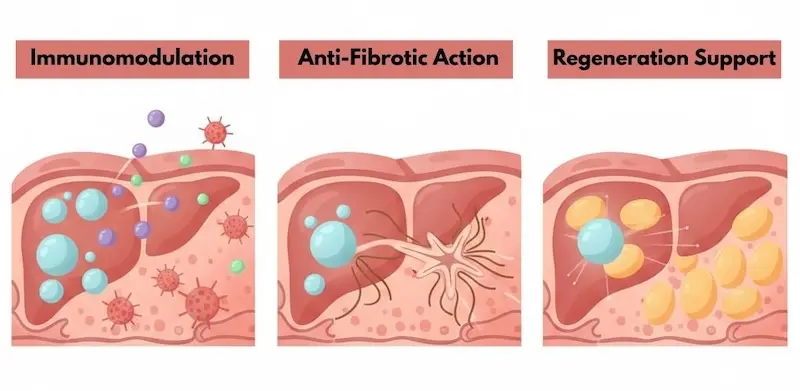
Calming Liver Inflammation in Fatty Liver Disease
The most important property of mesenchymal stem cells (MSCs) — the cell type used in our treatment — is that they are not pain relievers and not anti-inflammatory drugs in the conventional sense. They do not block a single molecule. Instead, they communicate with the immune system, releasing dozens of signaling proteins that shift the local environment from a pro-inflammatory state to a balanced one.
In fatty liver disease, the relevant target is the activated Kupffer cell population inside the liver. When MSCs are introduced into the body and reach the liver via the bloodstream, they release molecules that encourage Kupffer cells to switch from an aggressive, tissue-damaging state to a tissue-supporting one. The same signals reduce the production of inflammatory proteins like TNF-alpha and interleukin-6, which are central drivers of the progression from simple steatosis to steatohepatitis.
This is mechanistically different from a pharmaceutical that blocks one inflammatory protein. MSCs influence the upstream cells that produce the inflammation in the first place — and they do so without suppressing the immune system’s broader ability to fight infection.
Slowing Fibrosis Progression in Fatty Liver Disease
The cells most directly responsible for liver scarring are hepatic stellate cells. Once they activate, they pour out collagen, and the structural damage accumulates.
MSCs have been shown in both laboratory and animal studies to reduce hepatic stellate cell activation and to encourage already-activated stellate cells to return to a quiescent state. They also release enzymes called matrix metalloproteinases that can break down some of the excess collagen already deposited in the liver. The combined effect, in models of liver fibrosis, has been measurable reductions in collagen content and improvements in the structural appearance of liver tissue.
It is important to be precise here: in patients with established cirrhosis, MSCs do not return the liver to a normal state. The architecture cannot be fully rebuilt once it is severely distorted. But there is increasing evidence that in earlier stages of fibrosis — F1 through F3, before full cirrhosis — slowing or partially reversing the fibrotic process is biologically achievable.
Supporting Hepatocyte Recovery in Fatty Liver Disease
The third mechanism is paracrine support of the liver cells themselves. MSCs secrete growth factors and small membrane-bound packets called exosomes that carry proteins and genetic material to nearby cells. In the context of fatty liver disease, these signals appear to support hepatocyte survival under metabolic stress, encourage the natural regenerative capacity of the liver (which retains some ability to renew itself, unlike cardiac tissue), and modulate how hepatocytes handle fat metabolism.
The cumulative effect, in patients who respond, is a liver that is less inflamed, less actively scarring, and better able to function within the metabolic load it is carrying. Many of the same immunomodulatory mechanisms are also relevant in other conditions where chronic inflammation drives tissue damage, which is why heart failure stem cell therapy and several autoimmune conditions are studied with similar cellular approaches.
What the Clinical Data Shows About Stem Cell Therapy for Fatty Liver Disease
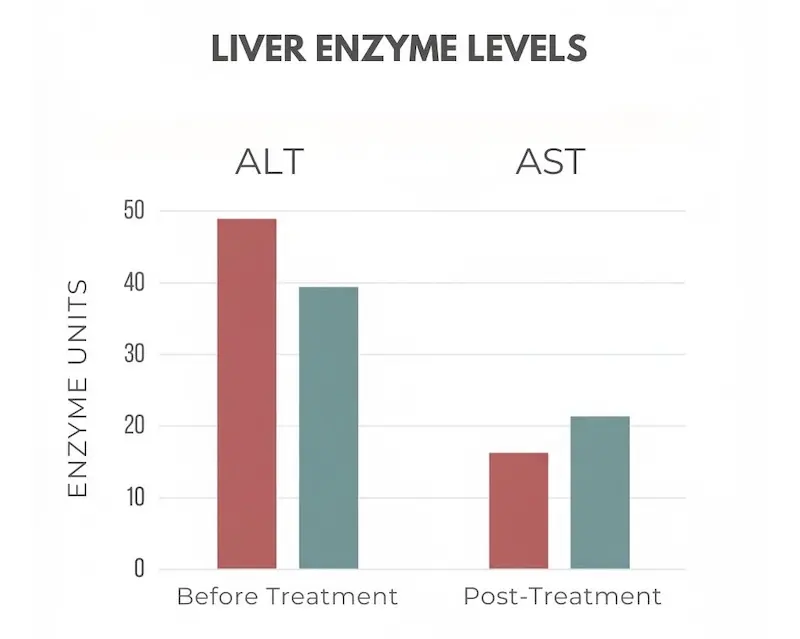
Source: aggregated trial data including Suk et al. (2016) and Lin et al. (2017).
Key Trials of MSC Therapy in Liver Disease and Fatty Liver Disease
The evidence base for mesenchymal stem cell therapy in liver disease is more developed than many patients realize, although the largest published trials have focused on cirrhosis and acute-on-chronic liver failure rather than on early-stage MASLD specifically. We will be honest about that distinction.
A randomized controlled trial by Lin and colleagues, published in Hepatology in 2017, evaluated allogeneic bone marrow-derived MSC infusions in 110 patients with hepatitis B virus-related acute-on-chronic liver failure. At 24 weeks, the group receiving MSC therapy showed significantly improved survival rates compared with the control group, alongside reductions in MELD scores — a standardized severity index for liver disease. The trial demonstrated that allogeneic MSCs were safe in this severely ill population and produced measurable clinical benefit.
A Phase 2 trial by Suk and colleagues, published in Hepatology in 2016, studied autologous bone marrow-derived MSCs in patients with alcoholic cirrhosis. Treated patients showed histological improvement in liver fibrosis on biopsy after 24 weeks, with reductions in collagen content visible on tissue analysis. This was one of the first studies to demonstrate fibrosis improvement on biopsy following MSC therapy in humans.
Several smaller studies and pilot trials have examined umbilical cord-derived MSCs specifically. Wang and colleagues reported that umbilical cord MSC therapy in patients with primary biliary cirrhosis produced reductions in ALT, AST, and gamma-GT enzymes alongside symptom improvement, with no significant adverse events over the follow-up period.
For MASLD specifically, the published human evidence is more limited and most data comes from preclinical and animal studies, where MSC administration has been shown to reduce hepatic fat content, decrease inflammatory cell infiltration, and improve insulin sensitivity. Human pilot studies in non-cirrhotic fatty liver disease are ongoing in several countries. We are direct with patients about this: the bulk of clinical evidence supports MSC therapy as a treatment that becomes increasingly substantiated as liver disease becomes more advanced, while its application earlier in the disease — where, biologically, it should arguably have more to work with — is still building its evidence base.
What Realistic Improvement Looks Like After Fatty Liver Disease Treatment
Across published trials in liver disease populations, the patterns of response are reasonably consistent. ALT and AST reductions in the range of 25% to 45% have been reported by 12 to 24 weeks post-treatment in responders. Liver stiffness measurements, assessed by transient elastography (FibroScan), have shown reductions of 1 to 3 kPa in patients with elevated baseline values. MELD scores in cirrhotic patients have improved by 2 to 4 points in studied populations.
What this looks like in practical terms varies. For a fatty liver disease patient with an ALT of 90 IU/L, a reduction to 50–60 represents a meaningful biological shift, even if it is not full normalization. For a patient whose FibroScan reads 9 kPa (suggesting significant fibrosis), a drop to 6–7 kPa represents a return toward an earlier stage of the disease — not a cure, but a slowing or partial reversal of the structural damage.
We want to be specific about what the data does not yet show. There are not yet large Phase III randomized controlled trials in MASLD specifically demonstrating long-term reversal of NASH or definitive prevention of cirrhosis progression. Response is variable: in trials where it can be measured, roughly 30% to 50% of patients achieve clinically significant improvement, while a meaningful minority show modest or no change. We do not currently have reliable predictors for who will fall into which category. Patients deserve to know these numbers before making any decision.
Autologous vs Allogeneic Stem Cells for Fatty Liver Disease
The Limits of Autologous Stem Cells for Fatty Liver Disease Patients
In Japan and several other countries, the regulatory framework permits autologous stem cell therapy — meaning cells harvested from the patient’s own bone marrow or fat tissue, processed, and reinfused. The advantage of this approach is the absence of immune rejection risk, since the cells are genetically the patient’s own.
The significant disadvantage, particularly relevant in fatty liver disease, is that a patient’s own cells reflect their age and metabolic environment. Patients with established fatty liver disease often also carry insulin resistance, type 2 diabetes, and chronic systemic inflammation. Studies have suggested that MSCs harvested from patients with metabolic disease show reduced proliferative capacity, lower secretion of beneficial signaling molecules, and diminished anti-inflammatory potency compared to cells from healthy donors. The very biological environment that produced the fatty liver disease may also have compromised the cells available from the patient’s own body.
For a patient in their fifties or sixties with five to ten years of metabolic dysfunction, the cells available for autologous harvest are not the same as the cells that would be available from a healthy young donor. This is a meaningful difference, not a marketing distinction.
Why We Use Allogeneic Umbilical Cord MSCs for Fatty Liver Disease
The treatment we offer in Malaysia uses allogeneic umbilical cord-derived MSCs, sourced from the Wharton’s jelly tissue of healthy newborns delivered by consented donors. These cells share several practical advantages relevant to fatty liver disease.
They are biologically young, with high proliferative capacity and strong secretion of the signaling molecules that drive the anti-inflammatory and anti-fibrotic effects relevant in liver disease. They have not been exposed to decades of metabolic stress, environmental toxins, or chronic inflammation. They are produced in standardized batches that can be quality-tested for cell viability and potency before each treatment is administered, which allows for consistent dosing.
Umbilical cord-derived MSCs also express low levels of the surface proteins that typically trigger immune rejection. Across published clinical trials, including the Lin 2017 study in liver disease, allogeneic umbilical cord and bone marrow MSCs have shown favorable safety profiles without significant rejection events. The infusion is delivered intravenously over approximately one to two hours and does not require any tissue harvest from the patient — no liposuction, no bone marrow aspiration, and no surgical procedure.
This approach is not inherently superior to autologous treatment in every context, and we will not claim it is. For fatty liver disease specifically, however, the biological case for using young, high-potency donor cells is well grounded.
Who Is — and Is Not — a Good Candidate for Fatty Liver Disease Stem Cell Therapy
Profiles That Tend to Respond Well to Fatty Liver Disease Stem Cell Therapy
Stem cell therapy for fatty liver disease tends to be most relevant for patients who meet several conditions. They have a confirmed diagnosis of MASLD or MASH (NAFLD or NASH under the older terminology), supported by elevated liver enzymes, imaging showing hepatic steatosis, and where available, FibroScan or biopsy data indicating the stage of fibrosis. They have been pursuing lifestyle modification consistently for at least six to twelve months, with lab results that have either plateaued or are not improving at the rate that would change the trajectory of the disease.
They have evidence of inflammation or early-to-moderate fibrosis — F1 through F3 stages — where there is meaningful tissue still capable of responding to anti-inflammatory and anti-fibrotic intervention. They are in reasonable overall health, without active malignancy, uncontrolled infection, or end-stage organ failure. And they understand that this treatment is not a cure, that it works alongside continued lifestyle modification rather than replacing it, and that response varies between patients.
The patients who tend to show the clearest response are those whose disease is active but not end-stage — where the liver is inflamed and accumulating fibrosis, but not yet structurally collapsed. This is the biological window in which MSC therapy has the most material to work with.
When Fatty Liver Disease Stem Cell Therapy Is Not Appropriate
We actively decline to treat patients in several situations, because the likelihood of benefit is low or because a different pathway is more appropriate.
Patients with decompensated cirrhosis and active complications — recurrent variceal bleeding, refractory ascites, hepatic encephalopathy — are typically candidates for transplant evaluation rather than elective stem cell therapy. Decisions in this group must be coordinated closely with the patient’s hepatology team, and we are honest that the published evidence supports MSC therapy more in compensated than decompensated late-stage disease.
Patients with active hepatocellular carcinoma or any active malignancy should not undergo MSC therapy. The growth factors and signaling molecules that benefit normal tissue could theoretically support tumor growth, and this is a contraindication we apply firmly.
Patients with active uncontrolled hepatitis B or C should have their viral disease appropriately managed before considering MSC therapy, since ongoing viral replication is a stronger driver of liver damage than anything regenerative therapy can address.
Patients whose primary issue is alcohol use that has not been addressed are also poor candidates. The evidence for MSC therapy in alcoholic cirrhosis exists, but only in the context of confirmed abstinence. We do not treat patients who are continuing to drink alcohol heavily, because the underlying cause of damage will continue regardless of any regenerative intervention.
And patients looking for a guaranteed reversal of established cirrhosis should understand clearly that this is not what the current data supports, and we will not frame the treatment that way.
A Patient’s Experience With Fatty Liver Disease Stem Cell Therapy in Malaysia
Why a NASH Patient Considered Stem Cell Therapy for Fatty Liver Disease
A man in his late fifties had been carrying a fatty liver disease diagnosis for approximately eight years when he first contacted our clinic. Type 2 diabetes had been diagnosed shortly before. His ALT had moved from 75 IU/L to 95 IU/L over the past two years despite consistent dietary changes and a regular walking routine. A FibroScan had recently measured his liver stiffness at 10.2 kPa — placing him at probable F3 fibrosis, the stage just before cirrhosis. His hepatologist had begun discussing the possibility of moving toward biopsy and considering newer pharmaceutical options once available.
He came to us in early 2025 having read both the optimistic and the skeptical writing on the topic. He was clear that he was not looking for a miracle, and we were equally clear that we could not promise one. His pre-treatment workup confirmed he was an appropriate candidate: active disease, evidence of progression, fibrosis at a stage where intervention still had room to act, and no contraindications.
How Recovery Unfolded After Fatty Liver Disease Treatment
He received a single course of allogeneic umbilical cord-derived MSC infusions over a short stay in Malaysia. He was instructed before, during, and after treatment that no medication changes were to be made without his hepatologist’s approval, and that lifestyle modification was to continue unchanged.
The first six weeks produced no noticeable subjective change. By the third month, his ALT had moved from 95 to 62 IU/L. His AST had also reduced. He reported feeling less afternoon fatigue, though he was careful to acknowledge this could be partially placebo or seasonal. At the six-month mark, his ALT had stabilized at approximately 50 IU/L, his FibroScan reading had decreased to 7.8 kPa — a movement back toward F2 fibrosis from F3 — and his fasting blood sugar had improved modestly. His twelve-month follow-up is pending. His diabetes medication and dietary plan have remained unchanged on his hepatologist’s advice.
He described his experience to us as “the first time the numbers have moved in the right direction in years, even though my routine has been the same.” His liver disease has not been cured. The need for ongoing monitoring and lifestyle discipline has not changed. But the trajectory, by his hepatologist’s assessment, has shifted in a meaningful way.
※ This is an anonymized account shared with the patient’s consent. Individual outcomes vary. This experience does not represent a guaranteed result for all patients.
Recovery and Follow-Up After Fatty Liver Disease Stem Cell Treatment
Most patients are comfortable traveling home within two to three days of the final infusion. Return to normal activity, including work, is generally possible within the first week.
The most important thing we communicate about the recovery period is patience. The biological mechanisms of MSC therapy — modulating immune cells, signaling to hepatic stellate cells, supporting hepatocyte function — unfold over weeks and months, not days. Most patients who respond do not notice meaningful change in the first four to six weeks. The earliest perceptible improvements typically appear between weeks 6 and 12, and laboratory changes in liver enzymes, FibroScan readings, or other markers usually become measurable between three and six months.
We schedule follow-up consultations at three months, six months, and twelve months after treatment. At each follow-up, we ask patients to share repeat liver function tests, imaging studies where applicable, and any updates from their primary hepatologist. Lifestyle modification is expected to continue throughout this period — the treatment works alongside diet and exercise, not in place of them.
Honest Risks and Limitations of Fatty Liver Disease Stem Cell Therapy
Known Side Effects of Fatty Liver Disease Stem Cell Treatment
The safety profile of allogeneic umbilical cord-derived MSC therapy, across published clinical trials in liver disease and other conditions, has been generally favorable. The most commonly reported effects following infusion are mild and self-limiting: low-grade fever in the 24 to 48 hours following treatment in approximately 15% to 20% of patients, transient fatigue, occasional headache, and mild muscle ache. These typically resolve without medical intervention.
Serious adverse events directly attributable to MSC therapy have been uncommon in the published trials we draw on, including the Lin 2017 study in liver failure patients, where allogeneic MSC infusions were administered to a population substantially sicker than typical fatty liver disease patients with no significant safety signals.
Several theoretical risks should be acknowledged. Because MSCs modulate immune activity, there is a theoretical interaction concern in patients on significant immunosuppression. There is also a theoretical concern about cellular therapies in patients with current or prior cancer, which is why we screen carefully for malignancy and decline patients with active disease. Long-term follow-up data beyond three years remains limited in this field overall, simply because the field is relatively young at clinical scale, and we are honest with patients about this.
What Stem Cell Therapy Cannot Do for Fatty Liver Disease
We want to be specific about what this treatment is not, because vagueness serves no one.
Stem cell therapy cannot reverse advanced cirrhosis. Once the liver has been extensively restructured, MSCs cannot rebuild the original architecture. The window in which this treatment is most likely to provide meaningful benefit is before the disease reaches end-stage structural collapse.
It does not eliminate the underlying drivers of fatty liver disease. If insulin resistance, excess caloric intake, or untreated diabetes continue, the metabolic stress on the liver will continue regardless of any regenerative input. This is why we are explicit that the treatment works alongside lifestyle modification, not as a substitute for it.
It is not a guaranteed response. Based on the available trial data and our own clinical experience over more than seven years, a meaningful proportion of treated patients — roughly 30% to 50% in studied populations — show clinically significant improvement. Others show modest changes, and a minority show no clear measurable benefit. We do not yet have reliable predictors for who will respond, though pre-treatment assessment provides useful information.
And it does not replace the relationship with your primary hepatologist. Patients receiving MSC therapy are expected to continue their ongoing monitoring, blood work, imaging follow-up, and any medications their treating doctor considers appropriate.
FAQ About Fatty Liver Disease Stem Cell Therapy
Resmetirom and GLP-1 receptor agonists work by changing how your body handles specific metabolic signals — resmetirom activates a thyroid hormone receptor in the liver to reduce fat accumulation, and GLP-1 drugs primarily reduce weight and improve insulin sensitivity. Both modify drivers of fatty liver disease and are taken daily on an ongoing basis.
Stem cell therapy works through a different mechanism. Mesenchymal stem cells communicate with the immune cells inside the liver — particularly the Kupffer cells driving inflammation and the hepatic stellate cells producing scar tissue — and shift the local environment toward repair rather than damage. They are administered as a course of one to three infusions rather than as ongoing daily medication.
The two approaches are not mutually exclusive. Several patients we work with continue their prescribed medications throughout and after stem cell therapy. We do not ask patients to stop drugs that their hepatologist has prescribed, and we do not position stem cell therapy as a replacement for evidence-based pharmaceutical care.
No. We specifically ask patients not to stop or modify any medications without direct guidance from the doctor who prescribed them.
This applies to diabetes medications, cholesterol-lowering drugs, blood pressure medications, and any other ongoing treatment. The metabolic environment created by uncontrolled diabetes or untreated cardiovascular risk factors continues to damage the liver regardless of any regenerative intervention. Maintaining your existing medication regimen during and after stem cell therapy is part of giving the treatment a fair chance to work.
The only context in which medication adjustment would be considered is after sustained improvement in lab results over several months, and only at the discretion of your treating hepatologist or primary doctor — never based on a stem cell therapy clinic’s recommendation.
This is one of the most honest questions we receive, and the truthful answer is that long-term durability data beyond two to three years remains limited in this field. We will not pretend otherwise.
What the available trial data and our clinical follow-up suggest is that improvements in liver enzymes and FibroScan readings, when they occur, typically become measurable between three and six months and tend to be sustained through the twelve-month follow-up period in patients who respond. Whether benefits persist at three years, five years, or longer depends significantly on what happens to the underlying drivers of the disease in the meantime. A patient who improves their metabolic environment through sustained lifestyle modification and good diabetes control is in a fundamentally different position from one who returns to the conditions that caused fatty liver disease in the first place.
Some patients return for additional infusions after twelve to eighteen months, particularly when they want to maintain progress in the context of ongoing metabolic challenges. Whether this is appropriate is a clinical judgment made on the basis of individual follow-up data, not a fixed protocol.
The honest answer depends on what stage of cirrhosis you have reached.
For compensated cirrhosis — meaning the liver is structurally distorted but still performing its essential functions, without complications like ascites, variceal bleeding, or hepatic encephalopathy — there is published clinical trial data supporting potential benefit from MSC therapy, including improvements in MELD scores and liver function markers. We do treat carefully selected patients in this category, in coordination with their primary hepatologist.
For decompensated cirrhosis with active complications, we are more cautious. The published evidence is more limited in this group, and the appropriate clinical priority is typically transplant evaluation. We would not recommend stem cell therapy as a substitute for transplant assessment, and we would want close coordination with your hepatology team before considering treatment.
What stem cell therapy cannot do, at any stage of cirrhosis, is rebuild the liver’s original architecture. The structural changes of cirrhosis are not reversed by any currently available treatment short of transplantation. What MSC therapy may do, in earlier compensated cirrhosis, is reduce ongoing inflammation, slow further fibrosis progression, and support the function of the remaining viable tissue.
In most countries, no. Stem cell therapy for fatty liver disease is currently considered an out-of-pocket medical service in Malaysia and is not covered by standard health insurance plans, whether domestic or international.
Some patients with comprehensive private insurance plans have been able to claim partial reimbursement for related costs such as pre-treatment laboratory work and imaging, but the cell therapy itself is generally not reimbursable under current insurance frameworks. We are happy to provide documentation patients can submit to their insurer, while being realistic that approval is uncommon.
We do not provide pricing information in this article because individual treatment plans vary based on the number of infusions recommended, pre-treatment assessment requirements, and length of stay in Malaysia. Specific costs are discussed during the initial consultation, after we have reviewed your case and confirmed that this treatment is appropriate for your situation.
Next Step
If you have read this far, you are most likely someone who has already made meaningful changes, watched the lab results, and is now genuinely trying to understand whether something more is worth considering for your specific situation.
We offer free online consultations for exactly this kind of conversation. Bring your recent blood work, your imaging or FibroScan results, and your current medications. We will look at your case honestly and tell you whether we think you are a realistic candidate — and if not, why not. You do not need to have made any decisions before reaching out. The consultation is a conversation, not a commitment.
References
- Younossi ZM, Koenig AB, Abdelatif D, Fazel Y, Henry L, Wymer M. “Global epidemiology of nonalcoholic fatty liver disease — meta-analytic assessment of prevalence, incidence, and outcomes.” Hepatology. 2016;64(1):73–84. https://doi.org/10.1002/hep.28431
- Rinella ME, Lazarus JV, Ratziu V, et al. “A multisociety Delphi consensus statement on new fatty liver disease nomenclature.” Hepatology. 2023;78(6):1966–1986. https://doi.org/10.1097/HEP.0000000000000520
- Suk KT, Yoon JH, Kim MY, et al. “Transplantation with autologous bone marrow-derived mesenchymal stem cells for alcoholic cirrhosis: Phase 2 trial.” Hepatology. 2016;64(6):2185–2197. https://doi.org/10.1002/hep.28693
- Lin BL, Chen JF, Qiu WH, et al. “Allogeneic bone marrow-derived mesenchymal stromal cells for hepatitis B virus-related acute-on-chronic liver failure: A randomized controlled trial.” Hepatology. 2017;66(1):209–219. https://doi.org/10.1002/hep.29189
- Wang L, Han Q, Chen H, et al. “Allogeneic bone marrow mesenchymal stem cell transplantation in patients with UDCA-resistant primary biliary cirrhosis.” Stem Cells and Development. 2014;23(20):2482–2489. https://doi.org/10.1089/scd.2013.0500
- Harrison SA, Bedossa P, Guy CD, et al. “A Phase 3, Randomized, Controlled Trial of Resmetirom in NASH with Liver Fibrosis (MAESTRO-NASH).” New England Journal of Medicine. 2024;390(6):497–509. https://doi.org/10.1056/NEJMoa2309000