Stem Cells and Olfactory Ensheathing Cell Therapy: Regulatory Approval and Clinical Translation in Neurological Repair
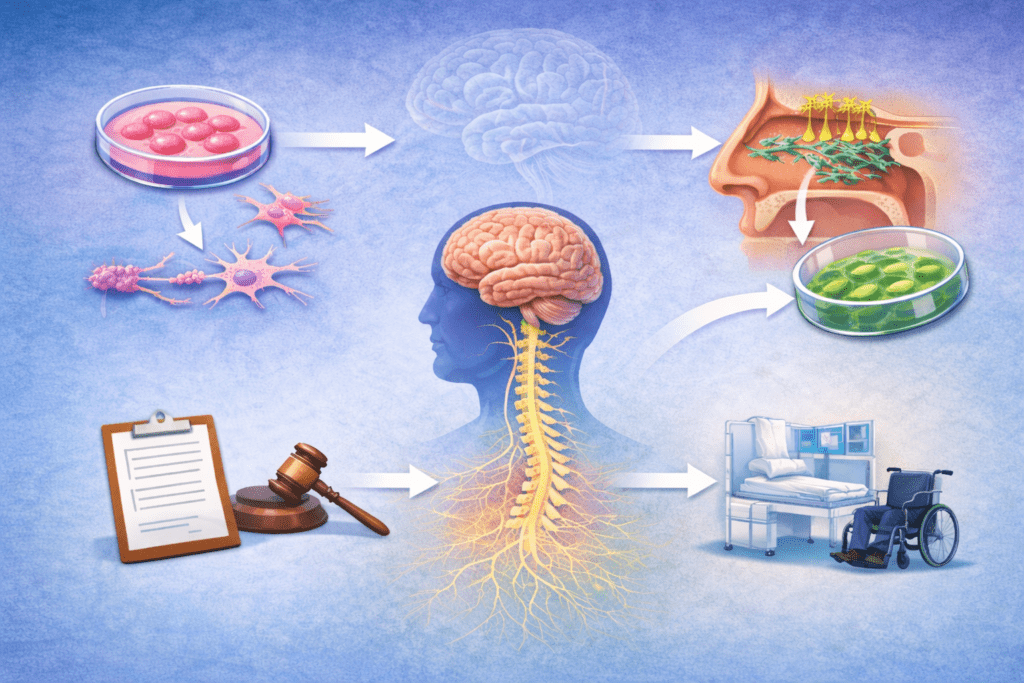
An overview of stem cells and olfactory ensheathing cell therapy regulatory approval for stroke and Parkinson’s disease neurological repair in clinical settings.
Overview: Advancing Cellular Therapies Into Regulated Clinical Practice
The field of regenerative medicine continues to advance steadily, defined in large part by the methodical transition of novel cellular therapies from preclinical research environments into formally regulated clinical application. Among the most clinically significant developments in neuroregenerative medicine occurred on February 11, 2026, when a formal regulatory milestone was reached in the domain of cell-based neurological repair.
The Beidaihe District Cell and Related Derivative Products New Technology Management Committee — operating under a designated national-level life and health industry demonstration zone in China — formally approved the clinical translation and application of olfactory ensheathing cell (OEC) therapy for specified neurological indications. This authorization was spearheaded by the Beidaihe Rehabilitation Hospital of the Ministry of Emergency Management, with a clinical focus on the therapeutic management of neurological deficits associated with stroke sequelae and Parkinson’s disease.
This development represents a meaningful transition for cell-based interventions targeting central nervous system (CNS) conditions, systematically moving them from the research phase into structured, regulated clinical deployment. Within the broader international context of regenerative medicine — a field that extensively examines various multipotent and pluripotent stem cells — this approval contributes essential real-world clinical data to the global effort to develop treatments for CNS injuries and neurodegenerative disease.
Clinical Trial Validation and the Regulatory Approval Pathway
Evidentiary Basis for Regulatory Authorization
The regulatory approval of this specific cellular therapy was grounded in empirical data derived from rigorous, methodologically robust clinical evaluations. The authorization was supported by findings from two multicenter, randomized, double-blind, placebo-controlled Phase II clinical trials. These studies were specifically designed to evaluate both the safety profile and the functional efficacy of OEC therapy in patient cohorts diagnosed with advanced ischemic stroke and Parkinson’s disease — two conditions for which conventional treatment options remain limited in scope.
The administration protocol utilized across both trials involved targeted submucosal injection into the olfactory mucosa. This delivery approach is designed to leverage the anatomical proximity of the olfactory system to the CNS, providing a minimally invasive yet potentially direct route for cellular delivery. According to the published results of these trials, participants demonstrated measurable improvements in neurological function scores and overall quality of life metrics compared to placebo controls.
Significance for International Regulatory Frameworks
By adhering strictly to internationally recognized standards of clinical trial design — including randomization, blinding, and placebo controls — the research provides a standardized evidentiary pathway for the clinical application of specialized cells in the context of CNS repair. This methodology is consistent with frameworks applied globally to evaluate stem cells and other advanced biological therapies, and establishes a data-driven model that may inform future regulatory assessments in other jurisdictions, including those governed by the European Medicines Agency (EMA) and the United States Food and Drug Administration (FDA).

Biological Mechanisms of Olfactory Ensheathing Cells
Cellular Properties and Neuroregenerative Functions
Understanding the therapeutic rationale for this approved protocol requires an examination of the underlying biology of olfactory ensheathing cells and their position within the broader landscape of neuroregenerative science. Olfactory ensheathing cells are a highly specialized classification of glial cells, notable for exhibiting a unique combination of biological characteristics. Structurally and functionally, they share properties with both peripheral Schwann cells — which support regeneration in the peripheral nervous system — and central nervous system astrocytes.
What distinguishes OECs from many other cellular structures in the adult mammalian CNS is their retained, continuous capacity to support nerve regeneration throughout an organism’s lifespan. Unlike most CNS cells, which demonstrate negligible capacity for structural repair following injury, OECs actively secrete a spectrum of neurotrophic factors and create a supportive cellular microenvironment that is conducive to axonal elongation and the structural reorganization necessary for functional recovery. These properties have made OECs a sustained subject of scientific inquiry, often studied alongside various stem cells due to their shared potential to modulate inflammatory responses, promote angiogenesis, and facilitate tissue restoration.
Historical Research Context and Foundational Studies
The current clinical application is the culmination of more than two decades of dedicated scientific inquiry. The foundational work dates to 2001, when a research team led by Professor Huang Hongyun initiated the application of OEC technology in patients with complete, late-stage spinal cord injuries — conditions historically regarded as permanent and irreversible. Early observational data from those interventions indicated partial restoration of mobility in specific patient subsets, providing initial evidence that the absolute permanence of adult CNS damage may, under certain biological conditions, be subject to modification.
These foundational studies, while subject to the limitations inherent in early-phase research, established a scientific rationale that subsequent research has continued to investigate, refine, and build upon. The current Phase II trial data represents the most structured and systematically controlled evaluation of OEC therapy to date, offering a clearer picture of its potential clinical utility in defined patient populations.
Integration With Comprehensive Neurorehabilitation Programs
A Multidisciplinary Clinical Framework
The contemporary application of cellular and stem cells therapies in the clinical context is rarely considered an isolated or standalone intervention. The clinical translation program at the Beidaihe Rehabilitation Center reflects a multidisciplinary philosophy in which OEC therapy functions as one component within a broader, integrated framework of comprehensive neurorepair treatment.
In practice, olfactory ensheathing cell therapy is administered in conjunction with a range of adjunct therapeutic modalities. These include advanced neuromodulation techniques, brain-computer interface (BCI) technologies that facilitate direct neurofunctional engagement, and intensive, targeted neurorehabilitation training programs tailored to individual patient deficits. The rationale for this combinatorial approach is grounded in the understanding that structural cellular repair, facilitated by OEC administration, may yield more meaningful functional outcomes when supported by simultaneous physiological stimulation and rehabilitative training.
Toward Structural and Functional Repair
This methodology, developed and championed by Professor Huang Hongyun’s clinical team and their collaborating partners, represents a significant conceptual shift in the management of neurodegenerative disease. The approach moves the therapeutic focus away from purely symptomatic palliation — which remains the predominant goal of most currently available pharmacological interventions for stroke and Parkinson’s disease — toward targeted structural and functional repair. By addressing both the biological substrate of neurological damage and the functional rehabilitation required to consolidate neuroplastic changes, the program reflects current evidence-based principles in advanced neurorehabilitation science.
Implications for Global Regenerative Medicine and Future Directions
Role of Specialized Regulatory Frameworks
The successful transition of this specific cellular technology into a formally regulated clinical environment carries implications that extend well beyond the originating jurisdiction. The regulatory mechanism employed — through the Beidaihe District Cell and Related Derivative Products New Technology Management Committee, functioning within a designated life and health industry demonstration zone — illustrates the important role that specialized, purpose-built regulatory frameworks can play in facilitating the responsible advancement of complex biological treatments.
Such frameworks, when operating with appropriate scientific rigor and transparent clinical oversight, serve to bridge the considerable gap that frequently exists between promising preclinical data and approved clinical application. They provide a structured mechanism for generating the safety and efficacy data required to support broader regulatory review, while also protecting patient welfare throughout the translation process.
Contributions to the International Scientific Community
While this specific approval was issued under Chinese regulatory authority, the clinical data, trial methodologies, and regulatory frameworks established through this process carry meaningful implications for the international medical and scientific community. The research directly addresses a widely recognized gap in the clinical translation of advanced neurorepair technologies — particularly those utilizing specialized cellular populations such as OECs, which have historically received less institutional attention than pluripotent stem cells or induced pluripotent stem cells (iPSCs), despite their distinct biological advantages.
As global research into targeted cellular treatments and stem cells continues to expand across North America, Europe, East Asia, and beyond, localized regulatory approvals of this nature provide important precedents. They offer validated technical methodologies, standardized clinical protocols, and reproducible outcome measures that can meaningfully inform broader international regulatory strategies aimed at addressing the complex, multifactorial challenges posed by neurodegenerative diseases such as stroke and Parkinson’s disease. The continued accumulation of Phase II and, ultimately, Phase III clinical evidence will be essential in determining the long-term role of OEC-based therapies within the global regenerative medicine landscape.