

Type 2 Diabetes Stem Cell Therapy | Restore Function Without Lifelong Medication

Living with Type 2 Diabetes often means a lifelong relationship with medication, dietary restrictions, and the constant monitoring of blood sugar levels. But what if science could offer something more — a way to address the disease at its cellular root? Stem cell therapy for Type 2 Diabetes is emerging as one of the most promising frontiers in regenerative medicine, attracting attention from researchers, clinicians, and patients worldwide.
This article breaks down what stem cell therapy actually is, how it may help people with Type 2 Diabetes, what the current evidence says, and what you should realistically expect if you’re considering it.
Table Of Content
- What Is Stem Cell Therapy? (A Simple Definition)
- Understanding Type 2 Diabetes: The Problem Stem Cells Are Trying to Solve
- How Does Stem Cell Therapy Work for Type 2 Diabetes?
- What Does the Research Say?
- Who Might Be a Candidate?
- Benefits and Risks at a Glance
- Stem Cell Therapy vs. Conventional Diabetes Treatment
- FAQ about stem cell therapy for Type 2 Diabetes
- The Road Ahead: Where Is the Science Heading?
- References
What Is Stem Cell Therapy? (A Simple Definition)
Stem cell therapy is a form of regenerative medicine that uses stem cells — the body’s “master cells” — to repair, replace, or regenerate damaged or dysfunctional tissue. Because stem cells can develop into many specialized cell types, they hold the potential to restore biological functions that chronic diseases have disrupted.
In the context of diabetes, researchers are particularly focused on using stem cells to:
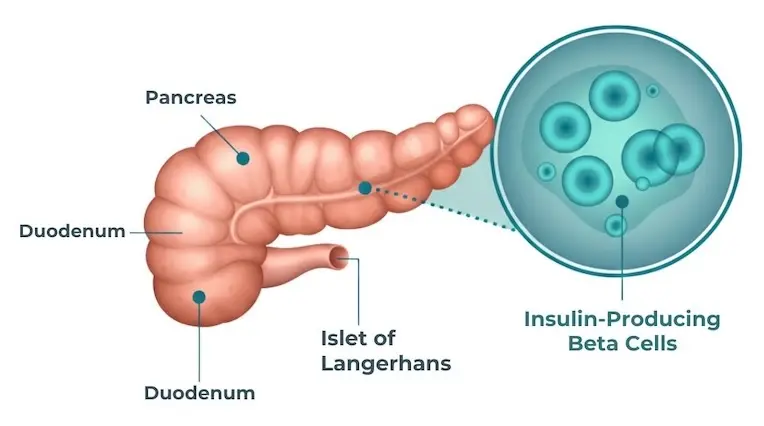
- Regenerate insulin-producing beta cells in the pancreas
- Reduce chronic inflammation that worsens insulin resistance
- Improve the body’s sensitivity to insulin
- Protect existing beta cells from further immune-related damage
Understanding Type 2 Diabetes: The Problem Stem Cells Are Trying to Solve
Type 2 Diabetes is a metabolic disorder characterized by two core problems: the body’s cells become resistant to insulin, and the pancreas gradually loses its ability to produce enough insulin to compensate. Over time, this leads to chronically elevated blood glucose levels, which damage blood vessels, nerves, kidneys, and eyes.
Unlike Type 1 Diabetes — which is primarily an autoimmune condition — Type 2 Diabetes is heavily influenced by lifestyle, genetics, and age. However, it is not purely a lifestyle problem. Chronic low-grade inflammation, mitochondrial dysfunction, and the progressive loss of functional beta cells all play biological roles that lifestyle changes alone cannot fully reverse.
This is precisely where stem cell therapy enters the conversation.
How Does Stem Cell Therapy Work for Type 2 Diabetes?
Different approaches are being explored, each targeting a different aspect of the disease.
1. Mesenchymal Stem Cell (MSC) Therapy
Mesenchymal stem cells are found in bone marrow, fat tissue, and umbilical cord tissue. They are the most widely studied stem cell type in diabetes research for several reasons:
- They have strong anti-inflammatory properties, helping to reduce the systemic inflammation that drives insulin resistance
- They can modulate the immune system, protecting remaining pancreatic beta cells
- They may secrete growth factors that stimulate the regeneration of beta cells
- They are relatively easy to harvest and expand in a laboratory setting
In clinical studies, MSC infusions have demonstrated improvements in fasting blood glucose, HbA1c levels, and insulin sensitivity in some patients — though results vary.
2. Induced Pluripotent Stem Cells (iPSCs) → Beta Cell Differentiation
One of the most exciting long-term strategies involves taking a patient’s own cells (such as skin or blood cells), reprogramming them into pluripotent stem cells, and then directing those cells to become functional, insulin-producing beta cells. These new beta cells could theoretically be transplanted into the pancreas to restore normal insulin production.
This approach is still largely in the experimental stage but represents a potential path toward a functional cure rather than just symptom management.
3. Hematopoietic Stem Cell (HSC) Therapy
Derived from bone marrow or peripheral blood, hematopoietic stem cells primarily give rise to blood cells. In the context of diabetes, HSC therapy has been explored mainly in Type 1 Diabetes to “reset” the immune system — but there is growing interest in its potential to reduce inflammatory pathways relevant to Type 2 as well.
4. Exosome-Based Approaches
A newer direction involves not transplanting stem cells themselves, but harvesting the exosomes (tiny vesicles) they secrete. These exosomes carry signaling molecules that can reduce inflammation and promote tissue repair — without the risks associated with live cell transplantation.
What Does the Research Say?
The body of clinical evidence for stem cell therapy in Type 2 Diabetes is growing, though it remains in relatively early stages compared to established treatments.
Key findings from published research include:
- Multiple Phase I and Phase II clinical trials involving MSC infusions have reported reductions in HbA1c (a key marker of long-term blood sugar control) lasting 3–12 months post-treatment.
- Some trials have shown that patients required lower doses of diabetes medication following stem cell treatment.
- A number of studies report improvements in C-peptide levels, suggesting improved insulin secretion capacity.
- Adverse effects in most published trials have been mild to moderate, with serious complications being rare when cells are sourced and administered properly.
Important caveats:
- Most trials have been small in size, making it difficult to draw definitive conclusions.
- Long-term follow-up data (beyond 2 years) is still limited.
- Results are not uniform across all patients — age, disease duration, metabolic health, and the stem cell source all appear to influence outcomes.
- No stem cell therapy for Type 2 Diabetes has yet received full regulatory approval (e.g., from the FDA or EMA) as a standard-of-care treatment.
Who Might Be a Candidate?
While no universal eligibility criteria exist outside of clinical trials, researchers generally describe ideal candidates as:
- Adults with a confirmed Type 2 Diabetes diagnosis (not Type 1)
- Those with suboptimal glycemic control despite medication
- Patients who have had the disease for fewer than 10 years (earlier intervention appears to yield better outcomes in some studies)
- Individuals without severe cardiovascular, renal, or hepatic complications
- Those who are not pregnant, and in reasonably stable general health
If you believe you may qualify, the most appropriate step is a consultation with an endocrinologist or a specialist affiliated with an accredited clinical research program.

Benefits and Risks at a Glance
Potential Benefits
| Benefit | Evidence Level |
|---|---|
| Reduced HbA1c | Moderate (multiple Phase II trials) |
| Improved insulin sensitivity | Moderate |
| Reduced medication dependency | Preliminary |
| Anti-inflammatory effects | Strong (preclinical + clinical) |
| Possible beta cell regeneration | Preliminary |
Known Risks and Limitations
- Immune rejection (lower risk with autologous/self-derived cells)
- Infection risk during cell harvesting or infusion procedures
- Tumor formation (theoretical concern, especially with pluripotent cells; not prominently reported in MSC trials)
- Variable and unpredictable results
- High cost — most treatments are not yet covered by insurance
- Regulatory uncertainty — risk of unproven therapies marketed by unaccredited clinics
⚠️ Be cautious of clinics offering “guaranteed” stem cell cures. Reputable therapy will always be delivered within a regulated clinical trial or accredited medical framework.
Stem Cell Therapy vs. Conventional Diabetes Treatment
| Factor | Conventional Treatment | Stem Cell Therapy |
|---|---|---|
| Goal | Manage blood sugar | Address cellular dysfunction |
| Mechanism | Insulin / metformin / GLP-1 agonists | Cell regeneration / immune modulation |
| Availability | Widely available | Mostly in clinical trials |
| Duration of effect | Ongoing (requires daily medication) | Potentially lasting (months to years) |
| Side effects | Well-documented | Still being studied |
| Cost | Relatively affordable (insured) | High; largely out-of-pocket |
| Regulatory status | Fully approved | Investigational |
Stem cell therapy is not currently a replacement for conventional treatment — it is being investigated as a complementary or future alternative, not an immediate substitute.

FAQ about stem cell therapy for Type 2 Diabetes
There is no proven cure for Type 2 Diabetes using stem cells at this time. Some clinical trials have reported significant and lasting improvements in blood sugar control — including reduced HbA1c and lower medication dependence — but “cure” is not a term the scientific community currently applies to any available stem cell diabetes treatment. The goal at present is disease modification, not eradication.
The delivery method depends on the type of stem cell used and the clinical protocol:
- Intravenous (IV) infusion — the most common method for MSC-based therapies; cells are delivered through the bloodstream and migrate toward sites of inflammation.
- Direct pancreatic injection — used in some more targeted protocols to deliver cells closer to the islets of Langerhans
- Subcutaneous implantation — an emerging approach using encapsulated beta-cell clusters to avoid immune rejection
All procedures are performed in a supervised clinical or hospital setting. Self-administered or at-home stem cell therapy is not a legitimate medical option.
Duration of effect varies considerably across patients and protocols. Published trials report measurable benefits — in terms of reduced HbA1c, improved fasting glucose, and reduced insulin requirements — lasting anywhere from 3 months to over 2 years post-infusion [2, 4]. Long-term follow-up data beyond 3 years remains limited. Some protocols are investigating repeat-dosing schedules to sustain results.
Based on Phase I and II trial data, MSC-based infusions have generally shown a favorable safety profile, with most adverse events being mild (fever, fatigue, injection-site reactions) and self-resolving. Serious adverse events have been rare in properly conducted trials. However:
- Risk is higher with unregulated, off-label, or unapproved treatments
- Pluripotent stem cells carry a theoretical tumor formation risk requiring careful long-term monitoring
- Patients with existing cardiovascular or renal complications should discuss eligibility carefully with their physician
In most countries, stem cell therapy for Type 2 Diabetes remains investigational and is not covered by standard health insurance plans. Exceptions may include participation in a university-sponsored or NIH-funded clinical trial, which may offset treatment costs. Patients are strongly advised to clarify costs and coverage before enrolling in any program. Resources like ClinicalTrials.gov can help identify registered, vetted studies.
The Road Ahead: Where Is the Science Heading?
Researchers are making meaningful strides. Biotech companies and academic medical centers are advancing trials that involve more refined cell delivery methods, better patient selection criteria, and combination strategies — for example, pairing stem cell therapy with GLP-1 receptor agonists or immunosuppressive regimens to improve and prolong efficacy.
The development of off-the-shelf allogeneic (donor-derived) stem cell products could eventually make therapy more accessible and affordable at scale. Meanwhile, advances in gene editing (such as CRISPR) are being explored to create beta cells that are resistant to immune destruction.
The question is no longer whether stem cell science will play a role in diabetes care — it is when and how.
References
- Bhansali S, Dutta P, Kumar V, et al. (2017). Efficacy of autologous bone marrow-derived stem cell transplantation in patients with type 2 diabetes mellitus. Stem Cells and Development, 26(7), 471–481. https://doi.org/10.1089/scd.2016.0275
- Liu X, Zheng P, Wang X, et al. (2014). A preliminary evaluation of efficacy and safety of Wharton’s jelly mesenchymal stem cell transplantation in patients with type 2 diabetes mellitus. Stem Cell Research & Therapy, 5(2), 57. https://doi.org/10.1186/scrt446
- Skyler JS, Fonseca VA, Segal KR, Rosenstock J; PRESERVE Trial Group. (2015). Allogeneic mesenchymal precursor cells in type 2 diabetes: a randomized, placebo-controlled, dose-escalation safety and tolerability pilot study. Diabetes Care, 38(9), 1742–1749. https://doi.org/10.2337/dc14-1346
- Pagliuca FW, Millman JR, Gürtler M, et al. (2014). Generation of functional human pancreatic β cells in vitro. Cell, 159(2), 428–439. https://doi.org/10.1016/j.cell.2014.09.040
- International Society for Stem Cell Research (ISSCR). (2021). Guidelines for Stem Cell Research and Clinical Translation (Version 2021). https://www.isscr.org/guidelines
References are provided for informational purposes. Readers are encouraged to consult the original sources. This article is not a substitute for professional medical advice.