

Osteoarthritis Stem Cell Treatment | Ease Pain, No Surgery
Getting out of a chair used to be effortless. Now your knees protest every time you stand.
Walking to the mailbox, climbing a flight of stairs, picking something up from the floor—these small, everyday movements have become negotiations with pain. If you have been told you have osteoarthritis, you already know the routine: painkillers that dull the edge but do not fix the problem, cortisone shots that work for a few weeks and then fade, and eventually the conversation about joint replacement.
You are not alone. According to a large-scale analysis published in The Lancet Rheumatology, roughly 595 million people worldwide were living with osteoarthritis in 2020—about 7.6% of the global population. That number is projected to approach one billion by 2050 as populations age and obesity rates climb.
In recent years, stem cell treatment for osteoarthritis has drawn serious attention from researchers and patients alike. Some clinics promise miracles; some doctors dismiss it entirely. In this article, we take a different approach: we look at what the clinical data actually says, explain how the treatment works in plain language, and are honest about both the potential and the limitations.
We are a clinical team based in Malaysia with over seven years of experience and more than 200 patients treated using allogeneic (donor-derived) umbilical cord mesenchymal stem cells. We do not claim this treatment is a cure, and we will be upfront about what it can and cannot do.
Table Of Contents
- Why Osteoarthritis Does Not Heal on Its Own
- Where Conventional Osteoarthritis Treatments Fall Short
- How Stem Cells Work Against Osteoarthritis: Three Mechanisms
- What the Clinical Data Shows About Stem Cell Treatment for Osteoarthritis
- Autologous vs. Allogeneic: Comparing Stem Cell Sources for Osteoarthritis
- The Treatment Process: Stem Cell Therapy for Osteoarthritis in Malaysia
- Who Is a Good Candidate for Osteoarthritis Stem Cell Treatment—and Who Is Not
- Risks and Honest Limitations of Stem Cell Treatment for Osteoarthritis
- FAQ About Osteoarthritis Stem Cell Treatment
- Next Step
- References
Why Osteoarthritis Does Not Heal on Its Own
The Cartilage Problem in Osteoarthritis
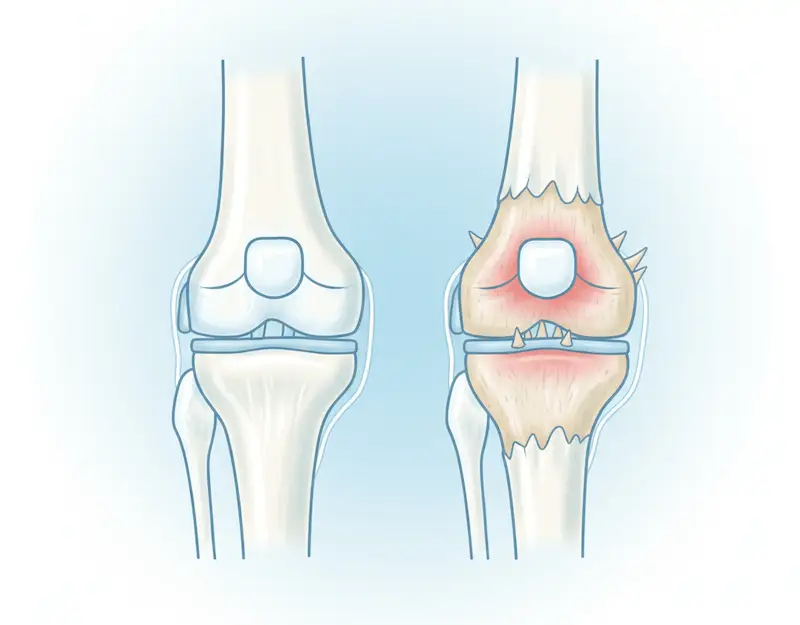
Cartilage is the smooth, rubbery tissue that cushions the ends of your bones where they meet at a joint. Think of it like the rubber tip on a chair leg—it absorbs shock and lets the surfaces glide without friction.
The trouble is, cartilage has almost no blood supply. Most tissues in your body repair themselves by sending blood carrying nutrients, oxygen, and repair cells to the damaged area. Cartilage cannot do this. It relies on a tiny population of specialized cells called chondrocytes, which are slow workers with limited capacity to multiply.
Once cartilage wears down past a certain point, it does not grow back on its own. The damage simply accumulates.
How Osteoarthritis Inflammation Creates a Vicious Cycle
Osteoarthritis is not just “wear and tear.” When cartilage breaks down, fragments irritate the joint lining (the synovium), triggering inflammation. That inflammation releases enzymes that chew up even more cartilage. The bone underneath responds by growing irregular spurs (osteophytes), and the joint stiffens further.
It is a feedback loop: damage causes inflammation, inflammation causes more damage. Without something to interrupt this cycle, the joint gradually deteriorates.
Where Conventional Osteoarthritis Treatments Fall Short
Pain Management for Osteoarthritis: Symptom Control, Not Repair
Conventional osteoarthritis treatment follows a well-worn ladder. It typically starts with over-the-counter painkillers such as paracetamol or ibuprofen, moves to prescription anti-inflammatories, then to cortisone injections or hyaluronic acid (a gel-like substance injected to lubricate the joint).
These approaches manage symptoms—they turn down the volume on pain. But none of them repairs damaged cartilage or stops the disease from progressing. Cortisone injections, in particular, tend to lose effectiveness over repeated use, and some research suggests that prolonged cortisone exposure may actually accelerate cartilage breakdown.
Joint Replacement for Osteoarthritis: Effective but Invasive
At the far end of the treatment ladder sits joint replacement surgery. For severe osteoarthritis, artificial joints can be transformative—many patients experience dramatic pain relief and restored function.
However, joint replacement is major surgery. It requires general anesthesia, weeks of rehabilitation, and carries risks of infection, blood clots, and implant loosening. Artificial joints also have a finite lifespan, typically 15 to 20 years, meaning younger patients may need revision surgery later in life.
For the many people who are past the point of painkillers helping but not yet ready for—or not suited to—surgery, there is a gap. Stem cell treatment for osteoarthritis aims to occupy that gap.
How Stem Cells Work Against Osteoarthritis: Three Mechanisms
Mechanism 1: Reducing Inflammation in Osteoarthritic Joints
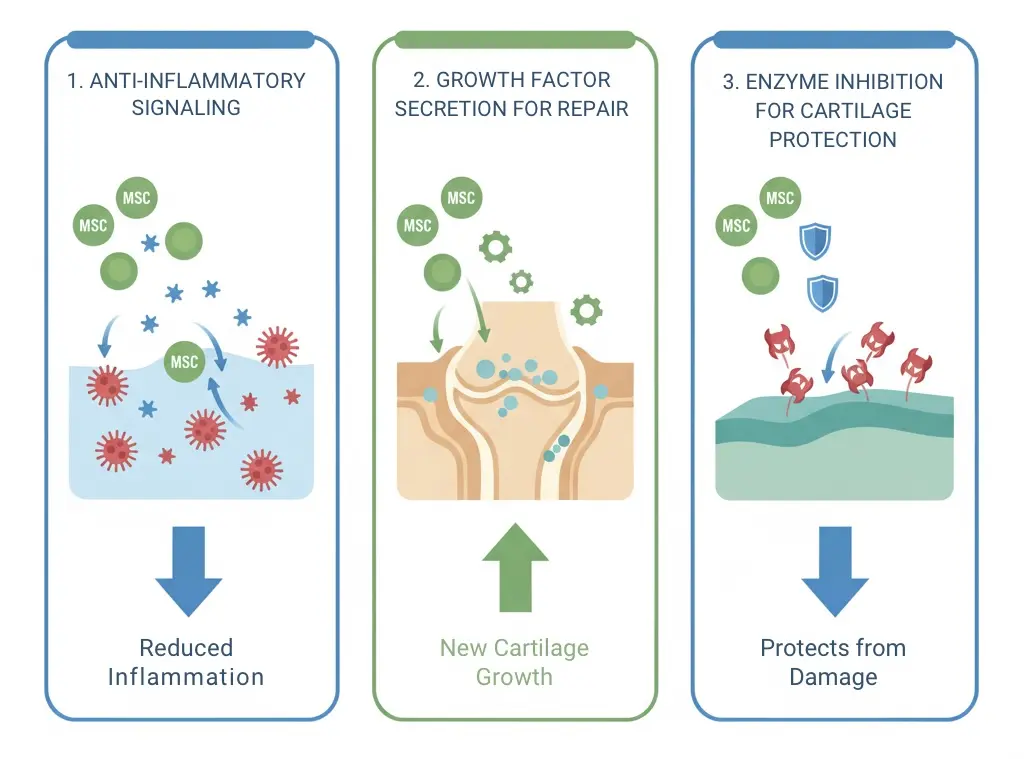
Mesenchymal stem cells (MSCs) act like mediators in a conflict zone. They release signaling molecules called cytokines that calm the overactive immune response inside the joint. Think of it as turning down the fire alarm rather than just spraying water on the flames—the underlying inflammatory cascade is being addressed.
In laboratory and clinical studies, MSCs have been shown to shift the joint’s immune cells (macrophages) from a destructive “attack mode” to a reparative “cleanup and rebuild mode.”
Mechanism 2: Stimulating Cartilage Repair in Osteoarthritis
MSCs secrete growth factors—chemical messengers that wake up the body’s own repair cells. These growth factors encourage the remaining chondrocytes to produce new cartilage matrix (the structural framework of cartilage).
The stem cells do not simply turn into new cartilage themselves. Rather, they act more like a construction foreman sending instructions to the workers already on site, telling them to start building again.
Mechanism 3: Protecting Remaining Osteoarthritis Cartilage from Further Damage
MSCs also release protective molecules that inhibit the enzymes responsible for breaking down cartilage (matrix metalloproteinases, or MMPs). By slowing down the wrecking crew while encouraging the repair crew, stem cells aim to shift the balance inside the joint from destruction toward preservation.
What the Clinical Data Shows About Stem Cell Treatment for Osteoarthritis
Pain and Function Scores After Osteoarthritis Stem Cell Treatment
Multiple systematic reviews and meta-analyses, including one published in Stem Cell Research & Therapy in 2025 that analyzed randomized controlled trials, have reported that intra-articular MSC injections produced measurable improvements in both pain and joint function compared to control groups.
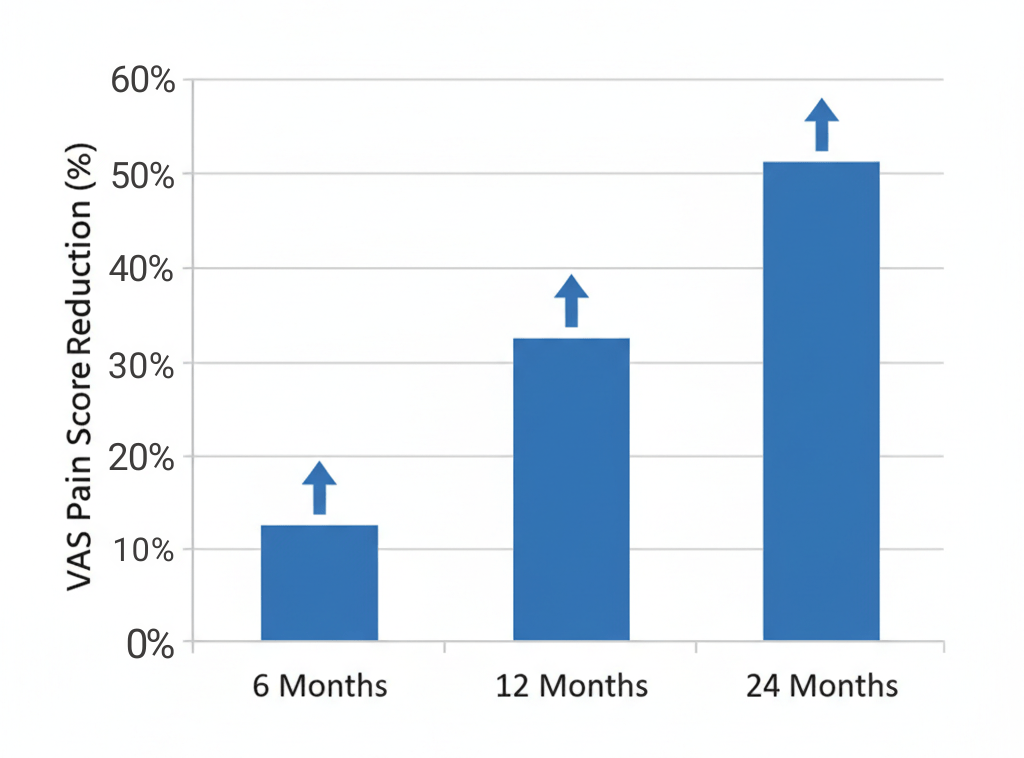
Pain scores on the visual analog scale (VAS) typically showed reductions of 30 to 50 percent across studies. Functional assessments using the WOMAC index (which measures pain, stiffness, and physical function together) also showed meaningful improvement.
A meta-analysis specifically evaluating umbilical cord-derived MSCs found a statistically significant reduction in WOMAC scores compared to control groups.
One important pattern has emerged: the benefits tend to become more pronounced over time. A 2025 meta-analysis published in Frontiers in Cell and Developmental Biology found that clinically meaningful differences between MSC and control groups were more evident at the 24-month follow-up than at 6 or 12 months, suggesting the biological processes set in motion by stem cells take time to mature.
Long-Term Osteoarthritis Cartilage Regeneration Evidence
In a clinical trial using allogeneic umbilical cord blood-derived MSCs with a hyaluronic acid gel scaffold, researchers observed cartilage regeneration that remained stable over seven years of follow-up. MRI imaging confirmed new cartilage formation at the defect site, and clinical outcomes (pain scores and function) remained improved with no significant adverse events over the entire observation period.
While this is promising, it is important to note that not all patients experience the same degree of cartilage regeneration, and results vary depending on the severity of the disease at the time of treatment.
Autologous vs. Allogeneic: Comparing Stem Cell Sources for Osteoarthritis
Autologous Stem Cells for Osteoarthritis: Using Your Own Cells
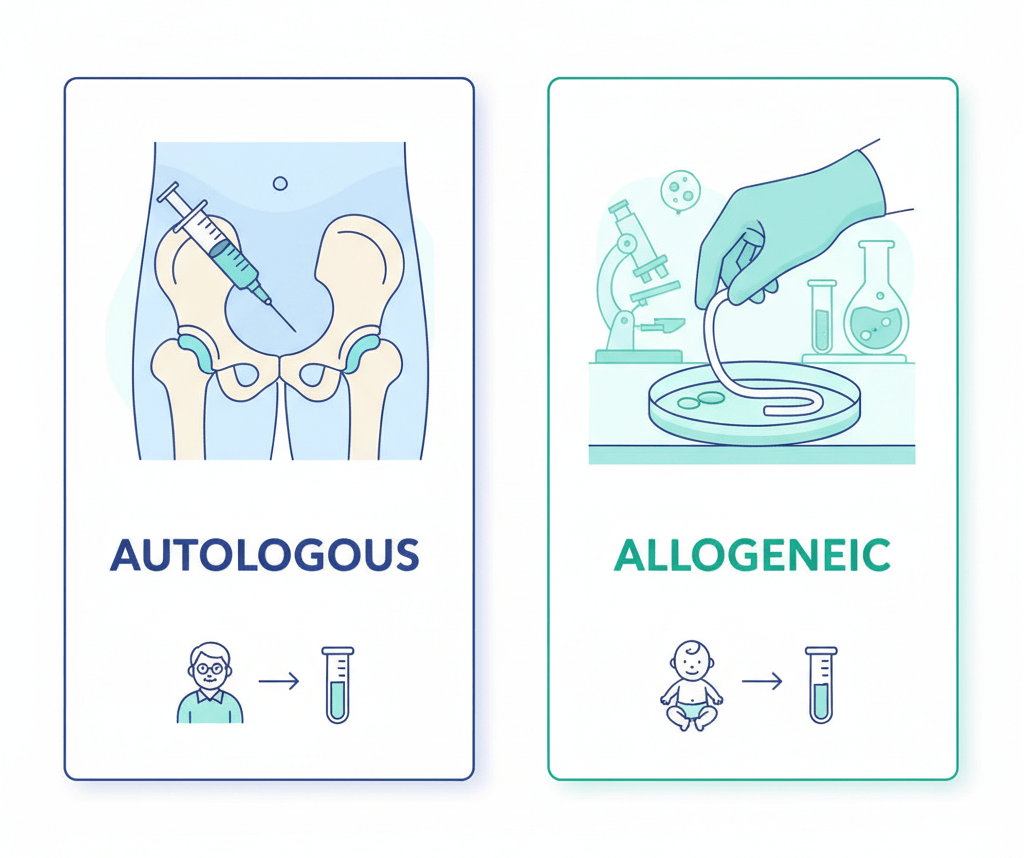
In Japan and several other countries, most stem cell clinics use autologous MSCs—cells harvested from the patient’s own bone marrow or fat tissue. The advantage is minimal immune rejection risk since the cells are your own.
However, there are significant drawbacks. The harvesting procedure is invasive (bone marrow aspiration or liposuction). The cells must be cultured and expanded in a laboratory, which takes weeks. And critically, stem cell quality declines with age—the very population most likely to need osteoarthritis treatment. Studies have shown that MSCs from older donors have reduced proliferative capacity and diminished anti-inflammatory potency.
Allogeneic Umbilical Cord MSCs for Osteoarthritis: The Approach We Use
We use allogeneic MSCs derived from donated umbilical cord tissue (Wharton’s jelly). These cells come from healthy, screened donors and are among the youngest, most potent MSCs available.
Umbilical cord MSCs have several practical advantages: they require no invasive harvesting from the patient, they can be prepared in standardized doses, and their youth means higher proliferative and anti-inflammatory capacity. Because they have low immunogenicity (they are “quiet” to the immune system), rejection reactions are extremely rare.
A growing body of research supports this approach. Umbilical cord-derived MSCs are the second most commonly used cell source in osteoarthritis clinical trials worldwide, accounting for approximately 26% of all trials, according to a 2025 review in the International Journal of Surgery.
In Malaysia, this treatment is conducted under regulated medical practice. There is no need for a surgical procedure to collect cells from the patient, and treatment can typically be completed in a single visit.
The Treatment Process: Stem Cell Therapy for Osteoarthritis in Malaysia
Step-by-Step: What to Expect During Osteoarthritis Stem Cell Treatment
The process at our Malaysia-based clinic follows five steps:
- Initial consultation and medical review — We review your imaging (X-rays, MRI), medical history, and current medications via an online consultation before you travel.
- On-site medical assessment — Upon arrival in Malaysia, a physician conducts a thorough examination to confirm suitability and plan the treatment approach.
- Stem cell administration — Allogeneic umbilical cord-derived MSCs are injected directly into the affected joint (intra-articular injection). The procedure is performed under local anesthesia and typically takes under an hour.
- Monitoring and recovery — You are monitored for a short period after the injection. Most patients can walk the same day. Mild swelling or discomfort at the injection site is normal and usually resolves within a few days.
- Follow-up program — We schedule remote follow-up consultations at 1, 3, 6, and 12 months to track your progress and advise on rehabilitation exercises.
What Recovery After Osteoarthritis Stem Cell Treatment Looks Like
Most patients describe the first few weeks as uneventful—some experience mild soreness, while others notice no change at all initially. Improvements in pain and function typically begin to emerge between the second and third month. The full effects often continue to develop over 6 to 12 months as the biological processes of inflammation reduction and tissue repair mature.
Patients with mild to moderate osteoarthritis (Kellgren-Lawrence grade 2–3) tend to respond better than those with severe disease. If cartilage is almost entirely gone and bone is grinding against bone, stem cells have much less material to work with.
Who Is a Good Candidate for Osteoarthritis Stem Cell Treatment—and Who Is Not
Osteoarthritis Patients Who May Benefit from Stem Cell Treatment
Stem cell treatment for osteoarthritis tends to show the best results in people who meet these criteria: diagnosed with mild to moderate osteoarthritis (Kellgren-Lawrence grade 2 or 3), have not responded adequately to conventional treatments such as physiotherapy, painkillers, or cortisone injections, are not yet candidates for or are trying to delay joint replacement surgery, and do not have active joint infections or autoimmune conditions that are uncontrolled.
Osteoarthritis Patients Who Are Not Ideal Candidates
This treatment is not suited for everyone. People with end-stage osteoarthritis (Kellgren-Lawrence grade 4), where cartilage is almost entirely destroyed and significant bone deformity exists, are unlikely to see meaningful improvement from stem cells alone. At that stage, joint replacement remains the most effective option.
Patients with active cancer, uncontrolled blood disorders, or systemic infections should not undergo stem cell treatment. Pregnant women are also excluded.
Risks and Honest Limitations of Stem Cell Treatment for Osteoarthritis
Known Side Effects of Osteoarthritis Stem Cell Treatment
The safety profile of MSC injections is generally reassuring. Across large meta-analyses, the rate of serious adverse events has been comparable to placebo groups. The most common side effects are temporary and minor: injection-site pain, mild swelling, and short-lived stiffness.
Rare risks include infection (as with any injection into a joint) and allergic reactions, though these are uncommon with umbilical cord-derived cells due to their low immunogenicity.
What Stem Cells Cannot Do for Osteoarthritis
It is important to set realistic expectations.
Stem cells cannot regrow a completely destroyed joint. If bone is grinding against bone with no remaining cartilage, the biology simply does not support regeneration at that level.
Not every patient responds equally. Some people experience significant pain relief and improved mobility; others notice modest improvement or no change. A 2024 study published in Nature comparing MSCs to corticosteroid injections found that at the one-year mark, MSC groups did not outperform the corticosteroid group—though subgroup analyses and longer follow-up periods may reveal different patterns.
Stem cell treatment for osteoarthritis is not a guaranteed solution, and anyone who tells you otherwise is not being honest.
FAQ About Osteoarthritis Stem Cell Treatment
Clinical studies show that pain and function improvements can last 12 to 24 months or longer after a single treatment. One trial using umbilical cord blood-derived MSCs demonstrated stable cartilage regeneration over seven years. However, osteoarthritis is a progressive disease, and some patients may benefit from repeat treatments over time.
The injection itself is performed under local anesthesia and is comparable to a cortisone injection. Most patients describe it as mild discomfort rather than significant pain. Some experience temporary soreness or swelling for a few days afterward.
PRP uses concentrated platelets from your own blood to promote healing. While PRP can provide short-term anti-inflammatory effects, MSCs offer a broader range of biological actions—including the ability to modulate immune responses and stimulate cartilage-producing cells. Some treatment protocols combine both approaches.
Regulatory status varies by country. In Malaysia, the treatment is conducted within the country’s regulated medical framework. In several countries, umbilical cord-derived MSC products have received regulatory approval or are in advanced clinical trials. In the United States and EU, most MSC therapies for osteoarthritis remain in clinical trial stages.
Yes. Stem cell treatment does not require you to stop your current medications (though your doctor may adjust them). Many patients continue physiotherapy alongside stem cell treatment, which may enhance outcomes. Patients being treated with disease-modifying drugs for rheumatoid arthritis, a condition that is distinct from osteoarthritis but sometimes coexists, should discuss their medication plan with their physician before proceeding.
Next Step
Living with osteoarthritis pain can feel like a long negotiation with your own body—constantly adjusting, limiting, and giving things up. If you have reached the point where conventional treatments are no longer providing adequate relief but you are not ready for joint replacement, it may be worth exploring whether stem cell treatment could be an option for your specific situation.
We offer free online consultations where you can share your imaging and medical history. There is no obligation to proceed with treatment—many people use the consultation simply to understand their options better. Whether or not you choose this path, we believe you deserve clear, honest information to make the decision that is right for you.
References
- GBD 2021 Osteoarthritis Collaborators. “Global, regional, and national burden of osteoarthritis, 1990–2020 and projections to 2050: a systematic analysis for the Global Burden of Disease Study 2021.” The Lancet Rheumatology, 2023. DOI: 10.1016/S2665-9913(23)00163-7
- Cao Y, et al. “Efficacy and safety of mesenchymal stem cells in knee osteoarthritis: a systematic review and meta-analysis of randomized controlled trials.” Stem Cell Research & Therapy, 16:122, 2025. DOI: 10.1186/s13287-025-04252-2
- Park YB, Ha CW, Lee CH, Yoon YC, Park YG. “Cartilage regeneration in osteoarthritic patients by a composite of allogeneic umbilical cord blood-derived mesenchymal stem cells and hyaluronate hydrogel: results from a clinical trial for safety and proof-of-concept with 7 years of extended follow-up.” Stem Cells Translational Medicine, 6(2):613–621, 2017. DOI: 10.5966/sctm.2016-0157
- Matas J, et al. “A phase I dose-escalation clinical trial to assess the safety and efficacy of umbilical cord-derived mesenchymal stromal cells in knee osteoarthritis.” Stem Cells Translational Medicine, 13(3):193–203, 2024. DOI: 10.1093/stcltm/szad088
- Zhu Y, et al. “Effects of the umbilical cord mesenchymal stem cells in the treatment of knee osteoarthritis: a systematic review and meta-analysis.” Medicine, 103(46), 2024. DOI: 10.1097/MD.0000000000040551
- Tian X, Qu Z, Cao Y, Zhang B. “Relative efficacy and safety of mesenchymal stem cells for osteoarthritis: a systematic review and meta-analysis of randomized controlled trials.” Frontiers in Endocrinology, 15:1366297, 2024. DOI: 10.3389/fendo.2024.1366297
- Long H, et al. “Prevalence trends of site-specific osteoarthritis from 1990 to 2019: findings from the Global Burden of Disease Study 2019.” Arthritis & Rheumatology, 74:1172–1183, 2022. DOI: 10.1002/art.42089
- Boggess B, et al. “Multicenter Trial of Stem Cell Therapy for Osteoarthritis (MILES).” Duke Health / Nature, 2024.
- Stem cell therapy for osteoarthritis: advances and outlook. International Journal of Surgery, 111(7):4815–4817, 2025. DOI: 10.1097/JS9.0000000000002498
- Frontiers in Cell and Developmental Biology. “Mesenchymal stem cell-based therapy for osteoarthritis: a systematic review and meta-analysis of clinical outcomes and functional recovery.” 2025. DOI: 10.3389/fcell.2025.1746471