
Menopause Stem Cell Therapy | Symptom Relief Without Long-Term HRT

You wake at 3 AM drenched in sweat, push the covers off, then pull them back on twenty minutes later when the chill sets in. By morning, your shirt is damp again. The hot flashes have been coming for two years now — a dozen a day on bad days — and they have quietly rewritten what your week feels like.
The sleep that used to come easily has become unreliable. The mood you took for granted is now something you have to manage. Your joints ache in ways they did not before. The energy that powered through long workdays has thinned. And the doctor’s visit ended, as it often does, with a prescription pad and the familiar conversation: “You can try hormone replacement therapy. There are some risks. We can talk about them.”
If that is roughly where you are, you are far from alone. Approximately one billion women worldwide will be postmenopausal by the end of this decade, and around 75 to 85 percent experience menopausal symptoms of some kind. About one in four women experience symptoms severe enough to substantially affect daily life — and a meaningful proportion either cannot take hormone replacement therapy due to medical history, or simply do not want to be on hormones for the next ten or fifteen years.
This article is written for women in that position. We will explain what menopause stem cell therapy actually involves, what the published clinical research shows in specific numbers, where the evidence is strong and where it is still emerging, and who is — and is not — a realistic candidate. We have been working in regenerative medicine in Malaysia for over seven years, with more than 200 patients treated using allogeneic umbilical cord-derived mesenchymal stem cells. We do not believe this treatment is right for everyone, and we will be specific about why.
Table of Contents
- Why Menopausal Symptoms Affect So Much More Than Hot Flashes
- The Real Limits of Hormone Replacement Therapy for Menopause
- How Stem Cell Therapy Targets Menopause at the Biological Level
- What the Clinical Research Shows About Menopause Stem Cell Therapy
- Allogeneic Umbilical Cord MSCs vs. Autologous Cells for Menopause
- Who Is — and Is Not — a Good Candidate for Menopause Stem Cell Therapy
- One Patient's Experience With Menopause Stem Cell Therapy in Malaysia
- Honest Risks and Limitations of Menopause Stem Cell Therapy
- FAQ About Menopause Stem Cell Therapy
- Considering Your Next Step
- References
Why Menopausal Symptoms Affect So Much More Than Hot Flashes
The Estrogen Decline and Its System-Wide Effects in Menopause
For most of the twentieth century, menopause was treated as primarily a reproductive event — the cessation of fertility and menstruation. Modern research has substantially revised that picture. Estrogen, it turns out, is not just a reproductive hormone. It acts on receptors throughout the body — in the brain, the cardiovascular system, the bones, the joints, the skin, the urogenital tract, and the immune system.
When ovarian estrogen production declines, every one of these systems feels the change. The hot flashes most people associate with menopause are caused by estrogen withdrawal disrupting the brain’s temperature regulation in the hypothalamus. But the same hormonal shift is simultaneously accelerating bone density loss, altering cholesterol profiles, thinning urogenital tissues, changing skin elasticity, and shifting the brain chemistry that supports mood and cognitive sharpness. This is why women in menopause often report symptoms that seem unrelated — sleep disruption, joint pain, urinary urgency, brain fog — appearing together. They are not separate problems. They are different expressions of the same systemic change.
Why Some Women Experience Severe Menopausal Symptoms While Others Do Not
The variation in menopause severity from one woman to another can be striking. Some women transition through menopause with mild symptoms over a year or two. Others experience severe symptoms persisting for a decade or longer. Genetics plays a meaningful role, as do baseline health, body composition, and the rate of estrogen decline. A more abrupt transition — particularly surgical menopause from ovary removal — tends to produce more severe symptoms than gradual natural menopause.
What also matters is the underlying inflammatory environment. A growing body of research, including work published in the Journal of Neuroinflammation, has reframed perimenopause as a “systemic inflammatory phase” in which the loss of estrogen’s anti-inflammatory effects unmasks low-grade chronic inflammation across multiple organ systems. Women who already have higher baseline inflammation — from autoimmune conditions, metabolic syndrome, or other factors — tend to experience more severe and longer-lasting symptoms. This inflammatory dimension is also one of the reasons stem cell therapy has biological relevance to menopause beyond the hormonal axis alone.
The symptoms of menopause are not, in other words, a simple deficiency state that requires a simple replacement. They emerge from a complex interaction of hormonal change, tissue aging, and systemic inflammation — which is why managing them often requires more than a single intervention.
The Real Limits of Hormone Replacement Therapy for Menopause
What HRT Does Well — and the Boundaries of Its Effectiveness
Hormone replacement therapy is, for many women, the most effective intervention available for moderate to severe menopausal symptoms. Modern HRT — particularly transdermal estrogen combined with micronized progesterone for women with an intact uterus — substantially reduces hot flashes and night sweats, helps with sleep disruption, mitigates urogenital atrophy, and slows postmenopausal bone density loss. We want to acknowledge this clearly, because dismissing HRT as a category is neither accurate nor helpful.
What HRT does is substitute for the missing hormone. It does not address the underlying systemic inflammation that develops alongside hormonal change, and it does not reverse cellular aging processes that accelerate during the menopausal transition. When HRT is stopped — and most current guidelines suggest using the lowest effective dose for the shortest necessary duration — symptoms typically return, sometimes nearly to pre-treatment levels. This is one of the central frustrations many women describe: HRT manages symptoms while in use, but the question of “when do I stop?” rarely has a satisfying answer.
Why Many Women Cannot or Choose Not to Use HRT for Menopause
A meaningful proportion of women have absolute or relative contraindications to systemic hormone therapy. A personal history of estrogen-sensitive breast cancer, prior thromboembolic events, severe migraines with aura, active liver disease, or unexplained vaginal bleeding are commonly cited reasons HRT is not an option. Strong family histories of breast cancer or stroke leave many other women hesitant even when they technically qualify.
Beyond medical contraindications, there is a category of women who are simply uncomfortable with the idea of supplementing with hormones for fifteen or twenty years to manage what is, biologically, a natural transition. The aftermath of the Women’s Health Initiative study in 2002 — which initially reported elevated risks for cardiovascular events and breast cancer with combined HRT — created a lasting cultural hesitancy that subsequent re-analysis has only partially softened. The result is that many women managing meaningful menopausal symptoms are doing so without the most effective conventional tool available, looking for something that addresses the biology rather than only replacing what is missing.
It is precisely this group for whom alternatives like menopause stem cell therapy become a relevant question.
How Stem Cell Therapy Targets Menopause at the Biological Level
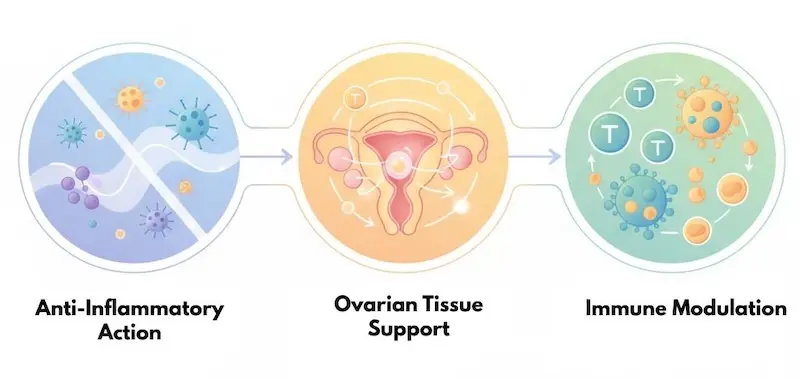
Mechanism 1: Modulating Inflammation in the Menopausal Body
Mesenchymal stem cells — referred to as MSCs — secrete a wide range of signaling molecules that calm inflammatory pathways. In the context of menopause, where the loss of estrogen unmasks systemic low-grade inflammation, this matters more than it might first appear. Persistent inflammation contributes to many of the symptoms women experience as “menopausal” — joint and muscle aches, brain fog and cognitive complaints, mood disturbance, and accelerated skin aging — through mechanisms that are not directly hormonal.
MSCs release anti-inflammatory cytokines (chemical messengers between cells), shift macrophages — a type of immune cell that drives or resolves inflammation — toward a tissue-repair state, and reduce the activity of inflammatory T-cells. Women who have experienced this benefit through stem cell treatment for related inflammatory conditions, such as our work in stem cell therapy for rheumatoid arthritis, often describe an improvement in symptoms that extends beyond the joints — better energy, clearer thinking, more stable mood. Some of those secondary effects are likely the result of reduced systemic inflammation, which is also a relevant pathway in menopause.
Mechanism 2: Supporting Ovarian Tissue and Hormonal Balance in Menopause
The ovary is not entirely silent after menopause. While the major decline in follicle reserve and hormone production is biologically permanent, the ovarian stroma — the supporting tissue surrounding any remaining follicles — continues to produce small amounts of hormones and respond to local signaling. Research, particularly in the context of premature ovarian insufficiency (a related but more severe condition), has demonstrated that MSCs delivered systemically or locally can promote ovarian tissue activity, support remaining follicles, and in some cases produce measurable improvements in hormone levels and ovarian function.
The relevance to natural menopause is more limited and more nuanced. We do not claim that MSC therapy reverses menopause or restores fertility — the data does not support that, and any clinic that suggests otherwise is overselling. What the mechanism does suggest is that the ovarian environment may be modestly responsive to the regenerative signals MSCs provide, which contributes to an improved hormonal milieu rather than a return to premenopausal levels.
Mechanism 3: Tissue Regeneration Across Menopause-Affected Systems
The third mechanism is the broadest. MSCs secrete growth factors and exosomes — small vesicles carrying signaling molecules — that support cellular health and tissue maintenance across many tissue types. For menopause, this is relevant because the symptoms are themselves so distributed: bone tissue, joint cartilage, urogenital epithelium, skin collagen, and cardiovascular endothelium all decline at accelerated rates after estrogen loss. The same regenerative signaling that has been studied in stem cell therapy for osteoarthritis — supporting cartilage and reducing joint inflammation — applies directly to the joint pain that many menopausal women experience as a new and unwelcome symptom.
This is what makes the systemic intravenous delivery of MSCs biologically reasonable for menopause. The cells circulate, sense areas of inflammation and tissue stress, and provide local support. The effect is not dramatic regeneration. It is, more accurately, a shift in the local environment toward maintenance and repair — across multiple tissues simultaneously.
What the Clinical Research Shows About Menopause Stem Cell Therapy
Studies on MSCs for Premature Ovarian Insufficiency and Menopause-Related Symptoms
The strongest clinical evidence for MSC therapy in the broader category of ovarian aging comes from research on premature ovarian insufficiency (POI) — a condition in which menopause occurs before age 40. While POI and natural menopause differ in important ways, the cellular biology overlaps substantially, and the trials are informative.
A clinical study by Yan and colleagues, published in Stem Cell Research & Therapy in 2020, evaluated allogeneic umbilical cord-derived MSCs in women with POI delivered via ovarian artery infusion. The treated group showed measurable improvements in anti-Müllerian hormone (a marker of ovarian reserve), follicle-stimulating hormone levels, and antral follicle counts at 12 months, alongside reductions in menopausal symptom scores. A study by Wang and colleagues published in Stem Cells International in 2018 reported similar findings using bone marrow-derived MSCs in POI patients, with improvements maintained at the 12-month follow-up.
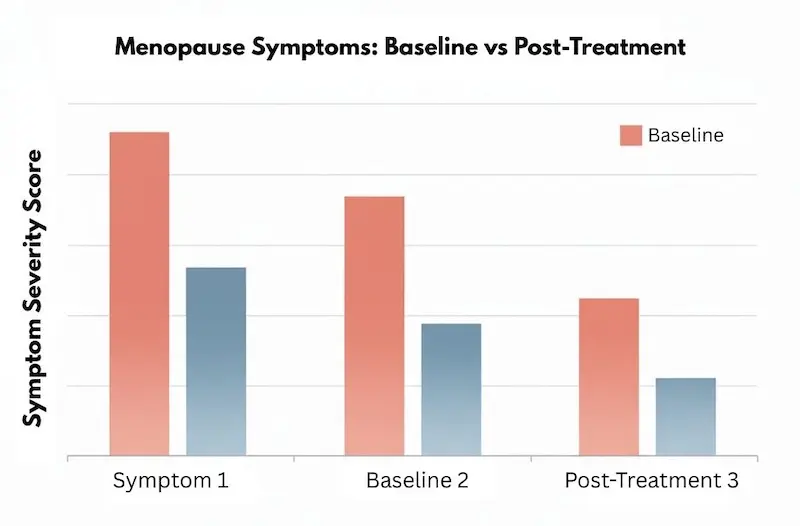
For natural menopause specifically, the published clinical trial data is thinner. Several Phase I and small Phase II studies have evaluated UC-MSC infusions for menopausal symptoms, generally reporting improvements in vasomotor symptoms (hot flashes and night sweats), sleep quality, and quality-of-life measures over 3 to 6 months, with safety profiles consistent with what has been reported for MSC therapy in other autoimmune and inflammatory conditions. We want to be honest that this evidence base is smaller and less mature than what exists for, say, knee osteoarthritis or refractory rheumatoid arthritis. The mechanism is biologically reasonable; the clinical data is encouraging but still developing.
Realistic Expectations from Menopause Stem Cell Therapy
The honest expectation framing is this: stem cell therapy is unlikely to eliminate menopausal symptoms entirely, and it does not return the body to a premenopausal hormonal state. What patients in trials and in our clinical practice have reported, when they respond, is partial improvement across multiple symptom domains — fewer and less severe hot flashes, better sleep continuity, improvement in joint and muscle complaints, and a subjective sense of better daily energy and clearer thinking.
Improvements typically begin to emerge between weeks 6 and 12 after treatment and continue developing over 6 months. A meaningful minority of patients — based on published trial data and our own follow-up — do not experience clinically significant improvement, and we cannot yet predict reliably who will and will not respond. We do not present this treatment as a cure for menopause. We present it as a biological intervention that, in responding patients, may shift the symptom severity from heavily limiting to manageable — without the need for ongoing hormone supplementation.
Allogeneic Umbilical Cord MSCs vs. Autologous Cells for Menopause
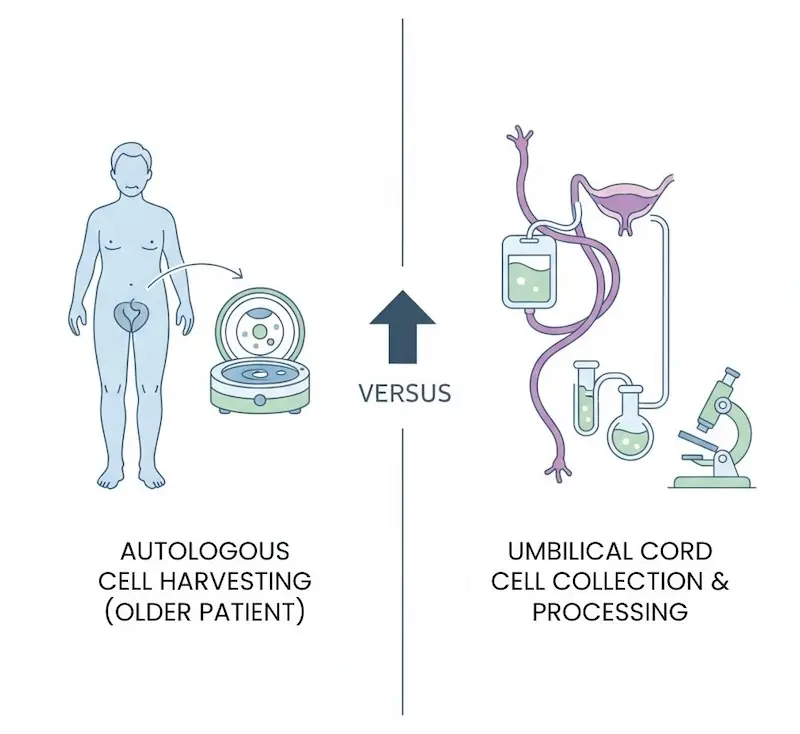
Why Cell Source Matters Especially for Menopausal Patients
In Japan, the regulatory framework for regenerative medicine has historically favored autologous cell therapy — meaning cells are harvested from the patient’s own body, typically from adipose (fat) tissue or bone marrow, processed, and reinfused. The advantage is the absence of any rejection risk; the cells are genetically the patient’s own. The disadvantage, particularly relevant for menopause, is that a woman’s own cells reflect the biological state of her body at the time of collection.
A woman in her early fifties seeking treatment for menopausal symptoms is, by definition, undergoing the systemic changes we discussed earlier — declining estrogen, increasing inflammation, accumulating cellular aging markers. Her own MSCs reflect that environment. Studies have shown that MSCs from older donors have reduced proliferative capacity, lower secretion of beneficial signaling molecules, and diminished anti-inflammatory potency compared to cells from younger sources. For a treatment whose mechanism depends on the cells’ regulatory and signaling activity, this matters.
Quality and Standardization of UC-MSCs for Menopause Treatment
The treatment we provide in Malaysia uses allogeneic mesenchymal stem cells derived from donated umbilical cord tissue — specifically the Wharton’s jelly layer surrounding newborn umbilical cords, collected at the time of consented healthy deliveries. These cells are biologically young, highly proliferative, and characterized by particularly strong immunomodulatory activity. Because umbilical cord MSCs express low levels of the surface markers that ordinarily trigger immune rejection, they are immunologically tolerated by recipients without requiring immunosuppression.
Quality control is consistent. Each batch is tested for viability, sterility, and identity markers before clinical use. Doses are standardized rather than dependent on what can be successfully harvested from an individual patient. For menopausal women, this means the cells delivered are not constrained by their own current biological age or inflammatory state. The signal arriving at their tissues comes from outside the menopausal milieu — which we believe is the more sensible cell choice for this clinical context.
Who Is — and Is Not — a Good Candidate for Menopause Stem Cell Therapy
Profile of a Menopause Patient Who May Benefit From Stem Cell Therapy
Women who tend to do well with menopause stem cell therapy generally share several characteristics. They have moderate to severe menopausal symptoms — vasomotor symptoms, sleep disruption, joint and muscle complaints, mood changes, fatigue — that are meaningfully affecting daily life. They have either contraindications to HRT (history of breast cancer, thromboembolic events, severe migraines with aura, etc.), unwillingness to use long-term hormone therapy, or have tried HRT and either could not tolerate it or did not achieve adequate symptom control.
They are in reasonable overall health, without active malignancy, uncontrolled autoimmune disease, or severe systemic illness. They understand that the timeline for response is gradual — first changes typically appearing between 6 and 12 weeks, with full effects developing over 6 months — and they accept that the goal is meaningful symptom improvement rather than complete elimination.
Women within roughly 10 years of their final menstrual period, who still have some functional ovarian tissue, tend to show somewhat better responses than women many years into postmenopause, though both groups can benefit. Women whose menopausal symptoms include a strong inflammatory component (joint pain, persistent fatigue, generalized aches) may particularly benefit given the anti-inflammatory mechanisms involved.
When Menopause Stem Cell Therapy Is Unlikely to Help
We actively discourage proceeding when the clinical picture suggests stem cell therapy is unlikely to provide meaningful benefit. Women whose symptoms are mild and well-managed with lifestyle modifications or short-term symptomatic treatment do not have enough to gain to justify the cost and travel involved. Women whose primary concern is fertility restoration after natural menopause should understand clearly that this is not what stem cell therapy can deliver — the data simply does not support that claim.
Active cancer, particularly hormone-sensitive cancers under current treatment, is a contraindication. Active infection or uncontrolled autoimmune disease should be addressed before treatment. Women looking for a single intervention that will eliminate all symptoms permanently are seeking something the current evidence does not support, and we will say so directly during consultation rather than after treatment.
We also have direct conversations with women whose symptom complaints may be partially or substantially driven by other conditions — undiagnosed thyroid disease, depression, chronic insomnia from non-menopausal causes — that would benefit from primary treatment of the underlying issue rather than menopause-focused regenerative therapy.
One Patient’s Experience With Menopause Stem Cell Therapy in Malaysia
Why a Woman in Her Early Fifties Considered Menopause Stem Cell Therapy
A woman in her early fifties had been in surgical menopause for four years following a hysterectomy with bilateral oophorectomy for benign uterine fibroids. Her menopausal symptoms had been severe from the start — multiple daily hot flashes, profound sleep disruption averaging four hours per night, joint pain across her hands and knees, and a persistent fatigue she described as “a fog I can’t think through.”
She had attempted HRT for eight months but discontinued it after developing recurrent migraines that had not been a feature of her life prior to estrogen replacement. Subsequent trials of low-dose SSRIs and non-hormonal alternatives had produced modest results that did not justify their side effects. Her gynecologist’s honest assessment was that she had reached the end of the conventional non-hormonal pathway, and her sister’s recent breast cancer diagnosis had reinforced her unwillingness to revisit hormone therapy.
She came to our clinic in mid-2024 after extensive reading of the published research. Her expectations were measured — she had told her family she would consider the treatment a meaningful success if her sleep improved enough that she could think clearly during the workday.
How Symptoms Changed Over Six Months After Treatment
The first month produced no clear change. She described it as discouraging in the way many patients do. By week eight, she reported that her hot flashes were both less frequent and noticeably shorter in duration — perhaps half their previous severity. Her sleep had begun consolidating, though she was still waking once or twice each night.
At the three-month follow-up, she described sleeping five to six hours most nights, reduced joint pain, and a clarity of thinking she had not experienced in three years. By six months, she rated her overall symptom burden as approximately one-third of pre-treatment severity. The hot flashes had not disappeared — she still experienced perhaps three to five per day rather than fifteen — and she described the joint pain as “present but no longer dominating my decisions.”
She did not return to a premenopausal state, and we did not suggest she would. What changed was the threshold above which her symptoms interfered with the life she wanted to live. For her, that change was meaningful enough to justify the treatment.
This is an anonymized account based on actual clinical experience. Individual responses vary substantially, and not all women experience improvements of this magnitude.
Recovery and Follow-Up After Menopause Stem Cell Therapy
Most patients return to their accommodation the same day as treatment and are typically able to fly home within two to three days of the final infusion. Mild fatigue, low-grade fever, or slight muscle aching in the first 24 to 48 hours is reported by approximately 15 to 20 percent of patients and resolves without specific intervention.
Structured follow-up consultations occur at three months, six months, and twelve months after treatment. We ask patients to complete standardized menopause symptom rating scales at each follow-up, creating a documented record of their response over time. For patients whose primary concerns include sleep, mood, or cognitive symptoms, we may also use additional validated questionnaires.
Honest Risks and Limitations of Menopause Stem Cell Therapy
Known Side Effects and Safety in Menopause Stem Cell Therapy
The safety profile of intravenous allogeneic UC-MSC infusions, across the published clinical trial literature including studies in autoimmune disease, cardiac conditions, and ovarian insufficiency, has been generally favorable. Serious adverse events directly attributable to the cells themselves have been uncommon. The most frequently reported effects are temporary: low-grade fever in the 24 to 48 hours following infusion, mild fatigue, and occasional headache — all consistent with mild immune recognition of donor cells and resolving without medical intervention.
We monitor patients closely during the infusion and for a period afterward. Patients with concurrent conditions — cardiovascular disease, kidney impairment, autoimmune disease — receive additional pre-treatment evaluation, because these conditions can affect tolerance and clearance.
Long-term safety data beyond two to three years remains limited because the field at clinical scale is relatively young. We are open with patients about this limitation. We monitor all patients in our program at regular intervals and contribute outcome data to the growing evidence base.
What Stem Cell Therapy Cannot Do for Menopause
We want to be specific because vagueness in this area causes real harm. Menopause stem cell therapy cannot reverse menopause. It does not restore fertility after natural menopause has occurred. It does not eliminate the need for ongoing health management — bone density monitoring, cardiovascular risk management, and routine screening remain essential.
It cannot guarantee improvement. A meaningful proportion of patients do not experience clinically significant changes in their menopausal symptoms. We do not yet have reliable predictors for who will and will not respond, though women with stronger inflammatory components to their symptoms appear more likely to benefit.
It is not a substitute for HRT in women whose primary symptom is severe vaginal atrophy with significant tissue thinning, where local estrogen therapy remains the most effective intervention. It is not appropriate when the dominant clinical concern is osteoporosis at a stage requiring pharmaceutical intervention with bisphosphonates or other bone-specific medications.
If you are looking for rapid, dramatic, and comprehensive symptom reversal, this treatment is not what we offer. What we offer is a biologically grounded intervention that, in responding patients, may shift the symptom burden meaningfully — over months, not days — without committing to ongoing hormone supplementation.
FAQ About Menopause Stem Cell Therapy
HRT replaces the missing estrogen (and progesterone where appropriate) directly, addressing symptoms by restoring hormone levels. Stem cell therapy works through different mechanisms — modulating inflammation, supporting tissue health, and influencing immune balance — rather than replacing hormones. The two approaches are not mutually exclusive in principle, though decisions about combining or sequencing them should be made with your treating physician.
Based on published clinical trial data and our own follow-up, the effects typically extend through at least 12 months, with some patients reporting sustained benefit beyond that timeframe. The durability beyond two to three years has not been definitively established because the long-term follow-up data is still maturing. Some patients elect to receive repeat treatment after 12 to 24 months depending on symptom return.
Regulatory frameworks for cell therapy vary substantially by country. Allogeneic UC-MSC therapy is provided under Malaysia’s regulatory framework for advanced cell therapies and is conducted under medical supervision. We recommend verifying the regulatory status applicable in your home country before traveling.
The mechanism — supporting tissue health, reducing inflammation, and providing regenerative signals — has theoretical relevance to postmenopausal bone health, and some research supports this. However, for women with established osteoporosis at higher fracture risk, current bone-specific medications remain the primary evidence-based intervention. Stem cell therapy may serve as a complementary approach in some cases but should not replace bone-specific therapy where it is clinically indicated.
This depends on your specific situation. Most patients continue any medications they require for unrelated conditions. For menopausal symptoms specifically, some patients reduce or discontinue non-hormonal symptom-management medications they had been taking, though this should be done in consultation with the prescribing physician. We do not recommend discontinuing any medication unilaterally based on stem cell treatment.
Considering Your Next Step
If you have read this far, you are likely someone who has thought seriously about your options and is trying to assess whether stem cell therapy makes sense for your specific situation — your symptom profile, your medical history, your reasons for not pursuing or continuing HRT.
We offer free online consultations for exactly this kind of conversation. The purpose is not to sell you a treatment. It is to look at your case honestly and tell you whether we believe you are a realistic candidate, and if not, why not. Bring your medical history, recent laboratory results if you have them, and your questions. You do not need to have made any decisions yet.
References
- Yan L, Wu Y, Li L, et al. “Clinical analysis of human umbilical cord mesenchymal stem cell allotransplantation in patients with premature ovarian insufficiency.” Cell Proliferation. 2020;53(12):e12938. https://doi.org/10.1111/cpr.12938
- Wang Z, Wang Y, Yang T, et al. “Study of the reparative effects of menstrual-derived stem cells on premature ovarian failure in mice.” Stem Cell Research & Therapy. 2017;8(1):11. https://doi.org/10.1186/s13287-016-0458-1
- McCarthy M, Raval AP. “The peri-menopause in a woman’s life: a systemic inflammatory phase that enables later neurodegenerative disease.” Journal of Neuroinflammation. 2020;17(1):317. https://doi.org/10.1186/s12974-020-01998-9
- Ling L, Feng X, Wei T, et al. “Human amnion-derived mesenchymal stem cell (hAD-MSC) transplantation improves ovarian function in rats with premature ovarian insufficiency.” Stem Cell Research & Therapy. 2019;10(1):46. https://doi.org/10.1186/s13287-019-1136-x
- Sheikhansari G, Aghebati-Maleki L, Nouri M, Jadidi-Niaragh F, Yousefi M. “Current approaches for the treatment of premature ovarian failure with stem cell therapy.” Biomedicine & Pharmacotherapy. 2018;102:254-262. https://doi.org/10.1016/j.biopha.2018.03.056
- Avis NE, Crawford SL, Greendale G, et al. “Duration of menopausal vasomotor symptoms over the menopause transition.” JAMA Internal Medicine. 2015;175(4):531-539. https://doi.org/10.1001/jamainternmed.2014.8063
- Hill K. “The demography of menopause.” Maturitas. 1996;23(2):113-127. https://doi.org/10.1016/0378-5122(95)00968-x
- Manson JE, Aragaki AK, Rossouw JE, et al. “Menopausal hormone therapy and long-term all-cause and cause-specific mortality: the Women’s Health Initiative randomized trials.” JAMA. 2017;318(10):927-938. https://doi.org/10.1001/jama.2017.11217