

Low Back Pain Stem Cell Therapy | Improve Without Surgery

Getting out of bed takes longer than it used to. Tying your shoes has become a small act of willpower. And the thought of a long car ride — or sitting through a three-hour meeting — fills you with quiet dread before it even begins because of Low Back Pain.
If chronic low back pain has become the background noise of your daily life, you are far from alone. An estimated 619 million people worldwide were living with low back pain as of 2020, making it the single leading cause of disability across the globe. Most of them have already traveled the standard treatment route: anti-inflammatory medication, physiotherapy, epidural steroid injections. For some, those approaches provide enough relief to carry on. For others, they offer diminishing returns — and eventually, a referral to a spine surgeon.
This article is written for people in that second group: those who have exhausted the standard options and are now asking whether there is a third path. We will explain what stem cell therapy for low back pain actually involves, what the clinical data shows in specific numbers from controlled trials, who is a realistic candidate, and where the evidence currently has limits. Our team has been working in regenerative medicine in Malaysia for over seven years, with more than 200 patients treated. We do not believe stem cell therapy is right for everyone, and we will be direct about why.
Table of Contents
- Why Chronic Low Back Pain Refuses to Heal on Its Own
- The Real Limits of Standard Low Back Pain Treatments
- How Stem Cell Therapy Works on Chronic Low Back Pain
- What the Clinical Data Shows for Lumbar Disc Degeneration
- Who Is — and Is Not — a Good Candidate for Low Back Pain Stem Cell Therapy
- A Patient's Experience with Low Back Pain Stem Cell Therapy in Malaysia
- The Honest Risks and Limitations of Low Back Pain Stem Cell Therapy
- The Treatment Process in Malaysia for Chronic Low Back Pain
- FAQ About Low Back Pain Stem Cell Therapy
- Ready to Think Through Your Options for Chronic Low Back Pain?
- References
Why Chronic Low Back Pain Refuses to Heal on Its Own
The Biology Behind Disc Degeneration and Chronic Low Back Pain
The lumbar spine — the lower five vertebrae that carry most of your body’s weight and enable the majority of your range of motion — is a remarkable piece of engineering. Between each pair of vertebrae sits an intervertebral disc: a tough outer ring called the annulus fibrosus surrounding a gel-like center called the nucleus pulposus. This disc acts as a shock absorber, distributing compressive forces during movement and providing the cushioning that allows you to bend, twist, and walk without grinding bone against bone.
The central problem of chronic low back pain is a biological one, and it begins with blood supply — or rather, the near-total lack of it. Intervertebral discs are among the largest avascular structures in the human body. By the time a person reaches their late twenties, the disc has lost its direct blood supply and must rely on nutrient diffusion through the cartilage endplates above and below. This makes self-repair extraordinarily limited. When the disc begins to degenerate — losing water content, height, and structural integrity — the body has almost no natural mechanism for restoring it. The degradation triggers a low-grade inflammatory process that sensitizes nearby nerve endings, and pain signals begin to fire not just during movement but increasingly at rest.
Why the Pain Cycle in Chronic Low Back Pain Is So Difficult to Break
Once disc degeneration reaches a certain threshold, a self-reinforcing cycle takes hold in chronic low back pain. Inflammation accelerates disc breakdown; disc breakdown triggers more inflammation; and the muscles surrounding the lumbar spine tighten in a protective response that adds compressive load to structures that are already under stress. Unlike a broken bone — which, given adequate blood supply and time, rebuilds itself — a degenerated disc cannot restore its original structure through rest, exercise, or medication alone.
This is the fundamental reason why physiotherapy, while genuinely valuable for pain management and muscular support, cannot reverse the underlying disc damage that drives chronic low back pain. It can help you manage the condition; it cannot undo what has already happened at the tissue level.
The Real Limits of Standard Low Back Pain Treatments
What Pain Medication and Injections Can — and Cannot — Do for Chronic Low Back Pain
The standard treatment ladder for chronic low back pain is well-established, widely used, and genuinely helpful — up to a point. Non-steroidal anti-inflammatory drugs, or NSAIDs (the class of medication that includes ibuprofen and naproxen), reduce the inflammation that sensitizes nerve endings and can meaningfully improve day-to-day comfort. Epidural steroid injections deliver concentrated anti-inflammatory medication directly to the affected nerve root, often providing weeks to months of relief. Both of these approaches work by managing symptoms rather than by addressing the structural cause of chronic low back pain.
Long-term NSAID use carries documented risks to gastrointestinal and cardiovascular health, which limits how aggressively they can be used in a chronic pain context. Repeated steroid injections lose effectiveness over time and, when administered too frequently, can actually accelerate tissue breakdown in surrounding structures. For patients whose chronic low back pain is driven by advancing disc degeneration rather than a single nerve irritation event, these tools progressively lose their leverage.
When Surgery Is Recommended — and Why Many Chronic Low Back Pain Patients Look for an Alternative
Spinal fusion surgery — joining two or more lumbar vertebrae together to eliminate movement at a painful segment — is the most common surgical intervention for degenerative low back pain. In carefully selected patients, it can reduce pain and improve function. It is also a major operation with a recovery period of six months to a year, significant intraoperative risks, and complications including adjacent segment disease, where the vertebrae above or below the fused level degenerate faster as a result of altered mechanical load. Success rates vary considerably depending on patient selection and the specific diagnosis being treated.
Many patients with chronic low back pain — particularly those in their fifties and sixties who are otherwise active and professionally engaged — find themselves in an uncomfortable position. Their pain is real and limiting. Their MRI shows structural damage that explains it. But they are not ready to accept the risks and recovery demands of major spinal surgery, and their current conservative treatments are no longer providing meaningful relief. It is precisely this group that most commonly begins exploring whether stem cell therapy offers a credible biological alternative.
When sciatic nerve compression accompanies lumbar disc degeneration — causing pain or numbness that radiates from the lower back into the leg — the underlying mechanisms overlap significantly with those of disc-driven chronic low back pain, and regenerative approaches address both pathways simultaneously.
How Stem Cell Therapy Works on Chronic Low Back Pain
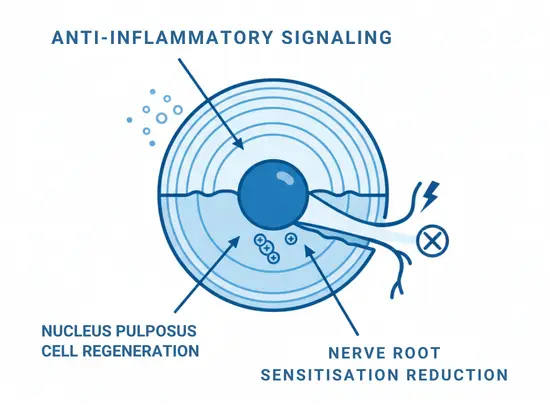
The Three Biological Mechanisms Behind Stem Cell Therapy for Low Back Pain
Mesenchymal stem cells — the cell type used in our treatment program, commonly referred to as MSCs — are not pain relievers in the conventional sense. They do not block receptors or suppress inflammation the way a pharmaceutical does. Instead, they work by signaling to the body’s own repair systems, releasing molecules that alter the local tissue environment. For chronic low back pain driven by disc degeneration, three mechanisms are particularly relevant.
The first is anti-inflammatory modulation. The inflammatory environment inside a degenerated disc is one of the primary drivers of pain in chronic low back pain. MSCs secrete signaling proteins called cytokines (think of them as molecular messages sent between cells) that shift the disc’s local environment from a pro-inflammatory state to an anti-inflammatory one. This reduces the chemical signals that are sensitizing nearby nerve endings — which is why many patients describe the pain relief that follows MSC treatment as feeling qualitatively different from, and more sustained than, the relief from a steroid injection.
The second mechanism is disc cell support and partial regeneration. The cells that give the nucleus pulposus its gel-like properties — nucleus pulposus cells — are responsible for maintaining the disc’s water content and structural proteins. In a degenerated disc, these cells are dying or dysfunctional. MSCs have been shown to promote the survival and activity of nucleus pulposus cells and, in some experimental conditions, to differentiate into disc-like cells themselves. The clinical consequence, in patients who respond, can be measurable recovery of disc hydration and height on MRI — a structural change, not just a symptomatic one.
The third mechanism is neural pain pathway modulation. Chronic pain involves not only local tissue damage but changes in how the nervous system processes and amplifies pain signals. Research suggests that MSCs may reduce the sensitization of nerve roots adjacent to damaged discs, partly explaining why some chronic low back pain patients experience improvements in pain severity beyond what disc structural recovery alone would predict.
Allogeneic Umbilical Cord MSCs vs. Autologous Stem Cells for Chronic Low Back Pain
Not all stem cell treatments are equivalent, and the difference in cell source has meaningful implications for outcomes in chronic low back pain.
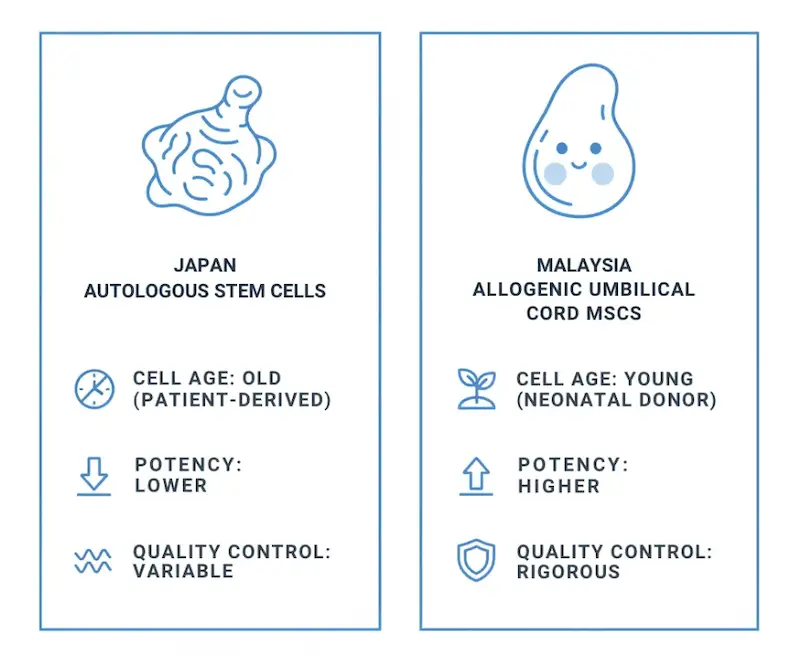
Japan’s current regenerative medicine framework permits autologous stem cell therapy, meaning cells are harvested from the patient’s own body — typically from bone marrow or adipose tissue — processed, and reinjected. The advantage is immunological compatibility: there is no rejection risk because the cells are genetically the patient’s own. The significant limitation is that a patient’s own cells reflect their age and health status. The stem cells of a 65-year-old with three degenerated lumbar discs are functionally compromised relative to those of a healthy young donor — fewer viable cells, lower proliferative capacity, reduced signaling output.
The treatment we offer in Malaysia uses allogeneic umbilical cord-derived MSCs: cells sourced from ethically donated umbilical cords of healthy newborns. These cells are young, highly proliferative, and immunologically tolerated by the recipient — umbilical cord MSCs express low levels of the surface markers that ordinarily trigger immune rejection. They are produced in consistent, quality-controlled batches, which means cell viability and potency can be verified before each treatment is administered. This difference in cell source is not merely technical — it has direct implications for the volume and functional quality of the cells that reach the target disc tissue in a chronic low back pain patient.
What the Clinical Data Shows for Lumbar Disc Degeneration
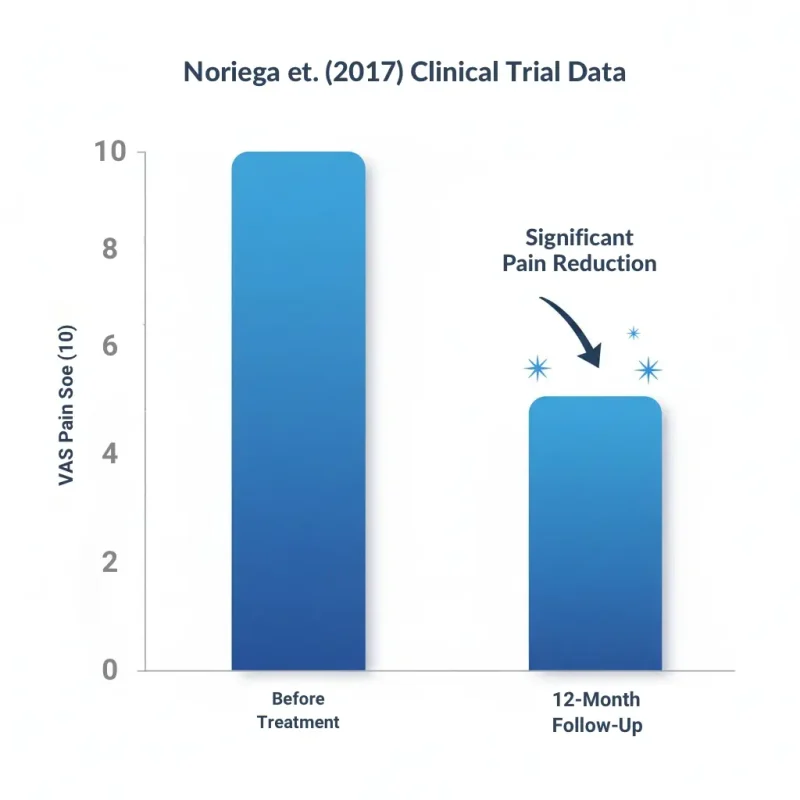
Key Clinical Trials on Stem Cell Therapy for Lumbar Disc Degeneration and Chronic Low Back Pain
The evidence base for stem cell therapy in chronic low back pain is younger than that for established surgical or pharmaceutical interventions — but it is not absent. The published data is more specific and more carefully controlled than much of the popular writing on this topic would suggest.
The most methodologically rigorous published trial to date is a randomized controlled study by Noriega and colleagues (2017), published in the journal Transplantation. The trial enrolled 24 patients with chronic low back pain caused by lumbar disc degeneration and randomly assigned them to receive either a single intradiscal injection of allogeneic mesenchymal bone marrow cells or a simulated injection serving as a control. At 12 months, the treated group showed statistically significant reductions in pain scores and significant improvements in functional disability scores compared to the control group. MRI analysis demonstrated disc hydration improvements in the treated group that were not observed in controls — indicating that the effect was structural, not merely symptomatic.
A prospective study by Pettine and colleagues (2015), published in the journal Stem Cells, followed 26 patients with lumbar discogenic pain who received autologous bone marrow concentrate injections. At 12 months, the mean visual analogue scale pain score — a standardized 0-to-10 pain measurement — dropped from 6.1 to 2.5. Forty percent of patients showed improvement of two or more levels on the Pfirrmann grading scale, a standardized MRI-based assessment of disc health, suggesting actual structural disc recovery in a meaningful proportion of cases.
An earlier case series by Orozco and colleagues (2011), in the same journal, reported that intradiscal MSC injection produced pain reduction beginning within three months and MRI evidence of disc hydration improvement at one year in all treated patients in the series.
What Realistic Improvement Looks Like for Chronic Low Back Pain Patients After Stem Cell Therapy
We want to be precise about what these numbers mean in practice, because selective reporting of best-case outcomes does patients a disservice.
A reduction in VAS pain score from 6.1 to 2.5 is clinically significant — it represents the difference between pain that interferes with most daily activities and pain that is present but manageable. But it is not elimination of pain, and the study populations included both responders and non-responders. Based on published trial data and our own clinical experience, the realistic picture for chronic low back pain stem cell therapy looks like this: the majority of patients who respond do so gradually, with first noticeable changes typically appearing between 6 and 16 weeks after treatment. Pain reduction, when it occurs, tends to be partial rather than complete — most patients describe their pain moving from a 6 or 7 out of 10 to a 3 or 4, with some reaching lower. Functional improvements — the ability to walk further, sit longer, sleep through the night, or reduce daily medication use — often appear alongside or shortly before the pain reduction itself. MRI changes, where they occur, typically become visible at the 6- to 12-month mark. And a significant minority of patients — estimated at 20 to 30 percent based on available trial data — do not achieve meaningful improvement.
We believe patients with chronic low back pain deserve these numbers rather than a curated highlight reel.
Who Is — and Is Not — a Good Candidate for Low Back Pain Stem Cell Therapy
Signs That Stem Cell Therapy May Be Worth Considering for Your Chronic Low Back Pain
Stem cell therapy for low back pain is most likely to benefit patients who meet several clinical conditions. The underlying cause of pain is primarily discogenic — originating from degenerated intervertebral discs rather than from severe structural collapse, progressive spinal stenosis, or primarily muscular or ligamentous issues. MRI confirms disc degeneration at one to three lumbar levels with some disc space remaining (not completely collapsed). The patient has had symptoms for at least six months despite consistent conventional treatment. There is no surgical emergency — no progressive neurological deficit such as foot drop or loss of bladder or bowel control, which require prompt surgical attention. The patient is in reasonable overall health, without active malignancy, uncontrolled autoimmune disease, or severe systemic illness. And the patient understands and accepts that stem cell therapy is not a guaranteed cure, and that results, when they occur, emerge gradually over months.
In terms of imaging, patients with Pfirrmann Grade 2 to 4 disc degeneration — meaning moderate degeneration with remaining disc tissue and fluid — tend to respond better than those with Grade 5, where the disc space has completely collapsed and structural restoration is no longer realistic.
When Stem Cell Therapy for Low Back Pain Is Unlikely to Help
We actively advise against proceeding when the clinical picture suggests the patient is unlikely to benefit or when a different treatment pathway is more appropriate.
Severe spinal stenosis with neurological compromise requires surgical decompression; MSC therapy cannot physically widen a narrowed spinal canal. Advanced spondylolisthesis causing mechanical instability is a structural problem best addressed surgically. Pain that is primarily originating from the sacroiliac joint or hip, rather than the intervertebral disc, will not respond to intradiscal treatment. Active cancer, active systemic infection, or uncontrolled autoimmune disease are contraindications. And patients who require rapid relief — due to professional obligations, upcoming events, or the psychological urgency of severe daily pain — may find the gradual timeline of stem cell therapy poorly matched to their needs.
We also take time to discuss whether a patient’s expectations are realistic before any treatment proceeds. Stem cell therapy cannot restore a completely collapsed disc to its original height. It is not a structural reconstruction — it is a biological stimulus. The most honest framing is this: it is an attempt to slow degeneration, modulate the inflammatory pain environment, and partially restore disc cell function. For patients for whom that is a meaningful and valued goal, it is worth a detailed conversation.
A Patient’s Experience with Low Back Pain Stem Cell Therapy in Malaysia
A Chronic Low Back Pain Patient’s Decision to Pursue Stem Cell Therapy
A man in his late fifties had been managing lumbar disc degeneration at two levels for five years. He had engaged consistently with physiotherapy, completed two separate courses of epidural steroid injections, and was taking NSAIDs on most days. His pain, rated around 7 out of 10 on difficult days, was limiting his work as a consultant who traveled frequently by air. His spine surgeon had recommended fusion surgery for the more severely affected level, but he was reluctant given the recovery timeline and the risk to his travel-dependent professional life.
After reviewing the clinical literature and consulting with our team, he decided to pursue allogeneic umbilical cord MSC intradiscal injection in Malaysia in early 2025. He was clear-eyed about the uncertainty of the outcome and did not enter the process expecting a cure.
How Recovery Unfolded After Low Back Pain Stem Cell Treatment
The first six weeks produced no noticeable change — a period he described as discouraging. By week ten, he reported that his morning stiffness was shorter in duration and that he was waking less frequently from pain during the night. At the six-month mark, his VAS pain score on most days had dropped from 7 to approximately 3.5, and he had been able to reduce his NSAID use significantly. He described being able to take long-haul flights without the anticipatory dread that had characterized the previous two years. His 12-month MRI showed modest improvement in disc signal intensity at the more severely degenerated level. He remains in follow-up. His pain has not disappeared, and surgery remains a future possibility depending on how his condition progresses. But his quality of daily life has improved in ways that are meaningful to him.
*This is an anonymized account based on actual clinical experience. Individual results vary and cannot be guaranteed for all patients.
The Honest Risks and Limitations of Low Back Pain Stem Cell Therapy
Known Side Effects and Safety Data in Chronic Low Back Pain Stem Cell Trials
The safety profile of intradiscal MSC injection, across published clinical trials, has been generally favorable. The most commonly reported adverse events are temporary post-procedure soreness at the injection site, mild fever within the first 48 hours, and a short-term increase in localized low back pain that resolves within one to two weeks. No serious adverse events — including disc space infection, tumor formation, or immune rejection — were observed in the Noriega 2017 randomized controlled trial or in the Pettine 2015 prospective study at one-year follow-up.
Longer-term safety data beyond two years remains limited, because the field is relatively young at the clinical scale. This is an honest limitation of current evidence that we disclose to every patient before treatment. We monitor all patients in our program at regular intervals and contribute data to the growing registry of post-treatment outcomes in the field.
The risk of disc space infection (a condition called discitis) from the injection procedure itself is a known complication of any intradiscal intervention, including standard steroid injections. We perform the procedure under strict sterile conditions with imaging guidance, which minimizes but does not eliminate this risk. In the event that infection occurs, it is treatable with antibiotics, though in rare cases may require surgical intervention.
What Stem Cell Therapy Cannot Do for Chronic Low Back Pain
We want to be specific about the boundaries of this treatment because vagueness serves no one.
Stem cell therapy cannot reverse severe, end-stage disc degeneration where the disc space has completely collapsed and adjacent endplates have fused. It cannot physically decompress a nerve root being compressed by herniated disc material in a way that is causing progressive weakness or neurological deficit — that requires surgical decompression. It cannot provide the structural stability that spinal fusion offers in cases of genuine mechanical instability. And it cannot guarantee improvement: a meaningful proportion of patients treated for chronic low back pain do not achieve significant pain reduction, and we do not have reliable predictors for who will and who will not respond.
If you are in severe, disabling pain right now and need rapid relief, conservative management intensification or surgical consultation may be the more appropriate immediate pathway. Stem cell therapy is not suited to situations that require fast results. Patients who enter the process with an accurate understanding of what it can and cannot deliver are better positioned to assess their response fairly — and to make informed decisions about next steps if it does not work.
The Treatment Process in Malaysia for Chronic Low Back Pain
Step-by-Step: What to Expect During Low Back Pain Stem Cell Therapy in Malaysia
For patients who decide to proceed after a thorough clinical discussion, the treatment follows a structured five-step process.
Step 1 is a medical records review and eligibility assessment conducted remotely before any travel is arranged. We review the patient’s complete medical history, current lumbar MRI (imaging within the past 12 months is required), and full treatment history. The goal is to confirm honestly — before the patient books flights — whether their clinical presentation is appropriate for intradiscal MSC therapy.
Step 2 is an in-person consultation and treatment planning session at our facility in Malaysia. The treating physician reviews imaging in detail, conducts a physical and neurological assessment, confirms the injection levels and appropriate cell dose, and has a full conversation about expected outcomes, realistic timelines, risks, and alternatives. No patient proceeds directly from arrival to injection — this consultation is a clinical gate, not a formality.
Step 3 is the intradiscal MSC injection procedure itself. The procedure is performed under fluoroscopy or CT imaging guidance to confirm accurate needle placement within the target disc before cells are delivered. The allogeneic umbilical cord MSCs — prepared and quality-tested in our facility — are injected into the affected disc level or levels. The procedure takes approximately 60 to 90 minutes. Most patients are discharged the same day and can return to their accommodation without an overnight hospital stay.
Step 4 is the post-procedure observation and initial recovery period. Patients are advised to rest and avoid heavy lifting, prolonged sitting, or high-impact activity for the first two to four weeks. Mild increased soreness during this period is expected and does not indicate treatment failure.
Step 5 is structured follow-up and monitoring. We conduct follow-up consultations at three months, six months, and 12 months after the procedure. A repeat lumbar MRI at 12 months provides objective data on any disc structural changes. Patients complete standardized pain and function questionnaires at each follow-up, creating a documented record of their response over time.
Recovery and What to Expect After Low Back Pain Stem Cell Therapy in Malaysia
The recovery from intradiscal MSC injection is considerably less intensive than post-surgical recovery from spinal fusion. Most patients are comfortable traveling home within two to three days of the procedure. Return to sedentary or office-based work typically occurs within one week. Return to moderate physical activity — walking, swimming, light resistance training — is generally possible within three to four weeks, guided by the treating physician’s advice.
The most important thing we communicate about the recovery period is patience. Unlike an epidural steroid injection — which can provide noticeable relief within days — the stem cell treatment works through a slower biological process. The cells need time to engraft, to begin modulating the inflammatory environment, and to stimulate disc cell activity. Most patients who respond begin to notice changes between weeks 6 and 16. Expecting meaningful change within the first two to three weeks is likely to produce frustration and may lead to an inaccurate early conclusion that the treatment has not worked.
FAQ About Low Back Pain Stem Cell Therapy
A steroid injection delivers a concentrated anti-inflammatory drug to reduce swelling around irritated nerve roots near the affected disc. It typically works within days and can provide meaningful relief for weeks to months. It does not change the structure of the disc, and its effectiveness generally diminishes with repeated use. Stem cell therapy works more slowly but aims to address the underlying disc degeneration rather than suppress symptoms at the nerve root. The two approaches are not necessarily competing — some patients use steroid injections to manage acute pain flares while pursuing stem cell therapy for its longer-term structural potential.
This depends on your underlying diagnosis, the degree of degeneration present, and how you respond to treatment. For patients with moderate disc degeneration and a positive stem cell therapy response, the progression may slow sufficiently to delay or avoid surgery over the medium term. For patients with mechanical instability, severe stenosis, or progressive neurological symptoms, surgery remains the more appropriate pathway regardless of stem cell treatment. We do not present stem cell therapy as a universal surgery replacement — we present it as a potential alternative for specific clinical presentations, evaluated case by case.
Yes, and we encourage it. Stem cell therapy creates a biological opportunity — reducing inflammation and supporting disc cell function — but the structural support of the lumbar spine still depends on the strength and coordination of the surrounding muscles. Continuing or resuming core stabilization physiotherapy after treatment is likely to reinforce and help sustain whatever structural improvement occurs. The two approaches work at different levels and are complementary rather than competing.
The honest answer is that we do not yet have long-term data beyond two to three years for allogeneic umbilical cord MSC intradiscal treatment, because the approach is relatively new at the clinical scale. The Pettine 2015 study showed durable effects at 12 months. Some patients in our program have maintained meaningful improvement at two and three years of follow-up. Whether effects are permanent, whether repeat treatment is beneficial, and which patient factors predict durability are active areas of investigation. We discuss this uncertainty openly with every patient.
The treatment is performed in Malaysia as a private self-funded medical procedure. It is not covered by Japanese public health insurance. International private health insurance policies typically exclude procedures classified as experimental or investigational. Patients should plan for out-of-pocket costs. We do not publish specific pricing on this website, as individual treatment plans vary in scope; we are happy to discuss costs transparently and in detail during the consultation process.
Ready to Think Through Your Options for Chronic Low Back Pain?
If you have read this far, you are probably someone who has already tried the standard approaches and is genuinely trying to assess whether stem cell therapy makes sense for your specific situation.
We offer free online consultations for exactly this kind of conversation — not to sell treatment, but to look at your case honestly and tell you whether we think you are a realistic candidate, and if not, why not. Bring your MRI, your treatment history, and your questions. You do not need to have made any decisions yet.
References
- GBD 2021 Low Back Pain Collaborators. Global, regional, and national burden of low back pain, 1990–2020, its attributable risk factors, and projections to 2050. Lancet Rheumatol. 2023;5(6):e316–e329. https://doi.org/10.1016/S2665-9913(23)00098-X
- Noriega DC, Ardura F, Hernández-Ramajo R, et al. Intervertebral disc repair by allogeneic mesenchymal bone marrow cells: a randomized controlled trial. Transplantation. 2017;101(8):1945–1951. https://doi.org/10.1097/TP.0000000000001484
- Pettine KA, Murphy MB, Suzuki RK, Sand TT. Percutaneous injection of autologous bone marrow concentrate cells significantly reduces lumbar discogenic pain through 12 months. Stem Cells. 2015;33(1):146–156. https://doi.org/10.1002/stem.1845
- Orozco L, Soler R, Morera C, Alberca M, Sánchez A, García-Sancho J. Intervertebral disc repair by autologous mesenchymal bone marrow cells: a pilot study. Transplantation. 2011;92(7):822–828. https://doi.org/10.1097/TP.0b013e3182198063
- Kepler CK, Ponnappan RK, Tannoury CA, Risbud MV, Anderson DG. The molecular basis of intervertebral disc degeneration. Spine J. 2013;13(3):318–330. https://doi.org/10.1016/j.spinee.2012.12.003
- Raj PP. Intervertebral disc: anatomy-physiology-pathophysiology-treatment. Pain Pract. 2008;8(1):18–44. https://doi.org/10.1111/j.1533-2500.2007.00171.x