

Fibromyalgia Stem Cell Therapy | What the Clinical Evidence Actually Shows

The alarm went off at 6:30 and your body answered with the familiar greeting: a heavy, diffuse ache across your back, shoulders, and legs that does not belong to any one joint or muscle. It is not sharp enough to name, not localised enough to explain, and not visible enough for anyone else to fully understand.
You are not imagining it. And you are not alone.
An estimated 2 to 5 percent of the global population lives with fibromyalgia — a figure that, depending on the diagnostic criteria used, translates to somewhere between 100 and 200 million people worldwide. In the United States alone, roughly 10 million people carry this diagnosis. Most of them are women. Most have waited two to five years for the diagnosis. And most have spent years on the standard treatment ladder: low-dose antidepressants, anticonvulsant drugs, physiotherapy, sleep hygiene protocols, graded exercise. Some of these help, at least partially. None of them address what is actually happening in the central nervous system.
This article is written for people who have already done the standard work. You have tried the medications your rheumatologist or pain specialist recommended. You are managing, but “managing” has started to feel like a ceiling rather than a step toward recovery. You are asking whether stem cell therapy has any honest evidence behind it — not marketing copy, not anecdote — and whether it might apply to your specific situation.
We will give you the actual data. We will tell you where the evidence is strong and where it is still early. We will also tell you what stem cell therapy cannot do for fibromyalgia, because we believe that honesty is more useful to you than hope dressed up as certainty.
Our team has been working in regenerative medicine in Malaysia for over seven years, with more than 200 patients treated using allogeneic umbilical cord-derived mesenchymal stem cells. This article reflects what we have learned from that experience and from the peer-reviewed literature — not what we wish were true.
Table of Contents
- The Biology Behind Fibromyalgia: Why Pain Persists Without Visible Damage
- Where Standard Fibromyalgia Treatments Reach Their Limit
- How Stem Cell Therapy Targets Fibromyalgia at the Neurological Level
- A Patient's Account: Living with Fibromyalgia Before and After Stem Cell Therapy
- What the Research Actually Shows About Stem Cells and Fibromyalgia
- Who Is — and Is Not — a Suitable Candidate for Fibromyalgia Stem Cell Therapy
- Honest Risks and Limitations of Fibromyalgia Stem Cell Therapy
- FAQ About Fibromyalgia Stem Cell Therapy
- If You Have Read This Far
- References
The Biology Behind Fibromyalgia: Why Pain Persists Without Visible Damage
Central Sensitization: The Mechanism at the Heart of Fibromyalgia
To understand why fibromyalgia is so resistant to treatment, you have to understand what is actually happening in the nervous system — because unlike osteoarthritis, where the problem is visible cartilage loss, or rheumatoid arthritis, where inflamed joint tissue shows up on imaging, fibromyalgia does not leave the kind of damage that an X-ray or MRI can catch.
The primary mechanism is called central sensitization. In a healthy nervous system, pain signals travel from damaged tissue up through the spinal cord to the brain, which interprets them as pain appropriate to the injury. When the injury heals, the signals stop. In fibromyalgia, this calibration breaks down. The central nervous system — meaning the brain and spinal cord — becomes abnormally sensitive to input, amplifying signals that would not normally register as pain, and continuing to produce pain signals even when the original trigger is long gone or never clearly present.
Think of it as a hearing aid turned up too loud. Ordinary sounds become overwhelming. In fibromyalgia, ordinary sensory input — pressure, temperature, even the weight of clothing — becomes experienced as pain.
This is not psychological. It is a documented neurological pattern, visible on functional MRI scans in studies where fibromyalgia patients show heightened activation in pain-processing brain regions in response to stimuli that non-affected individuals experience as mild or neutral.
The Role of Neuroinflammation in Fibromyalgia
More recent research has identified another layer to the problem: neuroinflammation — low-grade inflammatory activity inside the central nervous system itself.
The nervous system has its own immune cells, called microglia and astrocytes. These glial cells (the supporting cells of the brain and spinal cord) are normally responsible for maintaining a healthy neural environment, clearing cellular debris, and regulating neurotransmitter balance. In fibromyalgia, growing evidence suggests that these cells become chronically activated in an inflammatory state, releasing signals — including the same cytokines (chemical messengers) that drive joint inflammation in conditions like rheumatoid arthritis — that further sensitise the pain pathways and dysregulate mood, sleep, and cognitive function.
This neuroinflammatory picture helps explain why fibromyalgia is so often accompanied by fatigue that does not resolve with rest, cognitive difficulties often described as “fibro fog,” sleep that is not restorative, and mood disturbances. These are not separate problems layered on top of pain. They are part of the same underlying neurological disruption.
It is also the reason why fibromyalgia has historically been resistant to treatments designed for inflammatory joint disease or structural tissue damage. The target is not a joint. It is the nervous system itself.
Where Standard Fibromyalgia Treatments Reach Their Limit
What FDA-Approved Medications Can and Cannot Do for Fibromyalgia
Three drugs are currently approved by the US FDA specifically for fibromyalgia: pregabalin (an anticonvulsant that reduces nerve excitability), duloxetine (an antidepressant that modulates the serotonin and norepinephrine systems involved in pain regulation), and milnacipran (a similar antidepressant). In other countries, including those in Southeast Asia, low-dose amitriptyline and cyclobenzaprine are commonly used as well.
These medications work by modulating chemical signals in the nervous system. They do not address central sensitization directly, and they do not normalise the neuroinflammatory activity in the glial cells discussed above. What they can do is reduce the volume of the pain signal for some patients — turning a 7 out of 10 pain day into a 4 or 5. For many patients, that reduction is genuinely meaningful and worth the side effects.
The problem is that a large proportion of fibromyalgia patients find that this benefit plateaus. Studies on pregabalin, for example, show that around 30 to 40 percent of patients achieve a clinically meaningful response. That means the majority do not. Among those who do respond initially, the effect often diminishes over months to years as the body adapts.
The Problem With Escalating Drug Regimens Over Time
When the first medication provides partial relief and then fades, the standard clinical response is to add another drug, adjust the dose, or switch to a different agent. This process — what patients often call “medication cycling” — can lead to years of sequential trials with drugs that each carry their own side effect profile: weight gain from pregabalin, nausea and libido changes from duloxetine, cognitive blunting from combinations of central nervous system-active drugs.
The side effects accumulate. And through all of it, the underlying neurological dysfunction — the central sensitization, the glial cell dysregulation — continues without being addressed at the biological source.
This is the position that many of the patients who reach our clinic are in. Not undertreated. Not medication-resistant in the clinical emergency sense. But caught in a pattern of partial management, medication cycling, and a growing sense that the conventional treatment pathway does not have a fundamentally different answer to offer.
How Stem Cell Therapy Targets Fibromyalgia at the Neurological Level
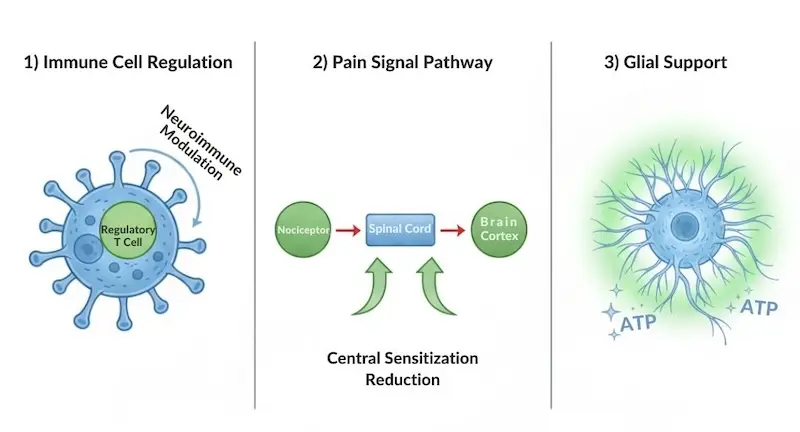
Neuroimmune Modulation: Calming the Inflammatory Environment Driving Fibromyalgia
Mesenchymal stem cells — the cell type used in our treatment program — do not work the way most pain medications do. Rather than blocking a receptor or modulating a single chemical pathway, MSCs release a broad spectrum of signalling molecules that interact with immune cells throughout the body and, critically, with the neuroinflammatory environment in the central nervous system.
When MSCs encounter activated immune cells and inflammatory glial cells, they release cytokines (chemical messenger proteins) that shift these cells away from their inflammatory, tissue-damaging state toward a reparative and anti-inflammatory state. In fibromyalgia specifically, this means targeting the chronically activated microglia and astrocytes whose inflammatory output is contributing to pain amplification and the accompanying symptoms of fatigue and cognitive impairment.
This is mechanistically different from what pregabalin or duloxetine do. Medications modulate how the nervous system processes a signal that is already being produced. MSCs work further upstream, influencing the neuroinflammatory environment that is generating and sustaining the abnormal signal in the first place.
Modulating Central Sensitization Through the Peripheral and Central Pain Pathway
The second mechanism relevant to fibromyalgia involves the role that peripheral inflammatory signals play in maintaining central sensitization. Even though fibromyalgia’s core problem is in the central nervous system, input from the periphery — from muscles, connective tissue, and peripheral nerves — continues to feed into and sustain the sensitised central state.
MSCs have been shown to reduce the production of pro-inflammatory molecules in peripheral tissues, decreasing the volume of inflammatory input reaching the spinal cord. By reducing this peripheral “noise,” the central nervous system receives less stimulation that sustains its sensitised state. In chronic pain research, this interaction between peripheral and central mechanisms is sometimes described as a two-way circuit — addressing one end can reduce the overall burden on the system.
This principle has been observed in related conditions. In patients with rheumatoid arthritis — another condition where central sensitization contributes significantly to pain burden alongside joint inflammation — MSC therapy has shown effects on both the peripheral inflammatory environment and on reported pain levels that exceed what joint inflammation alone would predict. You can read more about that experience in our discussion of rheumatoid arthritis stem cell therapy.
Supporting Glial Cell Health in Fibromyalgia
The third mechanism is perhaps the least understood but increasingly supported by preclinical research. MSCs secrete neurotrophic factors — proteins that support the health, survival, and function of nervous system cells. In animal models of chronic pain states resembling fibromyalgia, these neurotrophic signals have been associated with normalisation of aberrant glial cell activity and partial restoration of normal pain threshold responsiveness.
This does not mean MSCs “fix” the nervous system the way a drug fixes a deficiency. The effect is a biological stimulus — an attempt to shift the local neurological environment from a state of chronic dysregulation toward a more balanced one. Whether and to what degree this translates to symptom improvement in human fibromyalgia patients is the honest question the current evidence is beginning to address.
A Patient’s Account: Living with Fibromyalgia Before and After Stem Cell Therapy
Eleven Years of Managing Fibromyalgia — and Deciding to Try Something Different
A woman in her early fifties. Diagnosed with fibromyalgia eleven years before consulting us. In that time, she had worked her way through pregabalin (which caused significant weight gain and cognitive dullness she described as worse than the pain), duloxetine (which helped her mood but left her pain largely unchanged), and amitriptyline (which improved her sleep quality for about two years before the effect faded). She exercised regularly, saw a physiotherapist monthly, and had tried cognitive behavioural therapy. She was doing everything right.
Her average pain score on the worst days remained around 6 to 7 out of 10. Her fatigue was, in her words, “constant and non-negotiable.” She had reduced her working hours twice in the previous four years. Her neurologist had no new medications to suggest and had told her — honestly, she said — that fibromyalgia was simply a condition that had to be managed rather than cured.
She came to us in early 2025 after two years of researching regenerative medicine. She was methodical and sceptical. She explicitly told us she wanted clinical data, not testimonials. After reviewing her case, we assessed her as a reasonable candidate — active disease, no contraindications, documented failure of multiple first-line treatments — and were direct with her about the uncertainty of the outcome.
What Changed — and What Did Not — After Fibromyalgia Stem Cell Therapy
The first month produced nothing noticeable. She noted this in her follow-up call and described it with characteristic precision: “exactly as you said it would be.”
By the sixth week, she reported that her non-restorative sleep pattern had shifted. She was waking fewer times during the night and feeling measurably more rested in the morning. By week ten, her pain rating on typical days had moved from 6 to approximately 4. The fatigue, she said, was still present — but no longer “wall-to-wall.” There were afternoons when she had energy she had not expected.
At her six-month follow-up, her Fibromyalgia Impact Questionnaire (FIQ) — a standardised measure of how fibromyalgia affects daily function, with 100 being maximum impact — had dropped from 74 at baseline to 52. That shift corresponds to a move from severe functional impairment to moderate impairment. It did not eliminate her fibromyalgia. She remained on a lower dose of duloxetine, which her prescribing physician chose to maintain. The cognitive difficulties — the fibro fog she had described as one of the most disabling aspects of her condition — had improved more noticeably than she had expected, and more than her pain had.
She summarised it as: “I’m not better. But I’m living inside my day rather than just surviving it.”
We include this account not as evidence of what every patient will experience — it is not — but as an honest illustration of the texture of a meaningful response: partial, gradual, asymmetric across symptoms, and arrived at without dramatic turning points.
This is an anonymised account based on actual clinical experience. Individual results vary and cannot be guaranteed for any other patient.
What the Research Actually Shows About Stem Cells and Fibromyalgia
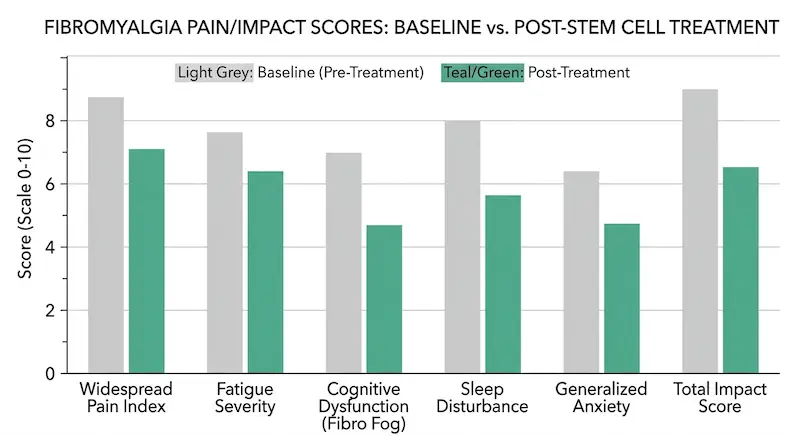
Evidence from Preclinical Research in Fibromyalgia Models
We want to be direct about where the evidence stands, because being vague about this helps no one.
The strongest evidence for MSC therapy in fibromyalgia currently comes from preclinical research — meaning studies in animals. A 2023 study published in the journal Life Sciences by Mokhemer and colleagues used a reserpine-induced mouse model of fibromyalgia, a well-validated model that reliably produces widespread pain hypersensitivity and depression-like behaviour similar to what human fibromyalgia patients experience. The study found that systemic MSC treatment significantly reduced both the mechanical hypersensitivity and the depression-related behaviours in treated animals compared to controls. At the cellular level, the researchers identified a specific mechanism: modulation of the NLRP3 inflammasome, a molecular complex involved in inflammatory signalling, and promotion of new neuron growth in the cerebral cortex — a process called neurogenesis.
This study is meaningful because it identifies a plausible, specific biological pathway — not just a general “anti-inflammatory effect” — through which MSCs may address fibromyalgia’s neurological underpinnings. It also corroborates earlier preclinical work using tooth-derived stem cells published in Brain Research in 2025, which demonstrated significant reduction in both pain hypersensitivity and depressive behaviour in a fibromyalgia mouse model.
Animal models are not humans, and positive preclinical results have not always translated into equivalent clinical benefit. This is a limitation that must be clearly stated.
Early Human Data and What It Suggests About Fibromyalgia
Clinical data specific to MSC therapy in fibromyalgia is still early. This is the honest reality, and it distinguishes fibromyalgia from conditions like osteoarthritis or heart failure where Phase II randomised controlled trial data in humans already exists.
A 2019 clinical study examining umbilical cord-derived MSC therapy in fibromyalgia patients reported reductions in pain scores and improvements in functional assessment after treatment. The evidence base is more limited than we would prefer to present to patients, and any clinician who tells you otherwise about fibromyalgia specifically is overstating what is known.
What we can draw on more confidently is the broader body of evidence on MSC effects in chronic pain conditions and in the neuroinflammatory mechanisms that fibromyalgia shares with other diseases. A 2019 review by Ren and colleagues published in Current Stem Cell Research and Therapy examined the evidence for MSCs and their exosomes (tiny signalling particles released by stem cells) in chronic pain broadly, concluding that the immunomodulatory and neuroregulatory properties of MSCs offer a mechanistically plausible basis for pain reduction that warrants further clinical investigation. The immune dysregulation seen in fibromyalgia — disrupted natural killer cell activity, altered cytokine profiles, evidence of autoimmune-like patterns in a significant subset of patients — is biologically consistent with the targets that MSC therapy has shown effectiveness against in other autoimmune and neuroinflammatory conditions.
A registered Phase II clinical trial examining allogeneic MSC infusions specifically in fibromyalgia patients is currently active on clinicaltrials.gov (NCT06888973). Results are pending, and we will monitor this data as it emerges.
What this means in practical terms: we are not in a position to cite a fibromyalgia-specific RCT with 200 patients and a 12-month randomised placebo comparison the way we can for osteoarthritis or chronic low back pain. The clinical rationale for this treatment in fibromyalgia is mechanistically sound and supported by preclinical data and early human signals. But the large-scale controlled trial that would allow precise predictions about response rates in this condition specifically has not yet been completed. Patients deserve to know this before making any decision.
Who Is — and Is Not — a Suitable Candidate for Fibromyalgia Stem Cell Therapy
Fibromyalgia Profiles That May Benefit from Stem Cell Therapy
Based on the current evidence and our clinical experience, the fibromyalgia patients most likely to benefit from MSC therapy share several characteristics.
They have a confirmed fibromyalgia diagnosis meeting the 2016 American College of Rheumatology criteria — meaning widespread pain affecting multiple regions for at least three months, combined with a symptom severity score that reflects the fatigue, sleep, and cognitive burden of the condition. They have tried at least one first-line pharmacological treatment (typically one of the three FDA-approved drugs or equivalent) and found either inadequate response or intolerable side effects. Their symptoms remain actively disabling — pain on most days in the moderate-to-severe range, fatigue that limits daily function, or sleep disruption that does not respond to sleep hygiene measures. They do not have an active autoimmune condition that is currently uncontrolled, and they are not on active cancer treatment.
Patients in whom there is evidence of an inflammatory or immune dysregulation component — elevated inflammatory markers, a documented autoimmune-like pattern, or clear symptom overlap with conditions like lupus or Sjögren’s syndrome — may represent a biologically distinct fibromyalgia subgroup that is particularly well matched to the immunomodulatory mechanisms that MSCs exert.
Patients who have managed their general health well — maintaining cardiovascular fitness through gentle aerobic exercise, maintaining sleep regularity, engaging with psychological support — often show better post-treatment trajectories. MSC therapy works best when it is contributing to a system that is doing everything else correctly, not substituting for the foundational work.
When Fibromyalgia Stem Cell Therapy Is Unlikely to Be Appropriate
We actively advise against proceeding in several circumstances.
Fibromyalgia that is currently well controlled on existing medication with acceptable side effects is not a case where the expected benefit of MSC therapy justifies the cost and travel involved. We will say this clearly in consultation if it is our assessment.
Active psychiatric crisis — including severe untreated depression, active suicidal ideation, or a recent psychotic episode — is a contraindication. This is not because fibromyalgia’s psychological components are not real, but because the stability needed to manage the treatment process, observe symptom changes accurately, and interpret the gradual timeline of biological response requires baseline psychological stability.
Patients with active cancer, active systemic infection, severe uncontrolled autoimmune disease, or who are pregnant should not receive this treatment.
Patients who need rapid relief — because of professional crisis, caregiving demands, or the acute psychological burden of severe daily pain — may find that the gradual timeline of stem cell therapy (response typically begins at six to sixteen weeks) is not matched to the urgency of their situation. For these patients, adjusting existing medication or psychological support while fibromyalgia-specific clinical trial data matures may be the more appropriate near-term path.
And patients whose primary expectation is complete elimination of fibromyalgia symptoms should hear this clearly: that outcome is not supported by the evidence, and we will not imply otherwise.
Treatment Day and the Weeks That Follow
The MSC infusion for fibromyalgia patients is administered intravenously — via a standard drip line — over approximately sixty to ninety minutes. The allogeneic umbilical cord-derived MSCs we use are sourced from the Wharton’s jelly layer of donated umbilical cords from healthy newborns, collected at the time of consented delivery. They are young, highly active cells with well-characterised immunomodulatory properties — a meaningful distinction from autologous (patient-derived) cells, which in a person with chronic disease and accumulated medication exposure may carry signs of that environment.
Most fibromyalgia patients at our clinic receive one to two infusions, determined by the pre-treatment assessment. The procedure is done on an outpatient basis. Most patients are comfortable returning to their accommodation the same day.
In the days immediately following infusion, a mild fever or muscle ache for 24 to 48 hours is common — a sign the immune system has registered the introduction of cells, not an adverse event in the clinical sense. These effects resolve without medication in the large majority of cases.
The critical thing we communicate about the post-treatment period is patience. If you are accustomed to pain medications that act within hours or days, the timeline of biological response to MSC therapy will feel unfamiliar. Changes in sleep quality are often the earliest signal, typically emerging between weeks four and eight. Pain reduction, when it occurs, tends to emerge between weeks six and sixteen. We schedule follow-up consultations at three months, six months, and twelve months to track progress using standardised fibromyalgia outcome measures including the FIQ-R (Revised Fibromyalgia Impact Questionnaire) and the PSQI (Pittsburgh Sleep Quality Index).
Honest Risks and Limitations of Fibromyalgia Stem Cell Therapy
Known Side Effects and Safety Data in Fibromyalgia Patients
The safety profile of intravenous allogeneic MSC therapy, across the broad clinical trial literature, has been consistently favourable. Serious adverse events directly attributable to umbilical cord-derived MSCs have been uncommon in published trials across multiple conditions. The most commonly reported immediate effects — low-grade fever, mild fatigue, and transient muscle ache in the 24 to 48 hours following infusion — are self-limiting and require no medical intervention.
Immune rejection has not emerged as a clinically significant issue in allogeneic MSC therapy trials. Umbilical cord MSCs express low levels of the surface markers that ordinarily trigger rejection responses, which is why we can use donor-derived cells without requiring the immune suppression that organ transplantation requires.
Fibromyalgia patients on existing immunomodulatory medications should discuss the potential interaction between their current treatment regimen and MSC infusion with both our team and their prescribing physician before any treatment is scheduled. We do not ask patients to stop their current medications before treatment — decisions about medication adjustment rest with the clinicians managing ongoing care, not with our team at the time of infusion.
Long-term safety data beyond two to three years for MSC therapy in any indication remains limited. This is an honest gap in current knowledge that we disclose to all patients before treatment.
What Stem Cell Therapy Cannot Do for Fibromyalgia
This section is as important as any other in this article.
MSC therapy cannot cure fibromyalgia. There is no treatment currently known that does. The most realistic framing is that it represents a biological attempt to shift the neuroinflammatory environment that maintains central sensitization — not to eliminate it.
It will not replace the need for ongoing management. Patients who respond to MSC therapy will still benefit from regular aerobic exercise, good sleep hygiene, and in most cases some level of psychological support. These are not secondary options; they are primary drivers of long-term outcome in fibromyalgia, and stem cell therapy works best alongside them, not instead of them.
The evidence base for fibromyalgia specifically is less developed than for conditions like osteoarthritis or rheumatoid arthritis, where Phase II or Phase III randomised controlled trial data exists in humans. We do not have a definitive response rate to offer you. Based on the clinical data from analogous neuroinflammatory and autoimmune conditions and our clinical experience, a reasonable estimate is that a meaningful proportion of appropriately selected fibromyalgia patients experience symptom improvement — but a significant minority do not respond, and we cannot yet predict reliably who will fall into which group.
Patients who do not experience improvement by the six-month mark have generally not gone on to show meaningful change at twelve months. If that is the case for you, we will say so honestly and support your return to conventional management options.
Fibromyalgia is one of medicine’s more genuinely difficult problems. Anyone who presents this treatment as a straightforward solution to it is not being honest with you.
FAQ About Fibromyalgia Stem Cell Therapy
Not exactly. The administration method — intravenous infusion of allogeneic umbilical cord-derived MSCs — is consistent with how we approach other conditions. But the biological rationale in fibromyalgia is specifically focused on central sensitization and neuroinflammation, which is a different target than cartilage repair in osteoarthritis or immune dysregulation in rheumatoid arthritis. The treatment protocol is tailored to what fibromyalgia is neurologically, not what it resembles clinically.
Most patients who respond do so gradually between weeks six and sixteen. Sleep quality and fatigue often improve before pain scores do. Patients who expect change within the first two to three weeks are likely to experience frustration. We prepare all patients explicitly for a latency period, because the biological process requires time to produce observable changes.
No. We do not ask patients to discontinue or reduce their existing medications before receiving MSC therapy, and we would advise against doing so without the guidance of your prescribing physician. Fibromyalgia medications are managing symptoms that affect daily function and sleep; stopping them without an adequate replacement would likely worsen your condition during the period when stem cells are beginning their biological work.
No. Stem cell therapy in Malaysia is conducted as a private, self-funded medical procedure. It is not covered by standard health insurance, and we do not have arrangements with specific insurers. Patients should plan for this as an out-of-pocket medical expense.
The main difference is cell source. Autologous treatment harvests cells from the patient’s own bone marrow or fat tissue. In a patient who has had fibromyalgia for many years and has been on multiple medications, those cells may themselves reflect the accumulated biological environment of chronic illness — reduced potency, altered signalling capacity. The allogeneic umbilical cord-derived MSCs we use in Malaysia come from young, healthy donor tissue, which consistently shows higher proliferative and immunomodulatory activity in laboratory analyses. The trade-off is that allogeneic cells introduce a theoretical immune recognition risk, though this has not translated into clinically significant rejection in the published trial data.
If You Have Read This Far
Fibromyalgia has a way of making patients feel as though the medical system has run out of ideas. When the medication trial list gets long and the partial relief starts to feel like the best available outcome, it is rational to look further.
We offer free online consultations not to funnel people toward treatment, but because we have found that a direct, honest conversation about a specific person’s clinical history is more useful than a general article can be. If your situation maps onto what we have described here — confirmed diagnosis, documented treatment failure, active symptoms, no contraindications — it may be worth a conversation.
If it does not, we will tell you that too. Bring your treatment history, your current medications, and your questions. There is no obligation to proceed with anything, and no pressure will be applied in any direction.
References
- Queiroz LP. “Worldwide epidemiology of fibromyalgia.” Current Pain and Headache Reports. 2013;17(8):356. https://doi.org/10.1007/s11916-013-0356-5
- Soroosh S. “Epidemiology of Fibromyalgia: East Versus West.” International Journal of Rheumatic Diseases. 2024;27:e15428. https://doi.org/10.1111/1756-185X.15428
- Mokhemer SA, Desouky MK, Abdelghany AK, Ibrahim MFG. “Stem cells therapeutic effect in a reserpine-induced fibromyalgia rat model: A possible NLRP3 inflammasome modulation with neurogenesis promotion in the cerebral cortex.” Life Sciences. 2023;325:121784. https://doi.org/10.1016/j.lfs.2023.121784
- Ren J, et al. “Mesenchymal Stem Cells and their Exosomes: Promising Therapeutics for Chronic Pain.” Current Stem Cell Research and Therapy. 2019;14(8):644–653. https://doi.org/10.2174/1574888X14666190125144517
- Gallagher D, et al. “Mesenchymal Stromal Cells Modulate Peripheral Stress-Induced Innate Immune Activation Indirectly Limiting the Emergence of Neuroinflammation-Driven Depressive and Anxiety-like Behaviors.” Biological Psychiatry. 2019;86(9):712–724. https://doi.org/10.1016/j.biopsych.2019.05.015
- Clauw DJ. “Fibromyalgia: A Clinical Review.” JAMA. 2014;311(15):1547–1555. https://doi.org/10.1001/jama.2014.3266
- Le Blanc K, Ringdén O. “Immunomodulation by mesenchymal stem cells and clinical experience.” Journal of Internal Medicine. 2007;262(5):509–525. https://doi.org/10.1111/j.1365-2796.2007.01844.x
- Wolfe F, et al. “2016 Revisions to the 2010/2011 fibromyalgia diagnostic criteria.” Seminars in Arthritis and Rheumatism. 2016;46(3):319–329. https://doi.org/10.1016/j.semarthrit.2016.08.012
- NCT06888973. “Mesenchymal Stem Cells Infusion in Patients With Fibromyalgia.” ClinicalTrials.gov. https://clinicaltrials.gov/study/NCT06888973