

Ulcerative Colitis Stem Cell Therapy | Calming Inflammation When Biologics Fail

The bathroom trip you plan your morning around. The work meeting you decline because the venue has no easy exit. The family trip you canceled last summer because the thought of a six-hour flight with active inflammation was unbearable. If you live with ulcerative colitis, the disease is not just a diagnosis on a chart — it is the quiet calculation underneath every plan you make.
An estimated 5 million people worldwide live with inflammatory bowel disease, with ulcerative colitis accounting for the larger share. For many, conventional treatment can achieve and maintain remission. But for a meaningful proportion — roughly 30 to 40 percent of moderate-to-severe cases — the standard treatment ladder eventually runs out of rungs. Steroids cause side effects that accumulate. Immunomodulators reach their ceiling. Biologic agents produce strong initial response, then gradually lose effectiveness over months or years. At the end of the ladder sits a conversation no one wants to have: total colectomy, the surgical removal of the colon.
This article is for people somewhere in that second group — patients who have moved through multiple lines of therapy and are now asking whether stem cell therapy for ulcerative colitis represents a credible biological alternative. We will look at what the published clinical data actually shows, explain how mesenchymal stem cells interact with the inflamed bowel, and be honest about both the potential and the genuine limits of this approach.
We have been working in regenerative medicine in Malaysia for over seven years, with more than 200 patients treated across a range of conditions using allogeneic umbilical cord-derived mesenchymal stem cells. We do not consider this treatment appropriate for every patient, and we will be specific about why throughout this article.
Table of Contents
- Why Ulcerative Colitis Returns Even After Remission
- The Conventional Ulcerative Colitis Treatment Ladder and Where It Runs Out
- How Mesenchymal Stem Cells Work Against Ulcerative Colitis
- What Clinical Trials Show About Stem Cell Therapy for Ulcerative Colitis
- Choosing the Cell Source: Allogeneic Umbilical Cord MSCs for Ulcerative Colitis
- Who Is — and Is Not — a Candidate for Ulcerative Colitis Stem Cell Therapy
- A Patient's Experience with Ulcerative Colitis Stem Cell Treatment
- Honest Risks and Limitations of Ulcerative Colitis Stem Cell Therapy
- FAQ About Ulcerative Colitis Stem Cell Therapy
- Ready to Think Through Your Ulcerative Colitis Options?
- References
Why Ulcerative Colitis Returns Even After Remission
The Immune System’s Confusion in the Colon
Ulcerative colitis is an autoimmune condition, which means the immune system — designed to protect against bacteria, viruses, and other genuine threats — has mistakenly identified the lining of the colon as a target. The inflammation it produces is real, but the perceived threat is not.
In a healthy person, the colon lining (called the mucosa) is constantly exposed to trillions of bacteria, dietary particles, and metabolic byproducts. A finely tuned immune response keeps the peace — tolerating what should be tolerated, responding to what genuinely needs a response. In ulcerative colitis, this balance breaks down. Immune cells flood into the mucosa and release inflammatory signaling proteins called cytokines (chemical messengers such as tumor necrosis factor alpha, interleukin-6, and others). The result is the surface ulceration of the colon lining that gives the disease its name, alongside the urgency, abdominal pain, and bloody diarrhea that define an active flare.
Why Remission Doesn’t Mean Cure in Ulcerative Colitis
Many ulcerative colitis patients do achieve remission — periods where symptoms quiet and the colon lining looks substantially healed on endoscopy. This is a meaningful clinical milestone. But it is not the same as cure.
The immune system’s tendency to misidentify the colon lining as a target does not disappear during remission. It is held in check by medication, by environmental factors that influence inflammatory tone, and sometimes for reasons that remain unclear. Most patients in remission can come out of it — triggered by an infection, a stressful period, a missed dose of medication, or no identifiable cause at all. The relapsing-remitting nature of the disease is precisely what makes long-term management so demanding. Patients cannot simply complete a course of treatment and walk away from the diagnosis.
The Conventional Ulcerative Colitis Treatment Ladder and Where It Runs Out
From 5-ASA to Biologics: A Stepwise Approach to Ulcerative Colitis
The standard treatment for ulcerative colitis follows a well-established stepwise structure that has been refined over decades.
The first line for mild-to-moderate disease is mesalamine — also called 5-aminosalicylic acid, or 5-ASA — a medication that reduces local inflammation directly in the colon lining. It is generally well-tolerated and can maintain remission in many patients with milder disease. When 5-ASA alone proves insufficient, corticosteroids such as prednisolone are used to bring active flares back under control. Steroids are powerful, but they carry significant cumulative side effects when used long-term: weight gain, bone loss, mood changes, increased infection risk, elevated blood sugar. They are intended for short-term flare control, not maintenance.
For patients whose disease requires more sustained immune suppression, immunomodulators such as azathioprine or 6-mercaptopurine come next. These dampen immune activity more broadly and require regular monitoring for liver function and blood counts. The most significant therapeutic advance of recent decades has been biologic agents — engineered proteins that target specific inflammatory pathways. Anti-TNF biologics such as infliximab and adalimumab, anti-integrin agents like vedolizumab, anti-IL-12/23 agents such as ustekinumab, and newer JAK inhibitors including tofacitinib have transformed care for many patients with moderate-to-severe disease.
When Biologics Lose Response in Ulcerative Colitis
Biologics work — until they don’t. Two distinct problems emerge over time.
The first is primary non-response. A meaningful proportion of patients, somewhere between 20 and 40 percent depending on the drug, never achieve adequate response to their first biologic. The reasons are not always clear, but they may relate to differences in the underlying inflammatory profile from one patient to another. The second is secondary loss of response. Patients who initially respond well to a biologic frequently see its effectiveness diminish over months or years. The body may produce antibodies against the drug (called anti-drug antibodies), or the dominant inflammatory pathway driving the disease may shift over time. Studies consistently suggest that roughly 30 to 40 percent of biologic responders experience this loss of effect within the first year, and rates continue to accumulate over longer follow-up.
When the first biologic fails, the response rate to the second is lower. By the third or fourth biologic, response rates fall further still. This is the patient population — those who have cycled through multiple biologics and are watching their remaining options narrow — who most often come to us asking what comes next.
The Conversation About Colectomy in Severe Ulcerative Colitis
For patients who have exhausted medical therapy, surgical removal of the colon — total colectomy, typically with construction of an ileal pouch-anal anastomosis — remains the definitive treatment for ulcerative colitis. Unlike Crohn’s disease, which can recur in any part of the digestive tract, ulcerative colitis affects only the colon. Remove the colon, and the disease is, in the formal sense, cured.
This is a real and valid option, and for some patients with severe, intractable disease it is the appropriate path. But colectomy is a major operation with significant short-term and long-term implications. The ileal pouch, while preserving the ability to have bowel movements, can develop its own inflammation (a condition called pouchitis) that may itself require ongoing treatment. Fertility considerations exist for women of reproductive age. Adjusting to altered bowel function takes time, and a meaningful minority of patients experience suboptimal pouch function over the years that follow.
For many patients facing this decision, the appeal of an option that could meaningfully calm the underlying inflammation without surgery — even if it is not a complete cure — is significant. This is the gap that stem cell therapy for ulcerative colitis attempts to occupy.
How Mesenchymal Stem Cells Work Against Ulcerative Colitis
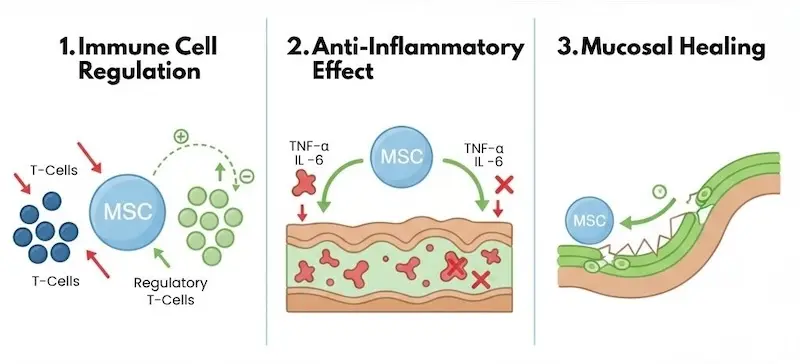
Calming the Misdirected Immune Attack
Mesenchymal stem cells, often abbreviated as MSCs, are a type of cell found naturally in bone marrow, fat tissue, and umbilical cord tissue. They have well-documented immunomodulatory properties — meaning they can influence how immune cells behave.
When MSCs are infused intravenously into a patient with ulcerative colitis, they travel through the bloodstream and tend to accumulate at sites of active inflammation, including the inflamed colon mucosa. There, they release signaling molecules that interact directly with the immune cells driving the disease. Specifically, MSCs suppress the activity of T-cells — the immune cells primarily responsible for the inflammatory attack on the colon lining — and stimulate the growth of regulatory T-cells, often shortened to Tregs. Tregs are a specialized immune cell population whose function is essentially to tell the rest of the immune system to stand down. This dual action — quieting the attackers while amplifying the peacekeepers — represents a fundamentally different mechanism from biologic drugs, which block one specific inflammatory protein.
This immune-resetting mechanism is also why MSC therapy has been studied across multiple autoimmune conditions. Patients with rheumatoid arthritis show comparable patterns of response to MSC infusion, reflecting the shared underlying issue of immune dysregulation across diagnoses that on the surface look quite different.
Reducing Inflammation Directly in the Bowel Mucosa
The second mechanism is direct anti-inflammatory action within the inflamed tissue itself. MSCs secrete molecules that suppress local production of TNF-alpha, interleukin-6, and interleukin-1 — the same inflammatory proteins that biologic drugs target — but from within the inflamed mucosa rather than from systemic circulation. They also reduce the activity of inflammatory macrophages and neutrophils, immune cells that contribute directly to tissue damage during active flares.
The combined effect is a reduction in the overall inflammatory tone of the colon lining, which can translate clinically to less bleeding, less urgency, and less abdominal pain — the symptoms that most directly limit daily life.
Supporting Mucosal Healing in Ulcerative Colitis
The third mechanism is supportive rather than strictly immunological. MSCs release growth factors — proteins that promote cell survival and repair — into the damaged mucosa. These growth factors help sustain the epithelial cells that line the colon, supporting the regeneration of the protective barrier the disease has eroded.
True mucosal healing — visible improvement of ulcers on endoscopy — has emerged in recent years as a key treatment goal in ulcerative colitis because it correlates with better long-term outcomes than symptom relief alone. MSCs do not rebuild a destroyed colon, but they may contribute to a tissue environment in which the body’s own repair processes can proceed more effectively.
What Clinical Trials Show About Stem Cell Therapy for Ulcerative Colitis
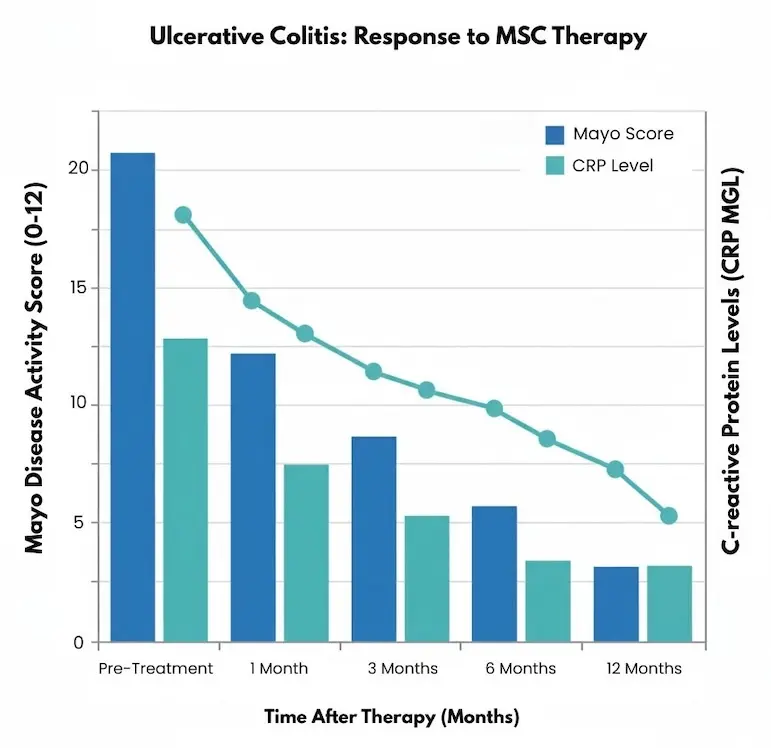
Key Studies on MSC Infusion for Ulcerative Colitis
The clinical evidence base for MSC therapy specifically in ulcerative colitis is younger and smaller than for some other conditions — but it is not absent. Several published studies have produced reproducible findings worth taking seriously.
A study by Hu and colleagues, published in Experimental and Therapeutic Medicine, evaluated allogeneic umbilical cord-derived MSCs in patients with moderate-to-severe active ulcerative colitis who had not responded adequately to conventional therapy. Patients receiving MSC infusions showed significant reductions in the Mayo score — the standard composite measure of ulcerative colitis disease activity, which combines stool frequency, rectal bleeding, endoscopic findings, and physician global assessment — alongside significant decreases in inflammatory markers including C-reactive protein.
A separate series of studies by Lazebnik and colleagues evaluated MSC therapy in patients with inflammatory bowel disease, including ulcerative colitis, and reported clinically meaningful improvements in disease activity scores at follow-up assessments. A small report by Liang and colleagues, published in the journal Gut, described allogeneic bone marrow MSC therapy in patients with refractory inflammatory bowel disease, observing reductions in disease activity without significant adverse events. The most established stem cell therapy in inflammatory bowel disease — Cx601 (darvadstrocel) for complex perianal fistulas in Crohn’s disease, evaluated in the ADMIRE-CD trial by Panes and colleagues — provides additional context: high-quality, randomized data showing that allogeneic MSC therapy can produce clinically meaningful change in inflammatory bowel disease populations, though that specific approval is for Crohn’s fistulas rather than luminal ulcerative colitis.
Across the available studies, pooled clinical response rates for MSC therapy in active inflammatory bowel disease have fallen in the range of 40 to 50 percent, with mucosal healing observed in a meaningful subset of patients on follow-up endoscopy.
What Remission Rates Actually Mean for Ulcerative Colitis Patients
We want to be specific about what these numbers represent in everyday terms, because selective reporting of best-case outcomes does patients a disservice.
A 40 to 50 percent clinical response rate is meaningful — particularly given that most patients enrolled in these trials had already failed conventional therapy. But “response” is not the same as “cure.” Clinical response in ulcerative colitis trials typically means a defined reduction in disease activity, not the elimination of disease. Patients who respond often continue some level of maintenance treatment, and relapses can still occur.
The realistic picture for ulcerative colitis stem cell therapy looks like this: a substantial minority of treated patients experience measurable improvement — reduced stool frequency, less rectal bleeding, improved energy, lower inflammatory markers — that emerges gradually over the first three to six months. Endoscopic improvement, where it occurs, typically becomes visible at the six-month follow-up or later. A significant proportion of patients — somewhere between 40 and 60 percent depending on the study — do not achieve meaningful response, and there are no reliable predictors that distinguish in advance who will respond and who will not.
We share these numbers in initial consultations because patients deserve them, not a curated highlight reel.
Choosing the Cell Source: Allogeneic Umbilical Cord MSCs for Ulcerative Colitis
Why Cell Source Matters in Autoimmune Conditions
Stem cell therapy can use cells harvested from the patient’s own body (autologous) or from a healthy donor (allogeneic). For autoimmune conditions including ulcerative colitis, this choice has clinical implications worth understanding.
Autologous cells avoid any theoretical immune rejection concern, since they are genetically the patient’s own. However, in a person whose immune system has been chronically dysregulated for years, the cells harvested from their own body may themselves reflect that dysregulated environment. Research has suggested that MSCs taken from patients with established autoimmune disease can show reduced immunomodulatory potency compared to MSCs from healthy donors — lower proliferative capacity, reduced secretion of beneficial signaling molecules, and diminished immune-modulating function. The cells are simply not as biologically vigorous as those of a healthy young donor would be.
Allogeneic umbilical cord-derived MSCs are sourced from the Wharton’s jelly of umbilical cord tissue, collected with consent from healthy newborn deliveries. These cells are young in biological terms, highly proliferative in laboratory studies, and characterized by particularly potent immunomodulatory activity. Because umbilical cord MSCs express low levels of the surface markers that ordinarily trigger immune rejection, they are well-tolerated when administered to unrelated recipients. Similar principles guide our approach to other autoimmune and inflammatory conditions, including rheumatoid arthritis stem cell therapy, where the case for donor-derived cells over patient-derived cells follows the same biological logic.
The Malaysia Approach to Ulcerative Colitis Stem Cell Therapy
Our clinic in Malaysia uses allogeneic umbilical cord-derived MSCs prepared and tested in standardized batches. Each preparation is verified for cell viability, surface marker expression, and potency before administration. This standardization is meaningful: the biological “dose” a patient receives is documented and consistent, rather than variable.
In Japan, the current regenerative medicine regulatory framework primarily supports autologous treatment, in which a patient’s own cells are harvested, expanded in a laboratory, and reinfused. This approach has its own validity and is appropriate for certain conditions. For ulcerative colitis specifically — where the underlying problem is immune dysregulation that may be reflected in the patient’s own cells — the case for using allogeneic cells from a healthy young donor is biologically reasonable.
Who Is — and Is Not — a Candidate for Ulcerative Colitis Stem Cell Therapy
Patient Profiles That Tend to Respond Best
Based on available clinical data and our seven years of experience, patients most likely to benefit from MSC therapy for ulcerative colitis share recognizable characteristics.
They have a confirmed diagnosis of ulcerative colitis with at least moderate disease activity, supported by recent endoscopy and elevated inflammatory markers such as C-reactive protein or fecal calprotectin. They have tried at least one biologic agent — and ideally more than one — without achieving sustained remission, or they are experiencing intolerable side effects from current treatment. They are not currently in an acute severe flare requiring hospitalization. They do not have active severe infections, untreated cancer, or other contraindications to immunomodulatory therapy. And they understand and accept that this is not a guaranteed cure, and that meaningful improvement, if it occurs, will emerge gradually over months rather than days.
When Ulcerative Colitis Stem Cell Therapy Is Not Recommended
There are situations where we advise against this treatment, and we say so directly.
Patients currently experiencing acute severe ulcerative colitis — with significant bleeding, many bloody bowel movements per day, fever, or signs of toxic megacolon — need urgent hospital-based medical management, not elective stem cell therapy. The gradual timeline of MSC therapy is fundamentally mismatched to acute severe disease. Patients with established high-grade dysplasia or colorectal cancer require surgical consultation rather than immunomodulatory intervention. Patients with active severe infections should not undergo any immunomodulatory therapy. Pregnant women are excluded.
We also have honest conversations with patients whose disease is already well-controlled on current medication with tolerable side effects. If your current regimen is working and you are tolerating it, the additional benefit available from MSC therapy may not justify the cost and travel involved. We will say this clearly rather than encourage a procedure that may not meaningfully improve your situation.
A Patient’s Experience with Ulcerative Colitis Stem Cell Treatment
A woman in her early forties had been managing ulcerative colitis for nine years. Diagnosed with pancolitis — inflammation affecting the entire colon — in her early thirties, she had cycled through mesalamine, multiple prednisolone tapers that left her steroid-dependent, azathioprine that produced unmanageable nausea, and two anti-TNF biologic agents. The second biologic had initially worked well for nearly a year before gradually losing effectiveness. Her gastroenterologist had begun discussing a third biologic with surgical consultation as an eventual possibility.
Her daily life had reorganized itself around proximity to bathrooms. She was working from home not by preference but by necessity. The fatigue was persistent and disproportionate to her sleep. She was, by her own description, exhausted by having a body that felt like an unreliable partner.
After reviewing the clinical literature and consulting with our team, she pursued allogeneic umbilical cord MSC infusion therapy at our clinic in Malaysia in 2024. We were direct in the consultation that we could not predict her individual response, and that her ongoing medication decisions should remain with her treating gastroenterologist.
In the first six weeks, she noticed nothing distinguishable from her baseline. By the third month, her stool frequency had decreased significantly — from eight to ten daily bowel movements to four or five. The intermittent rectal bleeding she had been experiencing for years had become rare. At her six-month follow-up, her C-reactive protein had fallen from elevated to within the normal range, and her fecal calprotectin had reduced markedly, suggesting reduced bowel inflammation. A follow-up colonoscopy at eight months showed partial mucosal healing in regions that had been visibly inflamed before treatment.
She continues a maintenance dose of mesalamine. Her disease has not vanished, and the possibility of future flares remains real. But she has been able to plan a family trip, return to in-person work two days a week, and stop calculating bathroom proximity into every decision. She described the change not as a cure but as “the first time in years the disease has been the smaller part of my life rather than the larger one.”
※ This is an anonymized account based on actual clinical experience. Individual outcomes vary and should not be considered typical or guaranteed.
What Recovery Looks Like After Ulcerative Colitis Stem Cell Treatment
The recovery period from MSC infusion is minimal in terms of physical demand. Most patients return to their accommodation the same day. Travel home is typically possible within two to three days of the final infusion.
What we communicate most insistently about the post-treatment period is patience. Unlike a corticosteroid taper that produces rapid symptomatic improvement, stem cell therapy works through gradual biological processes. The first noticeable changes in stool frequency, urgency, and energy typically emerge between weeks 8 and 16. Endoscopic improvement, where it occurs, is generally not visible before the six-month mark. Expecting dramatic change within the first month is likely to produce disappointment and may lead to inaccurate early conclusions that the treatment is not working. Patients who do respond often do so on a longer timeline than they initially anticipate.
Honest Risks and Limitations of Ulcerative Colitis Stem Cell Therapy
Known Side Effects in Ulcerative Colitis Stem Cell Trials
The safety profile of MSC infusion across published clinical trials in inflammatory bowel disease has been generally favorable. This is not a dismissal of risk; it is what the accumulated trial data shows.
The most commonly reported side effects are mild and self-limiting. A low-grade fever in the 24 to 48 hours following infusion is reported by approximately 15 percent of patients — thought to reflect the immune system’s recognition of and response to the donor cells rather than active infection. Transient fatigue and occasional headache in the days following infusion are also commonly reported. These effects typically resolve without specific intervention. Serious adverse events directly attributable to the cells themselves have been uncommon across MSC trials in inflammatory bowel disease, and the use of allogeneic umbilical cord-derived MSCs has not been associated with significant immune rejection in clinical experience to date — consistent with the well-documented low immunogenicity of these cells.
Long-term safety data beyond two to three years remains more limited than for established pharmaceutical agents, simply because the field is younger at the clinical scale. This is an honest limitation we disclose to every patient before treatment proceeds. We continue to monitor outcomes in our patient population over time and contribute data to the growing body of post-treatment evidence in this field.
What Stem Cell Therapy Cannot Do for Ulcerative Colitis
Setting realistic expectations matters more than overpromising.
Stem cell therapy is not a replacement for ongoing gastroenterological care. Patients who receive MSC therapy will continue to need follow-up with their treating gastroenterologist, monitoring of disease activity, and in most cases some level of maintenance medication. Decisions about medication adjustment must remain with the treating gastroenterologist, not made unilaterally before or after stem cell infusion. MSC therapy cannot reverse advanced dysplasia or eliminate cancer risk in patients with long-standing extensive colitis — patients with high-grade dysplasia or colorectal cancer need surgical consultation, not immunomodulatory therapy. It cannot guarantee improvement, and a meaningful proportion of treated patients do not experience clinically significant response. We cannot reliably predict in advance who will fall into which group, and we do not minimize this uncertainty in our pre-treatment conversations.
For patients in acute severe flares requiring rapid disease control, the gradual timeline of stem cell therapy is fundamentally unsuited to the clinical need. Hospital-based management with rescue therapy — high-dose intravenous corticosteroids, infliximab rescue therapy, or surgical consultation — is the appropriate immediate path in those situations.
FAQ About Ulcerative Colitis Stem Cell Therapy
Biologic drugs work by blocking one specific inflammatory protein — for example, anti-TNF agents block tumor necrosis factor alpha. They are precise but narrow, and over time the body can produce antibodies that neutralize them, or the dominant inflammatory pathway can shift to one the drug does not target. Mesenchymal stem cells work differently. Rather than blocking a single protein from outside the system, they interact directly with the immune cells driving the disease — suppressing the activity of attacking T-cells while amplifying regulatory T-cells that calm the rest of the immune system down. The mechanism is broader and addresses the upstream immune dysregulation rather than one downstream signal. This does not make stem cell therapy uniformly “better” than biologics — many patients do very well on biologic agents. But it does represent a fundamentally different approach, which is why it can sometimes produce response in patients who have stopped responding to biologic drugs.
No. We do not ask patients to stop their existing ulcerative colitis medications before MSC infusion, and we strongly advise against any unilateral changes to your regimen. Discontinuing 5-ASA, immunomodulators, or biologic agents without a structured plan from your treating gastroenterologist can trigger a flare that is far harder to bring back under control than the flare you are currently managing. Stem cell therapy is designed to work alongside your existing treatment, not as a replacement for it. After treatment, if you experience meaningful improvement, your gastroenterologist may eventually consider whether your maintenance regimen can be adjusted — but that decision belongs in their care, not in ours, and it should be made based on documented improvement in inflammatory markers and endoscopic findings rather than symptoms alone.
Most ulcerative colitis patients in our program receive between one and three infusions in total. The number is determined during the pre-treatment assessment based on your current disease activity, inflammatory marker levels, response to prior therapies, and overall clinical picture. Patients with more refractory or extensive disease often benefit from a multi-infusion protocol scheduled over the course of their stay, while patients with somewhat less active disease may receive a single infusion. This is not a decision made on a fixed template — it is made based on your individual case during the in-person consultation.
Honest answer: we do not yet know definitively. The longest published follow-up data in MSC therapy for inflammatory bowel disease generally extends to two to three years, and the field is still building the long-term evidence base. What we can say is that patients who respond typically maintain measurable benefit through the first year of follow-up, with some maintaining response well beyond that point. Some patients eventually experience a return of disease activity and consider repeat treatment; others maintain durable improvement on their baseline medication. Because ulcerative colitis is a relapsing-remitting condition by nature, we frame stem cell therapy as a way to potentially shift the disease trajectory and extend periods of low activity — not as a permanent endpoint. This is an honest limitation we discuss in every initial consultation.
In almost all cases, no. Stem cell therapy for ulcerative colitis is considered an out-of-pocket private medical service in Malaysia and is not covered by Japanese national health insurance, Malaysian government insurance, or the great majority of private insurance plans. A small number of high-end international private insurance plans include some coverage for regenerative medicine, but this is uncommon and should always be verified directly with your insurer before treatment is scheduled. We can provide documentation to support any insurance inquiry you wish to make, but we do not advise patients to assume coverage will apply.
Ready to Think Through Your Ulcerative Colitis Options?
If you have read this far, you are likely someone who has tried multiple lines of therapy and is now looking carefully at what realistic options remain. We understand the position — and the fatigue of being in it for years.
We offer free online consultations for exactly this kind of conversation. Bring your recent inflammatory markers, your endoscopy reports if you have them, and your treatment history. We will give you a direct assessment of whether your situation falls within the range where this therapy has shown evidence of benefit — or whether it does not. If our honest answer is that stem cell therapy is unlikely to be meaningful for your specific situation, we will say that too. You are not committing to anything by reaching out other than the conversation itself.
References
- Hu J, Zhao G, Zhang L, et al. Safety and therapeutic effect of mesenchymal stem cell infusion on moderate to severe ulcerative colitis. Experimental and Therapeutic Medicine. 2016;12(5):2983–2989. https://doi.org/10.3892/etm.2016.3724
- Forbes GM, Sturm MJ, Leong RW, et al. A phase 2 study of allogeneic mesenchymal stromal cells for luminal Crohn’s disease refractory to biologic therapy. Clinical Gastroenterology and Hepatology. 2014;12(1):64–71. https://doi.org/10.1016/j.cgh.2013.06.021
- Panes J, Garcia-Olmo D, Van Assche G, et al. Expanded allogeneic adipose-derived mesenchymal stem cells (Cx601) for complex perianal fistulas in Crohn’s disease: a phase 3 randomised, double-blind controlled trial. The Lancet. 2016;388(10051):1281–1290. https://doi.org/10.1016/S0140-6736(16)31203-X
- Liang J, Zhang H, Wang D, et al. Allogeneic mesenchymal stem cell transplantation in seven patients with refractory inflammatory bowel disease. Gut. 2012;61(3):468–469. https://doi.org/10.1136/gutjnl-2011-300083
- Ng SC, Shi HY, Hamidi N, et al. Worldwide incidence and prevalence of inflammatory bowel disease in the 21st century: a systematic review of population-based studies. The Lancet. 2017;390(10114):2769–2778. https://doi.org/10.1016/S0140-6736(17)32448-0
- Ungaro R, Mehandru S, Allen PB, Peyrin-Biroulet L, Colombel JF. Ulcerative colitis. The Lancet. 2017;389(10080):1756–1770. https://doi.org/10.1016/S0140-6736(16)32126-2
- Le Blanc K, Ringdén O. Immunomodulation by mesenchymal stem cells and clinical experience. Journal of Internal Medicine. 2007;262(5):509–525. https://doi.org/10.1111/j.1365-2796.2007.01844.x