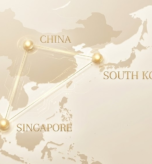

Navigating Stem Cell Regulation in Asia (2026): Safety & Legality in Korea, Singapore, and China
Estimated Reading Time: 15-18 minutes
SERIES: The 2026 Regulatory Landscape|Part 2: Asia Hubs (Current)
This detailed guide compares the strict, pharmaceutical-grade frameworks of South Korea, Singapore, and China.
Table of Contents
Introduction
For nearly two decades, Asia was a fragmented market for regenerative medicine, often characterized by loosely regulated clinics operating in legal gray zones. By 2026, that narrative has fundamentally shifted.
The regulatory landscape has matured into a sophisticated ecosystem. Governments in South Korea, Singapore, and China are no longer turning a blind eye; they are implementing rigorous frameworks to balance the intense demand for Mesenchymal Stem Cell (MSC) therapies with non-negotiable patient safety.
This article provides a comprehensive comparison: South Korea balances speed with its “Conditional Approval” system; Singapore enforces conservative safety as a strict guardian; and China focuses on centralized research control. Let’s dive into the details.
(For a global context comparing Asia to the West, see our international regulatory overview.)
At a Glance: Comparative Regulatory Matrix (2026)
To understand the fundamental differences in how these nations govern regenerative medicine, we have compiled a comparative matrix. This table highlights the core legal statutes and market access barriers.
At a Glance: Asia Regulatory Matrix (2026)
Innovation-Driven. Dual-track system designed to expedite commercialization and hospital access.
Advanced Regenerative Bio Act (ARBA)
MFDS (Drug Track) MOHW (Clinical Track)
Class III / IV (High Risk if expanded)
Permitted. Via approved drugs or MOHW authorized hospitals.
Yes. Conditional Approval based on Phase II data.
Safety-First. Conservative, risk-based approach treating cells as health products.
Health Products Act (HPA) under CTGTP Framework
HSA (Health Sciences Authority) MOH (Ministry of Health)
Class 2 CTGTP (High Risk if manipulated)
Restricted. Only approved products or registered trials.
No. Requires full registration or Special Access Scheme (SAS).
Centralized Control. Strict separation between non-profit research and commercial drugs.
Drug Administration Law & Clinical Research Measures
NMPA (Drug Approval) NHC (Clinical Research)
Biological Drug (Pharmaceutical classification)
Prohibited. Unless NMPA approved; hospitals cannot charge for research.
No. Standard IND/NDA pathway required.
Note: Regulations are subject to change; always verify with local authorities.
At a Glance: Asia Regulatory Matrix (2026)
| Feature | South Korea 🇰🇷 | Singapore 🇸🇬 | China 🇨🇳 |
|---|---|---|---|
| Philosophy | Innovation-Driven Dual-track system | Safety-First Risk-based approach | Centralized Strict research control |
| Legislation | Adv. Regenerative Bio Act (ARBA) | Health Products Act (CTGTP) | Drug Admin Law & Clinical Measures |
| Regulator | MFDS (Drug) MOHW (Clinical) | HSA (Health Sciences Auth.) | NMPA (Drug) NHC (Research) |
| MSC Class | Class III / IV (High Risk) | Class 2 CTGTP (High Risk) | Biological Drug (Pharma Grade) |
| Sale | Permitted (With approval) | Restricted (Registered only) | Prohibited (Research only) |
| Fast-Track | Yes (Conditional Appr.) | No (Full Reg. or SAS) | No (Standard IND/NDA) |
Key Insight: GMP is the New Standard
South Korea: The Dual-Track Innovator
South Korea has established itself as a global powerhouse in regenerative medicine, supported by government policies that designate bio-health as a “National Strategic Technology.” The regulatory environment is defined by its sophisticated Dual-Track System, formalized under the Advanced Regenerative Bio Act (ARBA).
Regulatory Verdict
South Korea offers the most flexible market access for advanced therapies among the three, thanks to its unique “Conditional Approval” mechanism. However, it maintains strict oversight over manufacturing quality.
The Legal Framework: ARBA
The Act on Safety and Support for Advanced Regenerative Medicine and Advanced Biopharmaceuticals (ARBA) bifurcates the industry into two clear pathways:
The Pharmaceutical Track
(MFDS)
Overseen by the Ministry of Food and Drug Safety. This treats stem cells as biological drugs intended for mass market commercialization.
Requires full IND approval and rigorous Phase I-III clinical trials.
The Clinical Research Track (MOHW)
Overseen by the Ministry of Health and Welfare. This allows designated medical institutions to provide cell therapies to patients under a research framework, often for conditions with no alternative treatments.
Traffic Light System: What is Allowed?
🟢 Permitted (Legal & Regulated)
| ✓ | Approved Cell Therapy Products: Commercial sale of MFDS-approved stem cell drugs (e.g., for knee osteoarthritis or anal fistulas). |
| ✓ | Hospital-Based Clinical Research: Treatments administered at “Advanced Regenerative Medical Institutions” approved by the MOHW. |
| ✓ | Conditional Approval: Therapies for rare diseases or serious conditions can be marketed after Phase II trials. |
🔴 Prohibited (Illegal)
| ✕ | Unlicensed Manufacturing: Processing cells outside of GMP-certified facilities. |
| ✕ | False Advertising: Claims of “anti-aging” or “rejuvenation” without specific MFDS approval. |
| ✕ | Overseas Smuggling: Importing unverified stem cell products for administration in local clinics. |
Deep Dive: Risk Classification & MSCs
South Korea employs a four-tier risk system. Mesenchymal Stem Cells (MSCs) that undergo culture expansion—the most common form of therapy—are typically classified as Class III (High Risk).
This classification triggers mandatory requirements for:
- Long-term patient safety registries.
- Rigorous adverse event reporting.
- Annual safety updates to the regulators.
For those interested in the specific statutes governing these classifications, our detailed analysis of South Korea’s stem cell laws provides further reading.
Singapore: The Strict Guardian
Singapore’s regulatory reputation is built on trust, transparency, and stringent enforcement. Unlike its neighbors, Singapore does not have a specific “Stem Cell Act”; instead, it integrates cell therapies into its broader Health Products Act under the CTGTP (Cell, Tissue and Gene Therapy Products) framework.
Regulatory Verdict
Singapore is the most conservative market. It prioritizes evidence over speed. While this limits the immediate availability of experimental treatments, it ensures that available therapies meet the highest global safety standards.
The Legal Framework: CTGTP
The Health Sciences Authority (HSA) governs the sector. The key differentiator in Singapore is that cell therapies are regulated as health products, not medical services. This shifts the liability to the manufacturer to prove safety, efficacy, and quality before a product can touch a patient.
Traffic Light System: What is Allowed?
🟢 Permitted (Legal & Regulated)
| ✓ | Standard of Care: Hematopoietic Stem Cell Transplantation (HSCT) for blood disorders (leukemia, lymphoma) in public hospitals. |
| ✓ | Registered Clinical Trials: Access to investigational MSC therapies through rigorous trials overseen by institutional review boards (IRBs). |
| ✓ | Special Access Scheme (SAS): Import of unapproved life-saving therapies for specific patients, strictly on a named-patient basis. |
⚠️ Caution (Restricted)
| ! | Orthopedic Injections: While Platelet-Rich Plasma (PRP) is widely accepted, the use of expanded MSCs for joint repair is generally restricted to trials or specialists under strict protocols. |
🔴 Prohibited (Illegal)
| ✕ | Direct-to-Consumer Marketing: Advertising stem cell therapies for “wellness,” “beauty,” or “vitality.” |
| ✕ | Unapproved Commercial Sales: Clinics cannot sell “stem cell packages” that are not registered on the Singapore Register of Health Products (SRHP). |
Deep Dive: Class 1 vs. Class 2 Risks
The HSA divides therapies based on manipulation:
Class 1
(Minimal Risk)
Minimally manipulated cells (e.g., bone marrow concentrate used during the same surgical procedure).
Class 2
(High Risk)
This includes almost all expanded MSC therapies. Even if the cells come from your own body (autologous), if they are grown in a lab, they are Class 2.
Requirement: Same level of dossier submission as a new pharmaceutical drug.
Patients seeking treatment in the city-state should consult our comprehensive guide to Singapore’s approved cell therapies to verify the legal status of specific procedures.
China: The Centralized Controller
China’s journey has been the most volatile, transitioning from a deregulated market in the early 2000s to a highly centralized, pharmaceutical-centric model in 2026. The government has effectively nationalized the oversight of stem cell research to purge the market of unverified “pay-to-play” treatments.
Regulatory Verdict
China has the strictest division between “Research” and “Commerce.” The “Zero-Charge Rule” for clinical research makes it unique: patients cannot legally be charged for experimental stem cell treatments in hospitals. Commercialization is only possible via full drug approval.
The Legal Framework: The Dual Authority
China’s oversight is split between two powerful bodies:
National Health Commission (NHC)
Manages the Clinical Research Track. Research is restricted to Grade 3A hospitals (the highest tier).
National Medical Products Administration (NMPA)
Manages the Drug Approval Track. This is the only path for commercializing a stem cell product.
Traffic Light System: What is Allowed?
🟢 Permitted (Legal & Regulated)
| ✓ | NMPA-Approved Drugs: A small number of MSC products (e.g., for Graft-versus-Host Disease) have received marketing authorization. |
| ✓ | NHC-Registered Research: Participation in government-approved clinical trials at Grade 3A hospitals. Crucially, these must be free of charge to the patient. |
🔴 Prohibited (Illegal)
| ✕ | “Pay-for-Treatment” Research: Hospitals charging patients for “experimental” therapies. |
| ✕ | Beauty Salon Injections: The administration of stem cells in aesthetic clinics is a criminal offense. |
| ✕ | Unapproved Protocols: Any clinical use of stem cells that is not registered in the national database. |
Deep Dive: The End of the “Hospital Exemption”
In many countries, hospitals can charge for experimental treatments under a “hospital exemption” rule. China explicitly closed this loophole.
This has forced the industry to pivot. Biotech companies can no longer partner with hospitals to sell treatments; they must now invest in the long-term IND/NDA drug approval process. This ensures that only data-backed therapies survive.
For a detailed timeline of this regulatory crackdown and the current list of permitted research hospitals, refer to our analysis of Mesenchymal Stem Cell regulation in China.
Comparative Analysis: Matching Regulations to Patient Needs
When we place these three jurisdictions side-by-side, clear patterns emerge regarding accessibility, cost, and safety profiles. The “best” location depends entirely on the patient’s specific medical context and risk tolerance.
Scenario A: The Patient Seeking Fast Access
Scenario B: Prioritizing Strict Pharmacovigilance
Scenario C: Eligible for Research Enrollment
Patient Action Plan: Navigating the Landscape
Regardless of the jurisdiction, the burden of due diligence often falls on the patient. As these regulations evolve, “gray market” operators may attempt to bypass rules.
The “S.A.F.E.” Protocol
A strategic checklist for patient due diligence.
Source
Ask specifically where the cells are harvested. Is the laboratory GMP-certified?
⚠ Red Flag
Non-GMP cells are considered illegal in all three markets.
Approval
Request the specific regulatory ID:
- KR 🇰🇷: MFDS License
- SG 🇸🇬: HSA Registration
- CN 🇨🇳: NMPA / NHC Filing
Financials
Are you paying for a “trial”?
China: Charging patients for trials is strictly illegal.
Korea/SG: Costs must be subsidized or transparently defined under ethics rules.
Evidence
Demand to see published data.
“Testimonials are marketing; peer-reviewed studies are evidence.”
Don’t settle for less.
Conclusion
By 2026, the regulatory divide between Asia and the West has narrowed significantly. South Korea, Singapore, and China have each constructed robust defenses against the “snake oil” era of the past.
- South Korea leads in regulated innovation through its dual-track model.
- Singapore maintains a conservative, safety-first approach.
- China enforces strict centralization to separate research from commerce.
For the medical community and patients, this transition is welcome. It means that while access may be more controlled, the therapies that are available are safer, more potent, and backed by genuine science. The future of regenerative medicine in Asia is no longer about “who can do it,” but “who can do it right.”
References
- Ministry of Food and Drug Safety (South Korea). Act on Safety and Support for Advanced Regenerative Medicine and Advanced Biopharmaceuticals. Link
- Health Sciences Authority (Singapore). Regulatory Guidance on Cell, Tissue and Gene Therapy Products (CTGTP). Link
- National Health Commission (China). National Registry of Stem Cell Clinical Research. Link
- Stem Cell Malaysia. Stem Cell Therapy Regulation in South Korea (2025). Link
- Stem Cell Malaysia. Stem Cell Therapy in Singapore (2025). Link
- Stem Cell Malaysia. Mesenchymal Stem Cell Therapy in China (2026). Link
ℹ Disclaimer
No Medical or Legal Advice
The content provided in this article—including the comparative analysis of regulations in South Korea, Singapore, and China—is strictly for informational and educational purposes. It is not intended to substitute for professional medical advice, diagnosis, treatment, or legal counsel.
Regulatory Currency (As of January 2026)
Regenerative medicine laws are dynamic. While we have made every effort to ensure the accuracy of this information as of January 2026, guidelines and enforcement policies in Asia can evolve rapidly. We strongly advise readers to verify current statuses with national authorities (e.g., MFDS, HSA, NMPA) or consult qualified professionals before making medical decisions.
No Endorsement
Mentions of specific countries, therapies, or pathways (such as “Conditional Approval”) do not imply an endorsement of any specific provider or treatment. The “Strategic Fit” scenarios outlined are hypothetical examples designed to help readers understand regulatory differences, not personalized recommendations.
Scope of Responsibility
This article is designed to guide your research and help you ask the right questions. However, [Company Name] cannot be held liable for any errors, omissions, or outcomes resulting from the use of this information. Please use this content as a starting point for your own due diligence. Accessing this article does not establish a doctor-patient or professional relationship.
Last Updated: January 2026