
Metabolic Syndrome Stem Cell Therapy | Targeting the Root Behind Multiple Risks

The pants that fit fine last year don’t quite close anymore. The post-lunch fatigue has become a daily feature instead of an occasional inconvenience. And at your last check-up, your doctor circled three different numbers on your lab results: blood pressure, fasting glucose, triglycerides. None individually catastrophic. Together, the picture has a name — metabolic syndrome.
If that sounds familiar, you’re far from alone. The International Diabetes Federation estimates that roughly one in four adults worldwide meets the criteria for metabolic syndrome — a clustering of abdominal obesity, elevated blood pressure, abnormal cholesterol or triglyceride levels, and elevated fasting glucose that, taken together, roughly doubles the risk of cardiovascular disease and increases the risk of progressing to type 2 diabetes by approximately fivefold.
Most people with metabolic syndrome have already had the lifestyle conversation with their doctor. Many are already on medications: a statin for cholesterol, an ACE inhibitor for blood pressure, perhaps metformin for borderline blood sugar. The standard pathway is to add another medication when a number drifts further out of range. For a significant proportion of patients, that pathway has begun to feel like a slow accumulation of prescriptions rather than a path toward actually getting better.
This article is for people in that situation: you’ve made the lifestyle changes you can sustain, you’re taking what your doctor has prescribed, but you’re looking for whether there’s something that addresses the underlying biology of why these numbers keep drifting together. We’ll cover what stem cell therapy is and isn’t, what the published clinical data actually shows, where it fits and where it doesn’t, and where the honest limits sit. Our team has worked in regenerative medicine in Malaysia for over seven years, with more than 200 patients treated using allogeneic umbilical cord-derived mesenchymal stem cells. We are not going to suggest this is a cure — and we’ll be specific about why.
Table of Contents
- Why Metabolic Syndrome Is More Than the Sum of Its Parts
- Where Conventional Metabolic Syndrome Treatment Hits a Ceiling
- How Stem Cell Therapy Targets Metabolic Syndrome at the Root
- What Clinical Trials Show About Stem Cells in Metabolic Syndrome
- Allogeneic Cord-Derived MSCs vs. Other Stem Cell Sources for Metabolic Syndrome
- Who Is — and Is Not — a Candidate for Metabolic Syndrome Stem Cell Therapy
- A Patient's Experience With Metabolic Syndrome Stem Cell Therapy
- Honest Risks and Limitations of Metabolic Syndrome Stem Cell Therapy
- FAQ About Metabolic Syndrome Stem Cell Therapy
- Considering Whether This Could Apply to Your Situation
- References
Why Metabolic Syndrome Is More Than the Sum of Its Parts
The Inflammatory Engine Behind Metabolic Syndrome
The reason metabolic syndrome is treated as a single named condition — rather than as five unrelated lab abnormalities that happen to coexist — is that there is a shared biological mechanism connecting the components. That mechanism, increasingly well understood over the past two decades, is chronic low-grade inflammation originating largely in dysfunctional fat tissue.
When fat cells (adipocytes) accumulate beyond their healthy storage capacity, they begin to malfunction. They release inflammatory signaling molecules called cytokines — chemical messengers including TNF-alpha and interleukin-6 — into the bloodstream. Immune cells, particularly macrophages, infiltrate the fat tissue and amplify these signals. This produces a sustained, low-intensity inflammatory state throughout the body that does not feel like inflammation in the way an injury or infection does. There is no fever, no obvious swelling. But it is biologically continuous and biologically active.
This chronic inflammation interferes directly with how cells respond to insulin. It alters how the liver handles fats. It promotes the kind of vascular changes that raise blood pressure and accelerate atherosclerosis. The same underlying biological process drives multiple components of metabolic syndrome simultaneously, which is why they tend to appear and worsen together rather than independently.
How Insulin Resistance Drives Metabolic Syndrome Forward
The second core mechanism is insulin resistance. Insulin is the hormone that tells cells throughout your body to take up glucose from the bloodstream after a meal. In metabolic syndrome, cells become progressively less responsive to that signal — meaning the pancreas has to produce more insulin to achieve the same effect.
This compensation works for years, sometimes decades. Fasting glucose may stay relatively normal because the pancreas is working harder behind the scenes. But the elevated insulin levels themselves cause harm. They promote fat storage in the abdomen. They contribute to higher blood pressure. They alter how the liver produces triglycerides and HDL cholesterol. Eventually, the pancreas cannot keep up — and the fasting glucose begins to climb. By the time someone is diagnosed with type 2 diabetes, the underlying insulin resistance has typically been progressing for many years.
The link between inflammation and insulin resistance runs in both directions. Inflammation drives insulin resistance, and the metabolic disturbances of insulin resistance amplify inflammation. This is the self-reinforcing cycle that makes metabolic syndrome difficult to reverse with isolated interventions.
Where Conventional Metabolic Syndrome Treatment Hits a Ceiling
Lifestyle Change for Metabolic Syndrome and Its Real Limits
We want to be clear about something important: lifestyle modification — sustained dietary change, regular physical activity, weight reduction, sleep quality — is not a placebo. It is the most powerful intervention available for metabolic syndrome, and for some patients it can produce remarkable improvements. Studies have repeatedly shown that meaningful weight loss, particularly when combined with regular exercise, can reduce or even reverse multiple components of metabolic syndrome.
The honest reality, however, is that sustaining substantial lifestyle change over years is difficult for most people. Work pressures, family obligations, sleep deprivation, the food environment we live in — these are not trivial obstacles, and willpower is not the limiting factor for most patients. Studies of intensive lifestyle programs consistently show that initial improvements are followed by partial regression in a majority of participants over multi-year follow-up.
Even when lifestyle change is sustained, some patients see only partial improvement. Genetics play a substantial role, particularly in how individuals store fat and how their pancreas responds to chronic stress. For these patients, even excellent lifestyle adherence may not be enough to bring all metabolic syndrome components into a healthy range.
The Polypharmacy Problem in Metabolic Syndrome
When lifestyle change alone is insufficient, the standard approach is to treat each abnormal value with its own medication. A statin addresses elevated cholesterol. An ACE inhibitor or angiotensin receptor blocker addresses blood pressure. Metformin is added when fasting glucose drifts upward. Each of these medications is genuinely effective for what it targets.
The cumulative effect, though, is what we hear about most often from patients reaching out to our clinic. By the time someone is in their fifties with established metabolic syndrome, they may be taking four or five medications daily, each requiring monitoring, each with its own side-effect profile, each acting on one downstream consequence of an upstream problem that none of them is addressing. The numbers may improve on paper. The trajectory of the underlying biology often does not.
There is also the question of what happens at the boundaries. Statins reduce cardiovascular events but carry documented muscle and metabolic effects in long-term use. Metformin is generally well-tolerated but can cause gastrointestinal symptoms and B12 deficiency over time. Long-term use of multiple antihypertensives can affect kidney function, especially as patients age. None of these is a reason to stop appropriate medication. But it explains why so many patients reach a point of asking whether there is anything that addresses the upstream cause rather than continuing to add downstream interventions.
This is similar in structure to what we see in patients with chronic inflammation in rheumatoid arthritis, where the long-term escalation of immunosuppressive drugs creates the same kind of impasse: each new medication helps, but the underlying immune dysregulation is not addressed by any of them.
How Stem Cell Therapy Targets Metabolic Syndrome at the Root
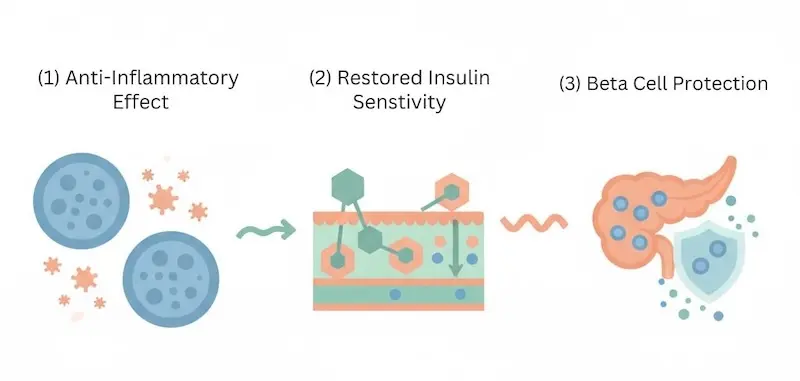
Mechanism 1: Calming Chronic Inflammation in Metabolic Syndrome
Mesenchymal stem cells (MSCs) — the cell type used in our treatment program — interact with the immune system in a way that no conventional metabolic syndrome medication does. Rather than blocking a single inflammatory protein, MSCs release a broad set of signaling molecules that shift the local immune environment from a pro-inflammatory state toward a more regulated, repair-oriented state.
In metabolic syndrome specifically, MSCs have been shown in laboratory and clinical studies to reduce levels of inflammatory cytokines including TNF-alpha and interleukin-6, to alter the behavior of macrophages within fat tissue toward a less destructive profile, and to support the activity of regulatory immune cells that help the rest of the immune system stand down. Because chronic low-grade inflammation is a shared driver of multiple components of metabolic syndrome, this single mechanism has the potential to influence several downstream outcomes at once. The same immunomodulatory action is part of what we see in cardiac patients — a connection we discuss in our heart failure stem cell therapy article, since cardiovascular consequences are one of the main reasons metabolic syndrome matters clinically.
Mechanism 2: Restoring Insulin Sensitivity in Metabolic Syndrome
The second mechanism follows directly from the first. As inflammation declines in fat tissue, liver, and skeletal muscle, the cells in those tissues become more responsive to insulin’s signal. This is not the stem cells “becoming” pancreatic cells or producing insulin themselves. It is the modification of the local environment that has been blocking insulin’s normal function.
Several published clinical studies — primarily in patients with type 2 diabetes, which represents the more advanced stage of the same underlying process — have measured improvements in insulin sensitivity using the HOMA-IR index, a standard mathematical calculation derived from fasting glucose and fasting insulin levels. In responding patients, HOMA-IR scores decline meaningfully after MSC treatment, indicating that cells throughout the body are responding more efficiently to a given amount of insulin. For metabolic syndrome patients in the prediabetic range, this kind of improvement directly targets the trajectory toward type 2 diabetes.
Mechanism 3: Supporting Pancreatic Beta Cell Function
The pancreatic beta cells — the cells that produce insulin — work harder and harder over the course of metabolic syndrome’s progression as insulin resistance increases. Eventually, in many patients, these cells begin to fail. This is the transition point from metabolic syndrome to overt type 2 diabetes.
MSCs appear to support beta cell survival and function through their secreted growth factors and through their anti-inflammatory effects on the pancreatic islets where beta cells reside. In published trials of MSC therapy for type 2 diabetes, several have measured improvements in C-peptide levels — a blood marker that reflects beta cell insulin production capacity — suggesting that the cells are functioning better after treatment, not simply that external insulin needs have decreased. For a patient with metabolic syndrome who has not yet progressed to diabetes, protecting beta cell function is precisely the kind of preventive biological action that the standard medication ladder does not provide.
What Clinical Trials Show About Stem Cells in Metabolic Syndrome
Findings From Type 2 Diabetes Trials Relevant to Metabolic Syndrome
The clinical trial literature specifically branded as “metabolic syndrome stem cell therapy” is relatively sparse. The much larger body of evidence comes from trials in type 2 diabetes — which shares the same underlying biology of insulin resistance and inflammation — and a smaller set of trials specifically targeting metabolic and cardiometabolic outcomes.
A randomized controlled trial by Bhansali and colleagues, published in Stem Cells and Development in 2017, compared autologous bone marrow-derived MSCs against bone marrow mononuclear cells and a placebo control in patients with type 2 diabetes. At twelve months, the MSC group showed significant reductions in daily insulin requirements and improvements in HbA1c (a three-month average measure of blood glucose). Approximately 60 percent of patients in the MSC group met the predefined response criteria.
A clinical trial by Cai and colleagues, published in Diabetes Care in 2016, used allogeneic umbilical cord-derived MSCs in patients with type 2 diabetes. At one-year follow-up, the treatment group showed improvements in HbA1c, reductions in inflammatory markers including C-reactive protein, and improvements in C-peptide-to-glucose ratios — indicating better beta cell function. No serious adverse events were attributed to the cell therapy.
An earlier study by Hu and colleagues, published in Endocrine Journal in 2013, examined Wharton’s jelly-derived MSCs in newly diagnosed type 2 diabetes. The treated group showed sustained reductions in HbA1c and improvements in C-peptide responses at one year compared with controls.
A 2020 systematic review and meta-analysis in Stem Cell Research & Therapy pooled data from multiple trials of MSC therapy in type 2 diabetes. The pooled analysis showed clinically meaningful reductions in HbA1c, improvements in insulin requirements, and improvements in C-peptide measures, with safety profiles that were generally comparable to control groups. The reviewers noted heterogeneity across studies and called for larger, longer trials — an accurate description of where the field stands.
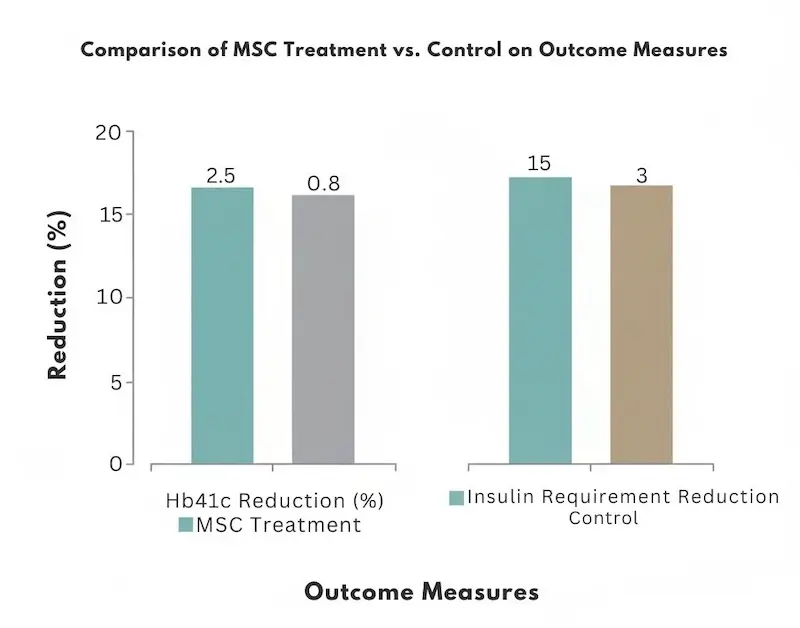
Realistic Numbers vs. Marketing Claims About Metabolic Syndrome Stem Cell Therapy
We want to be specific about what these numbers translate to in practice, because selective reporting of best-case outcomes is common in this field and does patients no favors.
In the published trials, HbA1c reductions in responding patients have generally been in the range of 0.5 to 1.5 percentage points at twelve months. For context, this is comparable to or somewhat better than the effect of adding a typical second-line oral diabetes medication — but achieved through a single course of treatment rather than ongoing daily medication. Reductions in daily insulin requirements have ranged from approximately 30 to 50 percent in responder subgroups. Reductions in inflammatory markers such as CRP have been documented in multiple trials.
Three caveats matter. First, not every patient responds. Across the trials, response rates have generally been in the range of 50 to 70 percent — meaning a meaningful minority experience little to no measurable benefit. Second, the durability of response beyond two years is not yet well established at the population level. Some patients sustain improvements; others see partial regression. Third, the published data is dominated by trials in established type 2 diabetes rather than in earlier-stage metabolic syndrome — meaning that while the biology is highly relevant, the specific population studied is different from someone with metabolic syndrome who has not yet progressed.
For metabolic syndrome patients who are still in the pre-diabetic range, the clinical hypothesis is that intervening earlier — when beta cell function is more intact and the inflammatory burden is somewhat lower — may produce more durable effects. There is biological reasoning to support this hypothesis, and emerging trial data appears consistent with it, but the field does not yet have the long-term randomized evidence to make this a definitive claim. We will say so honestly in any consultation.
Allogeneic Cord-Derived MSCs vs. Other Stem Cell Sources for Metabolic Syndrome
Why Cell Source Matters in Metabolic Syndrome Treatment
Stem cell therapies are not a uniform category. The cells can be sourced from the patient’s own body (autologous) — typically from bone marrow or adipose tissue — or from a healthy donor (allogeneic). The cells can come from adult tissues or from perinatal sources such as umbilical cord tissue. These choices have meaningful implications for what the cells can do once they are in the patient’s body.
In metabolic syndrome specifically, there is a particular reason to be thoughtful about cell source. Metabolic syndrome itself affects the cells of the body — including stem cells. Studies have shown that MSCs harvested from individuals with obesity, insulin resistance, or type 2 diabetes display reduced proliferative capacity, altered secretory profiles, and diminished anti-inflammatory potency compared with MSCs from healthy donors. In other words, the cells that need to do the immune-modulating work in a metabolic syndrome patient may, if drawn from that patient’s own body, already reflect the metabolic dysfunction that we are trying to address.
The Approach Used in Malaysia for Metabolic Syndrome
Our clinic uses allogeneic mesenchymal stem cells derived from umbilical cord tissue (specifically Wharton’s jelly), donated with full informed consent at the time of healthy births. These cells are biologically young, have not been exposed to decades of cumulative environmental and metabolic stressors, and have been characterized in laboratory studies as having particularly strong anti-inflammatory and immunomodulatory profiles.
In Japan’s current regulatory framework, autologous stem cell therapy is the more common pathway, partly because the legal structure is more established for cells that come from the patient’s own body. The advantage is the absence of any rejection concern. The trade-off, in the metabolic syndrome context, is the cell-quality issue described above. Allogeneic umbilical cord-derived MSCs have low expression of the surface proteins that typically trigger immune rejection, and across published cardiac and metabolic trials of allogeneic MSC therapy, clinically significant rejection events have not been observed.
The choice is not free of trade-offs in either direction. The available data does not yet definitively prove that allogeneic cord-derived cells are superior to autologous cells in every setting. But for the specific biology of metabolic syndrome — where inflammatory and metabolic dysfunction has likely already affected the patient’s own cells — using cells from outside that environment has a clear theoretical rationale and is supported by the available comparative evidence.
Who Is — and Is Not — a Candidate for Metabolic Syndrome Stem Cell Therapy
Metabolic Syndrome Profiles That Tend to Respond
Based on published trial data and our seven-year clinical experience, metabolic syndrome patients who tend to respond best share several characteristics. They typically meet at least three of the five standard metabolic syndrome criteria — abdominal obesity (waist circumference ≥90 cm in Asian men, ≥80 cm in Asian women, with adjusted thresholds for other populations), elevated fasting glucose (typically 100–125 mg/dL, the prediabetic range), elevated blood pressure, elevated triglycerides, or low HDL cholesterol. They have evidence of active inflammatory burden, often measurable through elevated high-sensitivity CRP. Their pancreatic beta cell function, where it has been measured, retains meaningful reserve. They are committed to maintaining the lifestyle foundations — diet, physical activity, sleep — that any metabolic intervention requires to produce lasting effect.
A particularly strong candidate profile is the patient who has identified as prediabetic — fasting glucose between 100 and 125 mg/dL, or HbA1c between 5.7 and 6.4 percent — and who is concerned about progression to type 2 diabetes despite reasonable adherence to standard recommendations. This is the population for whom the biology of MSC therapy is most directly relevant: insulin resistance is established but beta cell function is still substantially intact, meaning there is meaningful function to protect.
When Stem Cell Therapy Is Not the Right Choice for Metabolic Syndrome
We actively decline to treat patients in several situations. Those with established type 2 diabetes of long duration with severely impaired beta cell function may have less to gain — at that stage, the biology has progressed beyond what immunomodulation alone can meaningfully address. Patients with active malignancy, significant uncontrolled infection, or active autoimmune disease should not undergo MSC therapy, both for safety reasons and because the underlying conditions need primary management.
Patients whose metabolic syndrome is primarily driven by recent and substantial weight gain that has not yet been addressed may benefit more from sustained lifestyle modification and weight loss as a first-line intervention; in these cases we typically recommend at least six months of structured lifestyle effort before considering MSC therapy. Patients seeking stem cell therapy as a substitute for lifestyle change — rather than as a complement to it — are unlikely to see meaningful benefit, and we are direct about that.
Patients hoping that stem cell therapy will allow them to discontinue all of their current medications should adjust expectations before any consultation. The realistic possibility is improvement in markers and, in some cases, a discussion with the prescribing physician about reducing medication intensity over time. The unrealistic expectation is that a single course of cell therapy replaces the cardiovascular protection that medications provide.
A Patient’s Experience With Metabolic Syndrome Stem Cell Therapy
A man in his early fifties from a major Asian city. Diagnosed with metabolic syndrome four years before consulting our clinic. Five abnormal values at diagnosis: elevated waist circumference, fasting glucose at 118 mg/dL (prediabetic range), HbA1c at 6.0 percent, blood pressure averaging 142/88, and triglycerides above 200 mg/dL. He had been on metformin, a low-dose statin, and an ACE inhibitor for the past two years. His work involved frequent travel and irregular meals; despite working with a dietitian, sustained weight loss had been difficult.
He came to us in mid-2024 specifically concerned about progressing to type 2 diabetes — his father had developed it at age 55 and had subsequently had a heart attack at 62. He was direct that he was not looking for a way to stop his medications; he was looking for something that might change the trajectory.
Before accepting him for treatment, we reviewed his complete medical records, requested updated labs including high-sensitivity CRP and a fasting insulin level, and confirmed with his cardiologist that his blood pressure and lipid management were stable. He was an appropriate candidate: prediabetic but not diabetic, multiple metabolic syndrome components, evidence of inflammatory burden (elevated CRP), and committed to maintaining lifestyle changes alongside any treatment.
He received allogeneic umbilical cord-derived MSC infusions over a one-week visit to Malaysia. The first month produced no noticeable change. By the third month, he reported that his post-meal energy had improved — the daily afternoon fatigue had become less pronounced. At the six-month follow-up, his HbA1c had moved from 6.0 to 5.6 percent, his fasting glucose had moved into the normal range, and his CRP had reduced by approximately 35 percent. His blood pressure on the same medication had improved modestly. He had also lost approximately 4 kilograms during the same period, which he attributed in part to renewed energy for the kind of consistent activity he had been struggling to sustain.
His cardiologist subsequently agreed to a trial reduction in his ACE inhibitor dose, with continued monitoring. He remains on his statin and metformin pending the twelve-month assessment. He described the experience as “the first time in years that the trajectory has felt like it might be moving in a different direction.”
This is an anonymized account based on actual clinical experience. Individual outcomes vary, and this experience does not represent a guaranteed result for other patients.
What to Expect During and After Metabolic Syndrome Stem Cell Therapy
Most international patients spend approximately one to two weeks in Malaysia. Upon arrival, an in-person clinical assessment confirms the treatment plan. The MSC infusion itself is administered intravenously over approximately one to two hours, depending on cell dose and protocol. Most metabolic syndrome patients receive a series of one to three infusions during their visit, determined by pre-treatment assessment.
Immediate post-infusion observation lasts several hours. Most patients return to their accommodations the same day. Mild fever, transient fatigue, or mild headache during the first 24 to 48 hours after infusion are not uncommon; these effects are thought to reflect mild immune recognition of the donor cells and typically resolve without specific treatment. Patients are advised to maintain hydration, continue all existing medications, and avoid strenuous activity for the first week.
Follow-up assessment at three months and six months — typically conducted remotely — includes repeat laboratory testing and a structured review of changes in symptoms, medication needs, and metabolic markers. Functional and biochemical changes, when they occur, generally begin to emerge between weeks 6 and 16 and continue to develop over the first six to twelve months. Patients who have not noticed any change by six months have generally not gone on to show meaningful changes at one year, which is honest information for setting expectations from the outset.
Honest Risks and Limitations of Metabolic Syndrome Stem Cell Therapy
Known Side Effects in Metabolic Syndrome Stem Cell Trials
The safety profile of allogeneic MSC therapy across published trials has been generally favorable, but no medical intervention is without risk and we do not present it as such. The most commonly reported effects following infusion are mild and self-limiting: low-grade fever in the first 24 to 48 hours, transient fatigue, mild headache, and occasional muscle aches. These are reported by roughly 15 to 25 percent of patients across published trials and typically resolve without intervention.
Serious adverse events directly attributable to allogeneic MSC therapy have been uncommon in the published cardiovascular and metabolic literature. The Cai trial, the Bhansali trial, and others reported no significant treatment-attributable serious adverse events at one-year follow-up. That said, the field’s longest follow-up data is generally limited to two to three years; very long-term safety in metabolic syndrome populations specifically remains an area of ongoing study. We disclose this honestly to every patient.
Theoretical risks that we monitor for include immune reactions (rare, given the low immunogenicity of cord-derived cells), infusion-related events (managed by appropriate clinical protocols), and interactions with patients’ existing immunomodulatory or anticoagulant medications (managed through pre-treatment review). Patients with active infection, recent surgery, active malignancy, or pregnancy are not treated.
What Stem Cell Therapy Cannot Do for Metabolic Syndrome
We are equally direct about the limits.
Stem cell therapy does not replace lifestyle change. The biological effects of MSCs unfold in the same body that continues to be exposed to dietary, activity, and sleep patterns. Patients who maintain dietary patterns that drive ongoing inflammation and weight gain will likely undermine whatever benefit the cells produce. We say this explicitly and consistently.
Stem cell therapy does not eliminate the need for cardiovascular protective medications in patients who have established indications for them. A statin prescribed for elevated LDL with cardiovascular risk has documented benefits in cardiovascular event reduction that no current stem cell protocol can claim. Decisions about medication adjustment are made over time, in coordination with your prescribing physicians, based on observed changes in your metabolic markers and clinical picture.
Stem cell therapy will not benefit every patient. Across the relevant published trials, response rates in the range of 50 to 70 percent mean that a meaningful minority of patients see little or no measurable change. Predicting who will and who will not respond remains imperfect, although patients who meet stronger candidacy criteria — earlier-stage disease, intact beta cell reserve, evidence of active inflammation that can be modulated, sustained lifestyle commitment — tend to respond more reliably. Patients who reach this decision point with a realistic understanding of these probabilities are better positioned to evaluate their results fairly, whatever those results turn out to be.
FAQ About Metabolic Syndrome Stem Cell Therapy
Conventional medications for metabolic syndrome each act on a single downstream consequence — metformin reduces hepatic glucose output, statins reduce cholesterol synthesis, ACE inhibitors lower blood pressure. They are effective for what they do, but they do not address the chronic inflammation and insulin resistance that connect the components of metabolic syndrome. MSC therapy targets these upstream mechanisms, with the goal of influencing multiple downstream values through a single biological intervention.
In most cases, yes — at least initially. Stem cell therapy is designed to work alongside your existing medication, not as a replacement for it. Decisions about reducing or discontinuing medications are made by the physicians who manage your ongoing care, based on observed changes in your metabolic markers over months of follow-up. Some patients are eventually able to reduce medication intensity; others continue at their current level with improved underlying biology. We do not ask patients to stop medications before or during treatment, and we do not promise medication elimination as an outcome.
The honest answer is that the field does not yet have definitive long-term data. Published trials generally report follow-up of one to two years, with some extending to three years. Many responding patients show sustained improvement over this period, though some experience partial regression. The durability of effect appears to depend significantly on whether lifestyle factors — diet, activity, sleep, stress — continue to support the metabolic environment after treatment. Patients who maintain healthy patterns tend to sustain benefits longer than those who do not.
For patients with severe obesity (typically BMI ≥35 with metabolic complications, or BMI ≥40 regardless), bariatric surgery has the strongest evidence base for producing durable improvement or remission of multiple metabolic syndrome components. It is also a major surgical intervention with permanent anatomical and digestive consequences. Stem cell therapy and bariatric surgery target different patient profiles: surgery is best suited to severe obesity where mechanical/anatomical change is the goal, while stem cell therapy is more relevant for metabolic syndrome where inflammation and insulin resistance are the primary concerns and substantial surgical intervention is not indicated. They are not direct alternatives.
Stem cell therapy for metabolic syndrome is currently not part of standard guideline-recommended care in most countries, including for insurance coverage purposes. It is performed under regulated medical practice in jurisdictions where the treatment is legally permitted, including Malaysia. It is provided as a self-pay treatment. Specific pricing is discussed in individual consultations rather than in general informational content.
Considering Whether This Could Apply to Your Situation
If you have read this far, you are most likely someone who is already doing the things you have been told to do — taking medications as prescribed, working on lifestyle factors, having regular check-ups — and is genuinely trying to assess whether there is a treatment that addresses the underlying biology of why your metabolic numbers continue to drift.
We offer free online consultations for exactly this kind of conversation. We are not selling a treatment in those calls. We review your medical history, your current labs, and your specific situation, and we tell you honestly whether we think your case falls within the range where this therapy has shown evidence of benefit — or whether it does not. If the honest answer is that it is unlikely to be meaningful for you, we will say that. You are not committing to anything by reaching out other than the conversation itself.
References
- Saklayen MG. The global epidemic of the metabolic syndrome. Curr Hypertens Rep. 2018;20(2):12. https://doi.org/10.1007/s11906-018-0812-z
- Bhansali S, Kumar V, Saikia UN, et al. Effect of mesenchymal stem cells on glycemic control and metabolic parameters in patients with type 2 diabetes mellitus: a randomized controlled trial. Stem Cells Dev. 2017;26(7):471–481. https://doi.org/10.1089/scd.2016.0275
- Cai J, Wu Z, Xu X, et al. Umbilical cord mesenchymal stromal cell with autologous bone marrow cell transplantation in established type 2 diabetes: a pilot randomized controlled open-label clinical study to assess safety and impact on insulin secretion. Diabetes Care. 2016;39(1):149–157. https://doi.org/10.2337/dc15-0171
- Hu J, Yu X, Wang Z, et al. Long term effects of the implantation of Wharton’s jelly-derived mesenchymal stem cells from the umbilical cord for newly-onset type 1 diabetes mellitus. Endocr J. 2013;60(3):347–357. https://doi.org/10.1507/endocrj.EJ12-0343
- Liu X, Zheng P, Wang X, et al. A preliminary evaluation of efficacy and safety of Wharton’s jelly mesenchymal stem cell transplantation in patients with type 2 diabetes mellitus. Stem Cell Res Ther. 2014;5(2):57. https://doi.org/10.1186/scrt446
- Hotamisligil GS. Inflammation, metaflammation and immunometabolic disorders. Nature. 2017;542(7640):177–185. https://doi.org/10.1038/nature21363
- Couto PS, et al. Mesenchymal stem cells in the treatment of type 2 diabetes mellitus: a systematic review and meta-analysis. Stem Cell Res Ther. 2020;11:151. https://doi.org/10.1186/s13287-020-01624-8
- Alberti KGMM, Eckel RH, Grundy SM, et al. Harmonizing the metabolic syndrome: a joint interim statement of the International Diabetes Federation Task Force on Epidemiology and Prevention. Circulation. 2009;120(16):1640–1645. https://doi.org/10.1161/CIRCULATIONAHA.109.192644