
Innovacell IPO: Tokyo-Listed Cell Therapy Company Advances Stem Cells and Regenerative Medicine Pipeline
Innovacell lists on the Tokyo Stock Exchange raising $92M to advance stem cells and regenerative medicine, marking Tokyo’s first biotech IPO since 2025.
Innovacell Lists on the Tokyo Stock Exchange, Raising $92 Million to Advance Cell Therapy and Regenerative Medicine
Is the global biotech capital market beginning to recover after an extended period of suppressed IPO activity? The listing of Innovacell Inc. on the Tokyo Stock Exchange on February 24, 2026, suggests that investor appetite for late-stage, data-supported cell therapy companies is returning. Innovacell raised approximately ¥14.17 billion (equivalent to roughly US$92 million), becoming the first drug development biotechnology company to complete a public listing in Tokyo since 2025—a milestone that carries significance not only for the company but for the broader regenerative medicine and stem cells investment landscape in Japan and internationally.
Company Overview and Listing Background
Innovacell’s Origins and International Foundation
Innovacell Inc. is a Japanese cell therapy company with a distinctive international heritage. The company was originally incubated within the Medical University of Innsbruck in Austria, one of Europe’s established academic medical institutions, before establishing its parent entity in Japan in 2021. This dual foundation—rooted in European academic research and operationally anchored in Japan—has shaped the company’s hybrid approach to clinical development, combining rigorous scientific methodology with access to Japan’s advanced regulatory and manufacturing environment for regenerative medicine.
The company is co-led by CEO Colin Lee Novick, whose leadership has guided Innovacell through its transition from academic incubation to a publicly listed biopharmaceutical entity. Under his direction, the company has advanced its core cell therapy pipeline through successive clinical stages and built the organizational infrastructure required to support global commercialization.
Tokyo Stock Exchange Listing and First Biotech IPO Since 2025
Innovacell’s listing on February 24, 2026, holds particular relevance within the context of Japan’s biotech capital markets. According to the company’s CEO, no biotechnology companies completed public offerings on the Tokyo Stock Exchange during the preceding year—a reflection of the broader global biotech IPO downturn that constrained capital formation across major exchanges throughout 2024 and into 2025. Innovacell’s successful listing therefore represents not merely a corporate milestone, but a potential inflection point for Tokyo’s role as a destination for regenerative medicine and cell therapy capital.

IPO Structure and Financial Terms
Offering Price, Share Volume, and Total Proceeds
The IPO was priced at ¥1,350 per share, with a base offering of 8.4 million shares. The inclusion of an underwriters’ over-allotment option expanded the total capital raised to ¥14.17 billion, equivalent to approximately US$92 million at prevailing exchange rates. This structure is consistent with standard Japanese IPO practice, where over-allotment provisions allow underwriters to issue additional shares to meet excess demand, providing a mechanism to stabilize post-listing trading while maximizing gross proceeds for the issuer.
The total raise of ¥14.17 billion positions Innovacell as a meaningful new entrant in the Japanese listed biotech space, with sufficient capital runway to support both the near-term commercialization of its lead asset and the continued development of its broader pipeline of cell-based and regenerative medicine candidates.
Pre-IPO Funding History
Innovacell’s path to the public markets was supported by a series of private financing rounds. Most notably, in August 2025, the company completed a Series D funding round totalling ¥7.3 billion—a raise that was reported to be oversubscribed, indicating institutional demand in excess of the capital sought. The round was led by M&G Investments, a global asset manager, lending institutional credibility to the company’s valuation and clinical development strategy. The oversubscription of the Series D was a key precondition for the IPO, confirming that Innovacell had secured a foundation of informed institutional backing prior to entering the public markets.Alamysundaysprout.com
Core Pipeline: ICEF15 and the Science of Skeletal Muscle Regeneration
Indication and Therapeutic Rationale
Innovacell’s lead product candidate, ICEF15, is a regenerative medicine drug designed for the treatment of urge fecal incontinence—a condition characterized by the involuntary loss of bowel control associated with weakened or damaged sphincter musculature. The condition represents a significant unmet medical need, with substantial impact on patient quality of life and limited effective treatment options currently available in clinical practice.
The therapeutic approach underpinning ICEF15 is grounded in principles of autologous cell therapy and tissue regeneration. The treatment involves the local injection of skeletal muscle myoblasts derived from the patient’s own tissue—a modality that draws on foundational concepts in stem cells research and the body’s intrinsic regenerative capacity. By delivering the patient’s own muscle progenitor cells directly to the site of sphincter dysfunction, ICEF15 aims to stimulate the regeneration of functional muscle tissue, addressing the underlying anatomical deficit rather than managing symptoms through pharmacological suppression alone.
The autologous nature of the cell source is clinically relevant: by using the patient’s own cells, the therapy avoids the immunological complications associated with allogeneic cell products, reducing the risk of rejection and the need for immunosuppressive regimens.
Clinical Development Stage and Global Trial Design
ICEF15 has advanced to a global multicenter Phase III clinical trial, with active sites in both Japan and Europe. This stage of development reflects the resolution of earlier-stage risk factors—including manufacturing feasibility, dose-finding, and preliminary safety and efficacy signals—and positions the program within the category of late-stage assets that institutional investors have historically regarded with greater confidence relative to earlier preclinical or Phase I-stage programs.
In addition to the ongoing Japan-Europe trial, Innovacell has stated its intention to initiate late-stage clinical research in the United States, a step that would require engagement with the U.S. Food and Drug Administration (FDA) under its regulatory framework for cell and gene therapy products. Expansion into the U.S. market would significantly broaden the addressable patient population and commercial opportunity for ICEF15 if the program achieves regulatory approval across jurisdictions.

Use of IPO Proceeds and Commercial Strategy
Global Commercialization Infrastructure
The capital raised through Innovacell’s Tokyo listing is earmarked primarily for the global commercialization of ICEF15, should the program achieve regulatory approval in target markets. Planned expenditures include the development of production and marketing infrastructure across Japan, Europe, and the United States—three jurisdictions representing the principal regulatory and commercial markets for advanced regenerative medicine products.
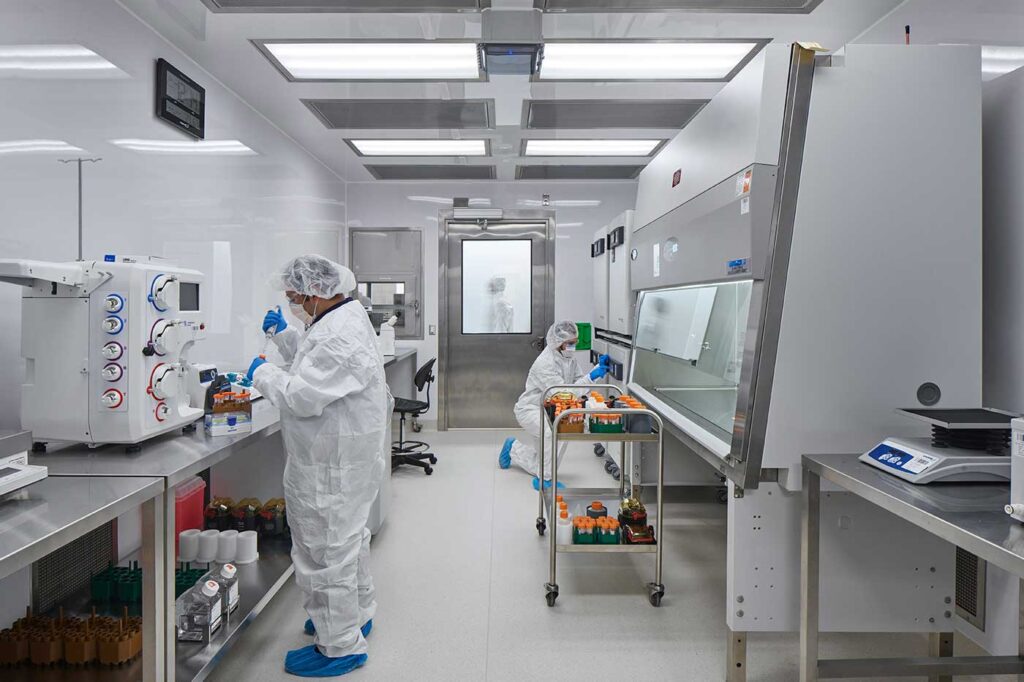
Building out manufacturing capacity for autologous cell therapy products is a capital-intensive undertaking. Unlike conventional pharmaceutical manufacturing, autologous cell therapies require individualized processing for each patient, involving the extraction, expansion, and quality-controlled preparation of patient-derived cells. Investing in this infrastructure ahead of commercial launch is a standard requirement for companies advancing personalized cell therapy programs at scale.
Pipeline Expansion Beyond ICEF15
In addition to the lead ICEF15 program, Innovacell has indicated that a portion of the IPO proceeds will be directed toward the research and development of additional pipeline candidates. This includes ICES13, a cell therapy candidate in development for the treatment of urinary incontinence—an indication with significant patient prevalence and an existing unmet need for durable, tissue-level interventions beyond conservative management. The development of ICES13 reflects the company’s broader strategy of applying its autologous myoblast platform and expertise in pelvic floor and sphincter-related musculature to a range of related conditions, leveraging shared manufacturing processes and clinical infrastructure.
Market Context and Strategic Significance
Timing the IPO: Product Maturity and Investor Sentiment
The decision to list at this juncture reflects a considered assessment of both product-specific and macroeconomic conditions. From a clinical perspective, ICEF15’s advancement to Phase III and the resolution of earlier development risks have substantially de-risked the program relative to earlier-stage cell therapy candidates. Institutional investors—particularly those allocating capital to life sciences—have increasingly differentiated between early-stage speculative programs and late-stage assets with robust clinical datasets, and Innovacell positions ICEF15 firmly within the latter category.
From a market environment perspective, the continued strengthening of Japan’s Nikkei index and the broader recovery of the global biotech IPO market—evidenced by renewed activity on the Nasdaq and the London Stock Exchange—provided a supportive backdrop for the listing. The convergence of strong clinical data, institutional backing from the oversubscribed Series D, and improving market conditions created the conditions under which the Tokyo Stock Exchange listing could be executed successfully.
Reopening Tokyo’s Biotech IPO Window
Beyond its significance for Innovacell as a corporate entity, the listing carries broader implications for Japan’s biotechnology capital ecosystem. The absence of biotech IPOs on the Tokyo Stock Exchange during 2025 reflected a period of sustained caution among both issuers and investors, driven by global macroeconomic headwinds and the tightening of risk appetite for early-stage life sciences companies. Innovacell’s successful raise signals that this period may be drawing to a close—at least for companies with advanced, data-supported cell therapy and regenerative medicine programs.
Industry observers have characterized the listing as an indicator of recovery within the international biotech funding environment, with companies possessing substantiated clinical evidence and credible regulatory pathways regaining access to public capital markets. For the stem cells and cell therapy field more broadly, this trajectory aligns with a global pattern in which regulatory maturity, improved manufacturing scalability, and demonstrated clinical outcomes are increasingly translating into renewed investor confidence.
Global Regulatory and Scientific Context for Cell Therapy
Innovacell’s IPO takes place within a global regulatory environment that has evolved considerably over the past decade to accommodate the specific requirements of advanced cell-based therapies. In Japan, the Act on the Safety of Regenerative Medicine and the Pharmaceuticals and Medical Devices Act (PMDA framework) provide a regulatory structure that enables conditional and accelerated approval pathways for regenerative medicine products—a framework that has positioned Japan as one of the more progressive jurisdictions for cell therapy development and commercialization.
In Europe, the European Medicines Agency (EMA) regulates advanced therapy medicinal products (ATMPs) under a dedicated regulatory pathway, while in the United States, the FDA’s Center for Biologics Evaluation and Research (CBER) oversees cell and gene therapy products under a framework that includes provisions for accelerated designation for conditions with significant unmet need. Innovacell’s ambition to initiate U.S. clinical research for ICEF15 would require navigation of this regulatory environment, including potential engagement with FDA’s expedited programs should the clinical profile of the therapy support such designations.
For the international stem cells and regenerative medicine community, Innovacell’s listing and the continued advancement of its autologous myoblast platform represent a concrete example of how academic research, sustained private investment, and disciplined clinical development can converge to produce a viable public company—and, ultimately, potential new therapeutic options for patients whose conditions remain poorly served by existing treatment modalities.