Regulatory Milestone for Stem Cells: China’s National Health Commission Issues New Directive on Biomedical Technology Clinical Research

Introduction
Are advanced cell therapies finally moving from research facilities into mainstream clinical practice? For many years, this has been one of the central questions facing the global biomedical community. On February 24, 2026, China’s National Health Commission (NHC) issued a significant policy directive aimed at accelerating the implementation of the Regulations on the Management of Clinical Research and Clinical Transformation and Application of New Biomedical Technologies — a framework widely expected to reshape the clinical landscape for stem cells, CAR-T therapy, and related advanced treatment modalities. This article examines the three major regulatory signals embedded in the NHC directive and their implications for patients, healthcare institutions, industry stakeholders, and international observers.
Background: The Regulatory Foundation
The policy directive issued on February 24, 2026 builds upon a foundational regulatory document: the Regulations on the Management of Clinical Research and Clinical Transformation and Application of New Biomedical Technologies, formally promulgated as State Council Order No. 818 and announced in September 2025. The February 2026 NHC directive provides operational guidance for implementing this framework, with the regulations themselves scheduled to take full effect on May 1, 2026.
The significance of this regulatory development lies in its position within the Chinese governance hierarchy. Unlike previous temporary administrative notices or pilot-program announcements, State Council Order No. 818 represents a top-level, legally binding instrument. This distinction is critical: it signals a structural shift from a fragmented, pilot-based approach to clinical research governance toward a unified, statutory compliance framework applicable nationally.
The NHC directive’s core objective, as stated in the document, is twofold: to ensure the steady implementation of the Regulations, and to advance the quality-oriented development of China’s biomedical industry in service of public health needs.

Signal One: Regulatory Clarity and the End of the Compliance Gray Zone
The Historical Problem of Regulatory Ambiguity
For much of the past decade, the field of cell therapy in China — and to varying degrees in other markets — has occupied an uncomfortable regulatory space. The absence of clearly defined legal standards allowed both legitimate research institutions and less scrupulous operators to conduct activities under similar banners. Patients seeking access to cutting-edge cell-based therapies faced a landscape in which the distinction between rigorous clinical research and unvalidated commercial procedures was often difficult to discern. Meanwhile, institutions genuinely engaged in scientific development faced structural barriers to clinical translation: they could conduct research but were unable to formally charge for emerging therapies or recoup development investment in a sanctioned manner.
State Council Order No. 818, and the NHC directive reinforcing it, directly address these systemic issues through three foundational mechanisms.
Institutional Eligibility Standards
The Regulations establish clear thresholds for which healthcare institutions may conduct clinical research involving new biomedical technologies. Specifically, only tertiary Grade-A hospitals — the highest tier in China’s hospital classification system — are formally eligible to carry out such studies. This requirement eliminates ambiguity around which institutions can legitimately engage in this field, creates a defined compliance perimeter, and raises the institutional quality standard for clinical research activity.
A Defined Regulatory Pathway
The directive establishes a structured procedural pipeline moving from clinical research filing, through transformation application approval, to reasonable fee application. This pathway — often described as “opening the last mile” from research to clinical practice — provides the first formally codified route for new biomedical technologies, including stem cell applications, to progress from investigational status to sanctioned clinical use with associated cost recovery. For institutions that have long faced the contradiction of possessing promising technologies without a legal avenue for clinical deployment, this represents a meaningful structural change.
Enforcement and Market Discipline
The Regulations also introduce proportionate enforcement mechanisms, signaling a departure from the informal, notification-based compliance culture of earlier years. Institutions that operate outside the defined framework are subject to formal regulatory consequences, while compliant institutions gain access to policy-supported benefits. Industry analysts have characterized this shift as the formal entry of China’s new biomedical technology sector into a rule-of-law governance paradigm — a development with implications for international partnerships, investment confidence, and patient safety standards.
Signal Two: Accelerating Clinical Transformation for Patients with Serious Conditions
Bridging the Gap Between Research and Clinical Access
One of the persistent criticisms of advanced cell therapy development globally has been the extended timeline between scientific demonstration of efficacy and patient access. In China’s previous regulatory environment, this gap was compounded by structural barriers: many promising cell therapy approaches were formally classified as “research projects,” making them inaccessible to patients who might benefit from them outside of narrowly defined trial settings. Limited pilot programs — such as those operating in designated innovation zones in Boao, Hainan — provided some access, but geographic and capacity constraints limited their overall reach.
The new regulatory framework directly targets this gap through a set of targeted provisions designed to accelerate clinical transformation without compromising scientific rigor or patient protection.
Priority Review for Critical Disease Applications
For new biomedical technologies addressing serious or life-threatening conditions for which no effective standard treatment currently exists — including certain malignancies — the Regulations provide for priority review and approval. This mechanism, analogous to similar expedited pathways in other major regulatory jurisdictions, is expected to materially shorten approval timelines for qualifying applications and bring clinically validated cell therapies to patients more rapidly.
Expanded Hospital Autonomy for Cell Preparation
Qualifying tertiary hospitals are now permitted, subject to regulatory approval, to develop their own cell preparation facilities. Following approval, these institutions may charge fees structured around the actual requirements of technological development. This provision addresses a fundamental economic constraint: without a sustainable cost-recovery model, even well-resourced hospitals had limited incentive to make the substantial investments required to support ongoing cell therapy research and preparation infrastructure. The new framework creates a financially sustainable model for institutional participation.
Broadening the Disease Scope for Stem Cell Applications
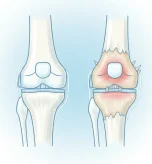
While the clinical application of CAR-T cell therapy for hematological malignancies has been the most prominent area of cell therapy development in recent years, the regulatory framework explicitly supports the expansion of stem cell therapy into additional disease categories. Conditions including knee osteoarthritis, type 2 diabetes, and Parkinson’s disease are identified as areas where the clinical application of stem cell approaches is expected to see accelerated development under the new framework. This broadening of eligible indications reflects the maturation of the underlying science and signals increasing confidence in the translational potential of stem cell research across multiple therapeutic areas.

Signal Three: Industry Development and Supply Chain Localization
Positioning China’s Biomedical Industry for Sustained Growth
Beyond the regulatory and clinical dimensions, the NHC directive explicitly frames the advancement of China’s biomedical industry as a national development priority. This industrial policy dimension reflects a broader recognition — shared across multiple major economies — that advanced therapeutic modalities such as stem cell and gene therapies represent a strategically important sector, both in economic terms and in terms of national health security.
Market Scale and Projected Growth
According to data cited in the directive’s surrounding policy context, China’s cell therapy market reached approximately CNY 12 billion (approximately USD 1.65 billion) in 2025, representing a compound annual growth rate exceeding 65%. Industry projections suggest the market may surpass CNY 50 billion (approximately USD 6.9 billion) by 2027, though such forecasts carry inherent uncertainty and should be interpreted with appropriate caution.
Domestic Supply Chain Development
A recurring concern in advanced cell therapy manufacturing globally has been dependence on imported core materials and equipment — cell culture reagents, specialized consumables, and automated processing platforms. In China’s case, this import dependency has been identified as a strategic vulnerability in the supply chain for cell-based therapies, including stem cell products. The regulatory framework is intended to create conditions that encourage domestic investment in the development and manufacturing of these core inputs, with the goal of increasing the localization rate of critical components over time.
Cost Trajectory and Access Implications
Current pricing for approved CAR-T cell therapies in China ranges into the hundreds of thousands to over one million yuan per treatment course, placing these therapies well beyond the reach of most patients without substantial insurance or subsidy support. The regulatory and industrial policy changes are expected to drive cost reduction through several mechanisms: increased automation in cell manufacturing, the development of allogeneic (off-the-shelf) cell product platforms that eliminate the need for patient-specific manufacturing, and greater domestic competition in key supply chain segments. Industry estimates suggest that by approximately 2027, the cost of some cell therapy treatments could decline to a range of CNY 300,000–500,000, which, while still substantial, would represent a meaningful improvement in accessibility relative to current pricing levels.
Global Regulatory Context
China’s regulatory development in this space does not occur in isolation. Other major jurisdictions have also been actively developing and refining regulatory frameworks for advanced cell and gene therapies. The United States Food and Drug Administration (FDA) has an established pathway for Biologics License Applications covering cell and gene therapy products, with dedicated guidance documents addressing manufacturing, clinical trial design, and long-term follow-up requirements. The European Medicines Agency (EMA) regulates advanced therapy medicinal products (ATMPs) — which include cell therapy, gene therapy, and tissue-engineered products — through a centralized procedure. Japan’s Pharmaceuticals and Medical Devices Agency (PMDA) introduced a conditional early approval pathway specifically for regenerative medicine products, which has facilitated the clinical entry of several stem cell-based therapies.
China’s State Council Order No. 818, and the implementing guidance from the NHC, represent the country’s effort to establish a comparable statutory framework — one that can support both domestic clinical research and international collaboration on a credible regulatory basis. The alignment of China’s framework with international regulatory principles around institutional eligibility, process transparency, priority review, and enforcement is likely to be a significant factor in its reception by international partners and investors.

Implementation Outlook: Expectations and Remaining Challenges
The Path Forward from May 2026
With the full implementation of State Council Order No. 818 set for May 1, 2026, the immediate period ahead will be critical in establishing how the framework operates in practice. Regulatory frameworks of this scope inevitably face implementation challenges: institutions will need time to develop compliance infrastructure, regulators will need to build review capacity for the increased volume of filings expected under the new pathways, and industry participants will need to align their development strategies with the new requirements.
Experts in the field have emphasized several priorities for successful implementation. Healthcare institutions must invest in compliance systems, ethics review infrastructure, and qualified personnel capable of operating within the framework’s requirements. Companies developing cell therapy products — including those working on stem cell applications — must prioritize rigorous scientific and manufacturing standards, recognizing that the regulatory environment now provides both greater opportunity and greater accountability. Regulatory authorities, for their part, will need to maintain dynamic oversight, adapt guidance as the science and clinical practice evolve, and ensure that the priority review pathway operates with genuine efficiency rather than becoming a bottleneck.
Balancing Innovation and Patient Protection
The central tension in any accelerated regulatory framework for advanced therapies is the balance between speed of access and safety assurance. The new Chinese framework, like comparable international approaches, attempts to navigate this tension through risk-proportionate requirements: higher bars for institutional eligibility, defined procedural pathways, and enforcement mechanisms that create accountability without suppressing legitimate innovation. How effectively this balance is maintained in practice will ultimately determine the framework’s success in achieving its dual objectives — advancing the biomedical industry and protecting patient welfare.
Conclusion
The February 24, 2026 directive from China’s National Health Commission represents a substantive step in the maturation of the country’s regulatory approach to advanced biomedical technologies, with particular relevance for stem cells and cell therapy applications. By establishing clear institutional eligibility standards, defining a formal clinical translation pathway, introducing priority review for serious disease applications, and supporting domestic industry development, the framework creates conditions that could meaningfully expand patient access to cell-based therapies, improve compliance standards across the sector, and support the growth of a scientifically credible and internationally competitive biomedical industry.
The full effect of these changes will depend on the quality of implementation across institutions, companies, and regulatory bodies alike. For patients, healthcare professionals, industry stakeholders, and international partners monitoring developments in this field, the period from now through and beyond May 1, 2026 will provide important evidence of how China’s regulatory framework for stem cells and advanced cell therapies functions in practice — and what it means for the broader global landscape of regenerative medicine.