Stem Cells and Aging Frailty: Clinical Evaluation of LOMECEL-B® in a Phase 2b Trial
Can stem cells meaningfully improve physical function in older adults living with aging-related frailty?
Recent Phase 2b clinical trial data published in Cell Stem Cell indicate that an allogeneic mesenchymal stem cell product, Laromestrocel (LOMECEL-B®), was associated with statistically significant improvements in physical endurance in a population of frail elderly individuals. The findings contribute to the evolving clinical research landscape surrounding stem cells and age-associated physiological decline.
Aging frailty is characterized by reduced physiological reserve, impaired stress tolerance, and increased vulnerability to adverse health events. The reported study reflects an ongoing shift in regenerative medicine research—from theoretical hypotheses toward controlled human investigations evaluating measurable functional outcomes.
Background: Aging Frailty and Regenerative Medicine
Aging frailty represents a multidimensional clinical syndrome marked by diminished strength, mobility limitations, and heightened risk of morbidity. Even minor stressors, such as infections or routine procedures, may precipitate serious complications in this population.
Within the broader regulatory and scientific framework, stem cells—particularly mesenchymal stem cells (MSCs)—have been investigated for their immunomodulatory and regenerative properties. Research has focused on whether such cellular preparations can address systemic biological dysfunction rather than only manage symptoms.

Investigational Product: Laromestrocel (LOMECEL-B®)
Allogeneic Bone Marrow–Derived Stem Cells
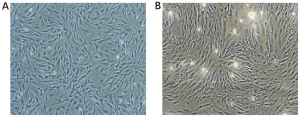
Laromestrocel (LOMECEL-B®), developed by Longeveron, is an allogeneic mesenchymal stem cell product derived from the bone marrow of young, healthy donors. The cells are administered via intravenous infusion, entering the systemic circulation.
A key feature described in the study is the low immunogenic profile of these stem cells, allowing administration without routine immunosuppressive therapy. This characteristic is particularly relevant in older populations, where immunosuppressive medications may pose additional risks.
Proposed Biological Mechanisms
The investigational product is described as having multiple paracrine, anti-inflammatory, and regenerative-supportive mechanisms. Rather than acting through direct tissue replacement, mesenchymal stem cells are believed to modulate the biological environment through signalling pathways that influence inflammation, vascular integrity, and tissue repair processes.
Phase 2b Randomized, Double-Blind Clinical Trial
Study Population and Design
The Phase 2b study enrolled 148 elderly participants between 70 and 85 years of age who exhibited restricted walking ability. The trial was conducted as a randomized, double-blind study, a design consistent with international standards for evaluating investigational biological therapies.
Participants received varying dose levels, allowing for assessment of potential dose-response relationships.

Clinical Outcomes: Physical Endurance and Functional Measures
Six-Minute Walk Test (6MWT)
Nine months following treatment, participants in the highest dose group demonstrated an increase of 63.4 meters in the six-minute walk test (6MWT) compared with placebo (p = 0.0077).
In geriatric clinical research, changes in walking distance are commonly used as objective indicators of functional capacity. The reported improvement exceeded established thresholds for clinical significance in mobility studies, suggesting measurable functional enhancement.
The improvement was also positively correlated with changes in PROMIS physical function scores, reflecting patient-reported outcome measures aligned with functional performance.
Molecular and Biomarker Findings
Beyond functional testing, investigators reported associations between treatment and reductions in soluble TIE-2 levels. This biomarker is involved in vascular signalling pathways, and its modulation may reflect changes in endothelial function.
The study described these findings as indicative of broader vascular and inflammatory remodelling processes, potentially contributing to improved stress resilience in frail elderly individuals.

Regulatory Designations and Global Context
The development program for LOMECEL-B® has reportedly received several U.S. Food and Drug Administration (FDA) designations, including Regenerative Medicine Advanced Therapy (RMAT), Fast Track, and Rare Pediatric Disease designations.
These designations are part of the U.S. regulatory framework designed to facilitate the development of investigational therapies targeting serious or unmet medical needs. Such recognitions do not constitute product approval but may support expedited review processes.
From a global regulatory perspective, stem cell–based products are subject to stringent evaluation standards across jurisdictions, including requirements related to manufacturing controls, safety monitoring, ethics review, and clinical trial oversight. The reported Phase 2b findings therefore represent one component of a broader, internationally regulated development pathway.
Broader Clinical Development Platform
The investigational stem cell platform described in the report has also been explored in other conditions, including hypoplastic left heart syndrome (HLHS) and Alzheimer’s disease (AD), reflecting a strategy focused on systemic regenerative mechanisms.
Such cross-indication research underscores ongoing efforts within regenerative medicine to evaluate whether mesenchymal stem cells may exert multi-system biological effects. However, each indication requires independent clinical validation under applicable regulatory standards.

Conclusion
The Phase 2b randomized trial of Laromestrocel (LOMECEL-B®) provides controlled clinical data suggesting that allogeneic mesenchymal stem cells may improve measurable physical endurance in older adults with aging-related frailty.
While the findings contribute to the growing body of clinical research on stem cells, further large-scale studies and continued regulatory evaluation are required to determine long-term safety, reproducibility, and broader clinical applicability.